Some students can read fluently, solve math problems, and follow classroom routines—yet still struggle to connect with peers, participate in group work, or understand what a teacher “really means.” When these challenges are persistent and interfere with relationships and learning, they may point to Social (Pragmatic) Communication Disorder, often shortened to Social Communication Disorder (SCD).
As a special education-focused writer, I’ve seen how easily social communication needs can be overlooked. They don’t always look like a “speech problem,” and students may not stand out until academic and social demands increase. The good news: when schools know what to look for, they can intervene early and effectively.
What Is Social Communication Disorder?
Social Communication Disorder is characterized by ongoing difficulty using verbal and nonverbal communication for social purposes. This includes knowing how to adjust communication to fit different contexts, following conversational rules, and understanding implied or nonliteral language. In school, SCD can show up in subtle ways that affect participation, peer relationships, and classroom performance.
Importantly, SCD is not the same as “being shy” or “being socially awkward.” The key is that the difficulties are consistent, developmentally unexpected, and significantly impact daily functioning at school and beyond.
Why SCD Symptoms Matter in the Classroom
School is a communication-heavy environment. Students are expected to:
- Collaborate with peers
- Interpret teacher feedback
- Understand group norms
- Navigate conflict and repair misunderstandings
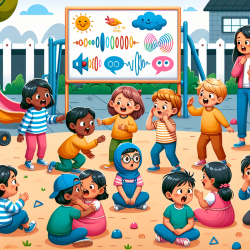
- Use language differently in the classroom than on the playground
When a student struggles with social communication, it can affect academic outcomes, behavior, and emotional well-being. Misunderstandings may look like noncompliance. Peer conflict may look like “drama.” Avoidance may look like disengagement. But often, the root issue is a skill gap in pragmatic language.
Common Social Communication Disorder Symptoms
Below are school-relevant symptoms educators and families often notice. A student does not need to show every sign, and symptoms can vary by age and setting.
1) Difficulty Starting, Joining, or Ending Conversations
Students may:
- Interrupt or jump in without context
- Stand on the edge of groups but not know how to enter
- Walk away abruptly or end conversations in an unexpected way
2) Trouble With Conversational Turn-Taking
Conversation has rules—taking turns, staying on topic, giving enough information, and noticing when someone else wants to speak. Students with SCD may:
- Monologue about a preferred topic
- Give one-word answers that stall interaction
- Miss cues that the listener is confused or bored
3) Challenges Using Language for Different Purposes
In school, students must request help, negotiate, persuade, apologize, and explain. Students with SCD may struggle to:
- Ask for clarification appropriately
- Advocate for themselves in a respectful way
- Use language to resolve conflicts
4) Difficulty Adjusting Communication to the Situation
This can look like using the same tone and style with everyone. For example:
- Talking to the principal the same way they talk to a friend
- Using overly formal language with peers
- Missing the “hidden rules” of different settings (classroom vs. lunchroom)
5) Misunderstanding Nonliteral Language
School language is filled with idioms, sarcasm, and implied meaning. Students may:
- Interpret “Hold your horses” literally
- Miss sarcasm and feel teased or targeted
- Struggle with jokes, riddles, and figurative language in reading
6) Difficulty Reading Nonverbal Communication
Social meaning is often carried through facial expressions, body language, and tone. Students may:
- Miss cues that a peer is annoyed or uncomfortable
- Stand too close or too far away
- Use limited eye contact or mismatched facial expressions
7) Frequent Peer Misunderstandings or Social “Fallout”
Some students are described as “always in conflict,” “misreading situations,” or “getting in trouble for things they didn’t mean.” They may:
- Say things that come across as rude or blunt
- Struggle with group work roles
- Have difficulty repairing communication after a mistake
How SCD Can Be Mistaken for Other Issues
Because SCD affects behavior and relationships, it can be confused with other concerns. Schools might initially suspect:
- Behavior challenges (defiance, arguing, “attitude”)
- Anxiety (avoidance, shutdown during group work)
- Attention difficulties (missing conversational cues, topic shifts)
- Learning difficulties (especially reading comprehension and written expression)
Students can also have SCD alongside other diagnoses or learning needs. This is why a thorough evaluation by a qualified Speech-Language Pathologist (SLP) is essential.
What Educators Can Do Right Now
If you suspect a student may be showing symptoms of Social Communication Disorder, these steps can help:
Document patterns across settings. Note what happens during group work, unstructured times, and teacher-led discussion.
Gather input from multiple adults. Classroom teachers, resource staff, recess supervisors, and families may see different pieces of the puzzle.
Use clear, explicit language. Replace “Be respectful” with specific expectations like “Use a calm voice, keep your hands to yourself, and wait until your partner finishes speaking.”
Pre-teach and practice social scripts. Teach phrases for entering play, disagreeing politely, or asking for help.
Refer to your school SLP team for assessment. Pragmatic language is within the SLP scope, and support is most effective when it’s targeted and measurable.
How TinyEYE Therapy Services Supports Schools
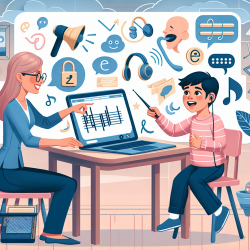
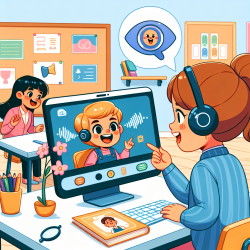
TinyEYE provides online therapy services to schools, including speech-language therapy that can address pragmatic language and social communication needs. For many districts, virtual service delivery helps close gaps in access—especially when staffing shortages or geographic barriers make in-person services difficult to sustain.
Here’s how TinyEYE can support students with social communication challenges:
Targeted pragmatic language therapy. TinyEYE clinicians can work on skills like turn-taking, topic maintenance, perspective-taking, and conversational repair using evidence-informed strategies.
School-relevant goals and progress monitoring. Therapy can be aligned with educational impact, classroom participation, and IEP objectives, with clear documentation of growth over time.
Engaging, structured online sessions. Virtual tools can support role-play, visual supports, and guided practice—helping students generalize skills to real school situations.
Collaboration with school teams. Effective social communication support works best when SLPs, teachers, and families share strategies and language. TinyEYE’s model supports coordination with school-based teams.
Consistent access to services. Online delivery can help maintain continuity when schedules, staffing, or travel create barriers.
What Progress Can Look Like
With the right support, students can make meaningful gains that show up in everyday school life, such as:
- Participating more confidently in group discussions
- Handling disagreements with less escalation
- Understanding classroom humor and figurative language more accurately
- Building and maintaining friendships
- Asking for help in a clear, socially appropriate way
Social communication is teachable. When schools identify symptoms early and provide structured intervention, students are better positioned to learn, connect, and thrive.
For more information, please follow this link.