Student well-being is no longer a “nice to have” in education—it is a core condition for learning. When students feel safe, supported, and connected, they are more ready to engage academically, build relationships, and persist through challenges. The Calgary Board of Education’s Student Well-Being Framework (August 2023) captures this reality in a practical way: well-being and achievement are interdependent, and schools are uniquely positioned to influence both.
For school leaders, educators, and support teams, the framework offers a shared language and a coherent approach to strengthening well-being across the school community. For organizations like TinyEYE, which provides online therapy services to schools, it also clarifies how specialized services can align with school-wide priorities—supporting students within a broader Culture of Well-Being rather than operating in isolation.
Defining Well-Being: More Than Physical Health
The framework defines well-being as holistic. It extends beyond physical health to include how students feel about their lives—happiness, satisfaction, purpose, belonging, and positivity. It also acknowledges that well-being is shaped by determinants of health: personal, social, economic, and environmental factors that influence outcomes over time.
In education settings, this matters because schools directly influence one of the most powerful determinants of health: education itself. And because students arrive with diverse lived experiences—culture, race, gender, social supports, and environmental conditions—well-being must be approached with equity and inclusion at the center.
A Culture of Well-Being: A Whole-School Commitment
A key contribution of the Student Well-Being Framework is its emphasis on culture. A Culture of Well-Being is not a single program, a one-time initiative, or the responsibility of one specialist. It is an embedded way of working—built through welcoming, caring, respectful, and safe learning environments that support both students and staff.
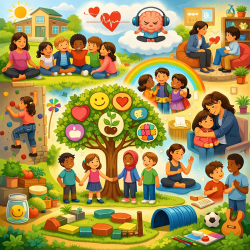
The framework aligns with holistic perspectives, including the Indigenous Education Holistic Lifelong Learning Framework, which describes four interconnected domains that support the whole person:
Spirit – To Be
Heart – To Belong
Body – To Do
Mind – To Know
This approach reinforces an essential idea: well-being is strengthened through balance, relationships, and meaningful connection—within self, with others, and with community.
Why Well-Being Matters in Education Outcomes
Educators have long understood what research increasingly confirms: how students feel impacts how they learn. Students who are healthy, safe, rested, and cared for are more ready to learn. When schools treat well-being as a precondition for learning, they create the conditions for stronger academic outcomes and healthier long-term trajectories.
The framework also challenges a common organizational pitfall: separating achievement and well-being into different “worlds,” managed by different specialists. Instead, it calls for structures and narratives that unite curriculum and learning with well-being and mental health—so that students experience one coherent system of support.
Moving Beyond Health Education: Building Health-Promoting Environments
Health education (information and learning experiences) is important, but information alone rarely changes behaviour. The framework emphasizes health promotion: shaping the environment, relationships, policies, and daily routines that make healthy choices and positive coping more likely.
In practical terms, this means well-being shows up everywhere—in classroom practices, school climate, staff collaboration, and the design of supports. It also means schools can integrate well-being across curricula, not only within “health class.” Examples include:
Using writing prompts in English Language Arts that explore coping, identity, or belonging
Discussing preparation, persistence, and stress-management strategies in Mathematics during assessment cycles
Exploring well-being through creativity, performance, and reflection in the Arts
How Schools Can Advance Well-Being: Two Complementary Tools
The Canadian Healthy School Standards
The framework highlights the Canadian Healthy School Standards as essential conditions for implementing a comprehensive approach. These include Foundational Standards (the “must-haves” that enable success) and Implementation Standards (the “how we do it here” elements that reflect each school’s context).
Foundational Standards include:
Whole School Approach
Well-Being Integrated Across All Curricula
Chart a Unique Plan
Implementation Standards include:
Students as Change Makers
School-Specific Autonomy
Demonstrated Administrative Leadership
Higher-Level Support
Dedicated Champion(s) to engage the school community
Community Support
Quality and Use of Evidence
Professional Learning
Comprehensive School Health (CSH)
Comprehensive School Health is presented as an evidence-based, whole-school approach that improves both health and learning outcomes. It is designed to be planned, integrated, and collaborative—engaging multiple interest-holders, including students and families.
CSH includes four components:
Teaching and learning
Policy (guidelines and regulations)
Partnerships and services
Social and physical environment
To implement CSH, the framework outlines a five-step process:
Engage and Connect
Understand your School Community
Prioritize and Plan
Take Action and Track Progress
Sustain, Improve, and Share
Four Key Themes That Drive Action
The framework identifies four themes that schools can use to focus planning, supports, and measurement. These themes reflect current research and are intended to guide both universal promotion and more targeted interventions.
Diversity and Inclusion
Diversity and inclusion are positioned as foundational to well-being. When students see themselves represented, experience equitable treatment, and learn in environments that actively reduce discrimination (including racism and ableism), they are more likely to feel safe and valued—conditions that support learning and mental health.
Practical school actions may include:
Increasing representation in texts and learning resources
Reducing unnecessarily gendered language and spaces
Using culturally responsive approaches to teaching and learning
School Connectedness and Sense of Belonging
School connectedness is the belief that adults and peers in the school care about a student’s learning and about them as an individual. Research links connectedness to improved achievement, better attendance, and stronger long-term outcomes. Relationships are not an “extra”—they are a core mechanism through which well-being and learning improve together.
Regulation
Regulation is framed broadly, extending beyond behaviour management to include attention, working memory, and cognitive flexibility—skills that support planning and problem-solving. Regulation also aligns closely with Social Emotional Learning (SEL) competencies such as self-management and responsible decision-making.
Importantly, regulation is shaped by both internal processes and interpersonal environments. In other words, students build regulation skills more effectively when classrooms are structured, supportive, and responsive.
Resilience and Mental Health
Resilience is described as the ability to navigate resources—psychological, social, cultural, and physical—to sustain well-being in the face of adversity. It is not a fixed trait; it can be learned and strengthened through relationships, safe environments, skills-building, and reduced stressors.
This theme strongly supports the case for wraparound, interdisciplinary services in schools—where educators, families, and specialized professionals collaborate to ensure students receive the right level of support at the right time.
A Continuum of Supports: Matching Help to Need
The framework emphasizes a continuum of supports that promotes well-being for all students while ensuring interventions are available for those with greater needs. Universal supports (Tier 1 and 2) are a central focus, because they create conditions where more students can thrive and fewer require intensive intervention.
Examples of universal supports include:
School-wide approaches such as restorative practices, trauma-informed practices, and SEL
Instructional strategies that build healthy relationships and engagement (e.g., cooperative learning, project-based learning, collaborative problem-solving)
Mentoring and relationship-building structures that strengthen connectedness
Natural supports in everyday life (family, Elders, coaches, community mentors)
Inclusive practices that honour equity, diversity, and belonging
As needs increase, Tier 3 and Tier 4 supports involve more targeted school-based interventions and, when necessary, individualized plans and external or specialized services.
Where Online Therapy Services Fit: Aligning Specialized Support with School Culture
For schools building a Culture of Well-Being, online therapy can be most effective when it is integrated into the broader continuum of supports and aligned with school goals. TinyEYE’s online therapy model can support this alignment by helping schools:
Increase access to specialized services (especially where staffing shortages or geography limit in-person options)
Provide timely targeted or individualized supports that complement Tier 1 and Tier 2 universal strategies
Strengthen collaboration by coordinating with school teams and contributing to wraparound planning
Support regulation, resilience, and connectedness by addressing barriers that affect learning participation and engagement
When specialized services and school-wide strategies reinforce one another, schools move closer to what the framework describes: balanced, coordinated elements that allow students—and staff—to thrive.
Strategic Actions That Make Well-Being Sustainable
The framework highlights strategic actions that help well-being efforts last beyond a single initiative or school year. These include:
System coordination and clear communication of available supports
Professional learning and development (because staff well-being and student well-being are intertwined)
School Development Plans that intentionally integrate well-being goals and student voice
Strategic resourcing of time, people, and tools
Collaborative partnerships with community organizations and service providers
In practice, these actions help schools move from reactive support to proactive design—building environments where well-being is embedded, measured, and improved over time.
For more information, please follow this link.