Why This Distinction Matters in Schools
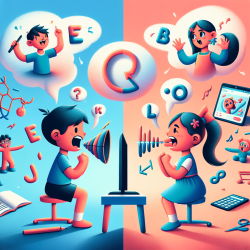
When a student is hard to understand, adults may describe it simply as “speech errors.” In practice, two common speech sound disorders can look similar but require different intervention approaches: articulation disorders and phonological disorders. Understanding the difference helps school teams make appropriate referrals, set meaningful goals, and support faster progress.
What Is an Articulation Disorder?
An articulation disorder involves difficulty producing specific speech sounds correctly due to how the lips, tongue, teeth, or airflow are used. Errors are often consistent and tied to particular sounds.
- What it sounds like: A student may say “wabbit” for “rabbit” or produce a distorted /s/ (often called a lisp).
- Common error types: Substitutions (w/r), distortions (slushy /s/), omissions (ca for cat), or additions (buhlue for blue).
- Typical therapy focus: Teaching accurate sound placement and movement, then practicing in words, sentences, and conversation.
What Is a Phonological Disorder?
A phonological disorder is a pattern-based difficulty where a student uses simplified “rules” to organize sounds in their language system. The issue is less about motor placement and more about how sounds are patterned and contrasted to make meaning.
- What it sounds like: The student may consistently drop final consonants (“ca” for “cat”) or replace many back sounds with front sounds (saying “tar” for “car”).
- Common patterns (phonological processes): Final consonant deletion, fronting, stopping (t/s), cluster reduction (“poon” for “spoon”).
- Typical therapy focus: Helping the student learn sound contrasts and reduce error patterns across many words.
Quick Comparison for School Teams
- Articulation: Usually a few sounds; errors may be distortions; targets are specific sound productions.
- Phonological: Patterns affect many sounds; errors change meaning; targets are sound rules and contrasts.
How Online Therapy Can Support Students
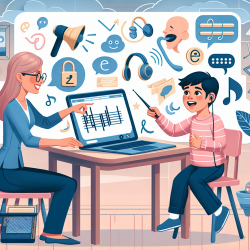
With school-based online therapy, students can receive consistent, targeted practice with an SLP using engaging digital materials, frequent feedback, and data-driven goal adjustments. Collaboration with teachers and families helps carry skills into the classroom.
For more information, please follow this link.