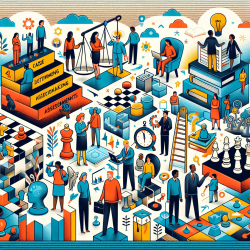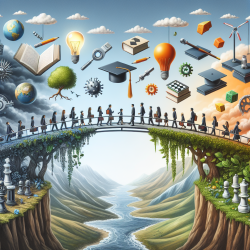
As we navigate the complexities of the Fourth Industrial Revolution, a significant challenge has emerged: the widening skills gap. Employers are increasingly finding it difficult to hire candidates with the necessary competencies. According to a 2022 study by Monster, 91% of employers reported struggling to fill positions due to this gap. With technologies like Augmented Reality (AR), generative Artificial Intelligence (AI), and robotics evolving rapidly, many technical skills taught today may become obsolete by the time students enter the workforce.
The Importance of Durable Skills
In this fast-paced environment, the longevity of technical skills is diminishing. Young workers are switching jobs more frequently, reducing their chances to gain role-specific experience. Therefore, it's crucial to focus on equipping students with durable skills—competencies that endure over time and are applicable across various domains. These include critical thinking, creativity, communication, and collaboration.
Unlike traditional "soft" or "human" skills, durable skills offer resilience and transferability. Employers are increasingly seeking these capabilities, as evidenced by a survey showing that seven out of the ten most requested job capabilities were durable skills. However, graduates often enter the workforce without them.
The Role of Higher Education
Universities have a significant role in cultivating graduates with these transferable skills. Although educators claim that their institutions teach these skills, they often struggle to pinpoint where in their curricula this occurs. Typically, courses focusing on critical thinking or communication are confined within single disciplines, limiting students' ability to apply these skills in diverse contexts.
Challenges in Teaching Durable Skills
- Disciplinary Silos: Most universities are structured around specific disciplines, creating barriers to teaching across them.
- Content Focus: Courses often prioritize information dissemination over skill development.
- Lack of Assessment: Without clear definitions and assessments for durable skills, integrating them into curricula is challenging.
Strategies for Integrating Durable Skills
- Diverse Stakeholder Engagement: Form a group of administrators and faculty from various disciplines to transform curricula.
- Skill Selection: Choose durable skills based on institutional values and educational goals while considering market needs.
- Curriculum Mapping: Develop a map detailing learning outcomes and corresponding courses to ensure consistent skill reinforcement.
- Faculty Training: Encourage faculty to integrate durable skills into lesson plans and assessments effectively.
- Assessment Development: Implement an assessment system focused on evaluating durable skills rather than traditional grading methods.
The message from employers is clear: educational institutions must prepare students with competencies that match workforce demands. By intentionally integrating durable skills into curricula, universities can provide lasting value for both students and employers.
For more information, please follow this link.