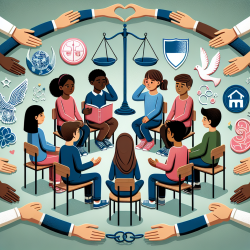
Why classroom rules matter more than ever
In schools today, classrooms are expected to be places where students can learn academic content and practice the real-life skills of listening, disagreeing respectfully, and participating in a community. That’s especially true when topics are personal, values-based, or potentially controversial—like identity, culture, and freedom of religion or belief.
When a class doesn’t have clear expectations, discussions can quickly slide into interruptions, side conversations, teasing, or silence from students who don’t feel safe speaking up. The result is lost learning time and a classroom climate where only a few voices dominate.
A strong set of classroom rules is not about control. It’s about creating a learning environment where every student’s dignity is protected and where everyone can participate meaningfully.
A helpful mindset: rules are about protecting rights
One of the most practical insights from human rights education is this: classroom rules work best when students understand what the rules protect.
In a healthy classroom, students should feel their rights are respected, including the right to:
- Freedom of expression (sharing ideas without being mocked)
- Respect (being treated as a person with value)
- Privacy (not being pressured to share personal beliefs)
- Safety (physical and emotional safety)
- Freedom of religion or belief (including the right to have no religion)
- Education (being able to learn without disruption)
This framing is powerful because it shifts the classroom from “teacher rules” to “community agreements.” It also makes expectations feel fair, not arbitrary.
Step-by-step: how to build classroom rules with students (in about 50 minutes)
The following approach is designed to be simple, student-centered, and easy to repeat at different grade levels. It also works well at the start of a semester, after a classroom reset, or before beginning a unit that involves discussion and debate.
1) Start with the truth: discussions can be challenging
Begin by naming what students already know: some topics bring out strong feelings, different backgrounds, and different beliefs. The goal of discussion is not to “win,” but to explore ideas with curiosity and respect.
It’s also worth acknowledging something students appreciate hearing: everyone has bias. Students, educators, and even classroom materials reflect perspectives. A respectful classroom doesn’t pretend bias doesn’t exist—it learns to notice it and manage it responsibly.
2) Ask three simple questions that unlock better rules
Instead of handing students a list of rules, invite them to describe what they need in order to learn well. A quick whole-class brainstorm can generate surprisingly thoughtful ideas.
- What makes a good discussion?
- What kind of classroom environment encourages a good discussion?
- What kind of class environment helps you learn?
As students answer, capture their words on chart paper or the board. Encourage both “objective” ideas (like taking turns) and “subjective” feelings (like feeling respected or not being laughed at).
3) Build rules in pairs, then merge into small groups
Next, ask students to work in pairs and create five (or more) rules they believe are essential for a safe, respectful learning environment. Then combine pairs into groups of four to compare lists and agree on a shared set.
This structure matters because it:
- Gets every student thinking, not just the most vocal
- Encourages negotiation and perspective-taking
- Creates stronger buy-in because students helped create the rules
4) Create a class list based on consensus
Have one or two groups read their rules aloud. After each rule, ask for a quick show of hands from other groups who had the same or similar idea. Record the rules that have broad agreement.
Then ask whether any important rules are missing and whether the class agrees to include them.
5) Keep the list short and the wording clear
Here’s a key lesson many classrooms learn the hard way: fewer rules are better than many. A short list is easier to remember, easier to enforce consistently, and less likely to become “wallpaper” that everyone ignores.
A good target is no more than 10 rules. Ask students:
- Which rules overlap and could be combined?
- Which rules are unclear and need better wording?
Clarity is kindness. Students are more likely to follow expectations that are specific and understandable.
The game-changer: rewrite rules as rights and responsibilities
Once the class has a workable list, take it one step deeper: show students that every rule implies a right and a responsibility.
For example:
- Rule: Don’t interrupt.
- Right: I have the right to speak without being interrupted.
- Responsibility: I have the responsibility not to interrupt or allow anyone to be interrupted.
This shift is more than a writing exercise. It teaches citizenship skills: in a community, rights don’t survive unless people practice the responsibilities that protect them.
A simple classroom activity format
Ask students to copy the class rules onto a clean sheet of paper, then rewrite them in a two-column format:
- Column 1: Right (first-person statements work best)
- Column 2: Responsibility (the matching behavior that protects the right)
Then compare student responses and create one combined class version. Post it in the room and revisit it when needed—especially after conflicts, before debates, or when new students join.
Connecting classroom culture to human dignity and human rights
Human rights education often begins with a simple idea: human dignity. Dignity is the sense that every person has inherent worth and deserves respect. In the classroom, dignity shows up in everyday moments:
- How students respond when someone makes a mistake
- Whether students feel safe sharing an unpopular opinion
- How differences in religion, culture, language, or identity are handled
- Whether the class protects students from discrimination, bullying, or exclusion
When students practice protecting each other’s rights in the classroom, they’re also practicing how communities function outside of school. That’s why many human rights frameworks emphasize that people have duties to their community: shared responsibility is how freedom becomes real.
Where TinyEYE fits: supporting safe, respectful learning environments
At TinyEYE, we work with schools to provide online therapy services that support students’ communication, social-emotional growth, and participation in learning. Classroom rules and respectful discussion norms directly affect student success—especially for students who may already feel hesitant to speak, struggle with self-advocacy, or need predictable routines to feel safe.
When classroom expectations are clear and connected to rights and responsibilities, educators often see:
- More student participation and better-quality discussion
- Fewer disruptions and less time spent “putting out fires”
- Improved peer interactions and a stronger sense of belonging
- More consistent support for students who need structure and clarity
In other words: classroom rules aren’t just management tools. They’re access tools—helping more students engage in learning.
A ready-to-use starter set of classroom rules (keep it simple)
If your class needs a quick starting point, here are examples that commonly earn consensus and map well to rights and responsibilities:
- Listen actively and respectfully when others speak.
- One voice at a time—no interrupting.
- Disagree with ideas, not people.
- Use language that is respectful and free from discrimination.
- Share airtime so many voices are heard.
- Protect privacy: no pressuring others to share personal beliefs.
- Ask questions to understand, not to embarrass.
- If harm happens, repair it (apologize, make amends, learn).
These are most effective when students help refine the wording and agree on what each one looks like in action.
For more information, please follow this link.