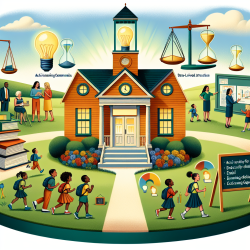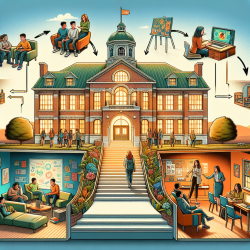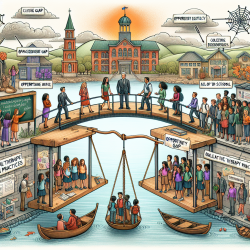
Closing the achievement gap remains one of the most urgent and complex challenges facing public education. But research increasingly suggests a critical shift in how we define the problem: the “achievement gap” is often a visible outcome of a deeper “opportunity gap.” In other words, students don’t arrive at school with equal access to resources, supports, stability, and learning opportunities—and those inequities show up in academic results.
This matters even more as student demographics continue to change. The National Center for Education Statistics (NCES) reported that between 2000 and 2016 the percentage of White students in public schools decreased (from 62% to 52%), while Hispanic students increased (from 15% to 25%), Asians increased (from 3% to 5%), and children of two or more races increased (from 2% to 4%). At the same time, poverty rates remain uneven across groups: in 2014, the share of children under 18 living in poverty was highest for Black children (37%), followed by Hispanic children (32%), with White and Asian children at 12% each.
When opportunity is unequal, the consequences extend well beyond test scores. Students who experience persistent low achievement face higher risks of dropping out, incarceration, poor health outcomes, substance abuse, and lifelong poverty. The stakes are personal, community-wide, and generational.
Why “Opportunity Gap” Is the More Actionable Lens
Educational researcher H. Richard Milner (2012) argues that focusing only on achievement can hide the conditions that shape learning. Opportunity gaps include unequal access to:
- High-quality teachers and stable staffing
- Rigorous and culturally relevant curriculum
- Early learning experiences (Pre-K and beyond)
- Safe, supportive school climates
- Technology and reliable internet access
- Academic interventions and enrichment
- Mental health and social-emotional supports
- Fair discipline practices and restorative approaches
The good news is that opportunity gaps can be addressed through intentional policy, leadership, and school-level practice. Below are research-based levers schools can use—starting now.
1) Policy and Systemic Changes: Equity Has to Be Built Into the System
District and school systems—how funding flows, how teachers are prepared and supported, how accountability is designed—play a defining role in student outcomes. Research summarized by Kamm Solutions (2018) highlights that policies can either create conditions for student success or reinforce inequity.
Key systemic moves include:
- Investing in high-quality teacher preparation and setting high standards for teacher education
- Protecting time for teacher collaboration (curriculum planning, analyzing student work, co-designing interventions)
- Providing meaningful, job-embedded professional development (not one-off sessions)
- Revising teacher evaluation to value inquiry, collaboration, and growth
- Addressing inequitable funding that leads to outdated materials, poor facilities, and limited technology
- Recognizing and addressing institutional racism and gaps in cultural competence
System-level change also matters for English Language Learners (ELL), one of the fastest-growing student populations in the U.S. In 2014, about 4.7 million public school students participated in ELL programs, and Hispanic students made up 78% of that group (about 3.6 million). Policies that allocate resources for ELL instruction, family engagement, and cultural competence training are essential—not optional.
2) Leadership Sets the Narrative: Mindset and Culture Drive Outcomes
School leaders have outsized influence on whether a campus becomes a supportive learning community or a place where some students feel alienated. Research cited by Connie Kamm points to a powerful finding: studies of test scores from half a million students across 72 countries found that students’ mindsets were twice as powerful in predicting scores as home environment and demographics.
That doesn’t mean mindset replaces material supports. It means leaders can shape the daily conditions that help students and staff believe growth is possible—and then back that belief with structures that make success more likely.
Effective leaders help by:
- Building a growth-oriented culture with high expectations and strong support
- Hiring and retaining educators committed to equity and student success
- Allocating resources to close gaps (time, staffing, coaching, interventions)
- Creating accountability measures that monitor progress and adjust strategies
- Establishing a shared instructional framework across classrooms
- Developing strong relationships with families and community partners
3) Collective Teacher Efficacy: When Teachers Believe “We Can,” Students Benefit
Collective Teacher Efficacy (CTE) is the shared belief that educators, working together, can positively impact student outcomes. When teachers believe they can collectively build critical thinking, creativity, and mastery of complex content, they are more likely to try new approaches, persist through challenges, and set rigorous goals.
Leadership directly influences whether CTE can thrive. Principals “control the narrative” of what it means to be a successful learner, what growth looks like, and what impact means. When that narrative is consistent—and reinforced through collaboration time, coaching, and shared goals—teacher efficacy becomes a practical engine for improvement rather than an abstract concept.
4) Discipline Practices: You Can’t Close an Achievement Gap While Students Are Excluded From Learning
Exclusionary discipline, especially out-of-school suspensions, has racially and ethnically disparaging effects and contributes directly to opportunity loss. The Center for Civil Rights Remedies estimated that U.S. public school children lost nearly 18 million days of instruction in a single school year due to exclusionary discipline (based on suspension counts and average days missed).
When students lose instructional time, they lose access to the very opportunities schools are trying to provide. Schools and districts can respond by:
- Tracking discipline data disaggregated by race, ethnicity, gender, and disability status
- Implementing restorative discipline practices district-wide
- Providing professional development on equitable, practical alternatives to exclusion
- Establishing accountability measures to ensure implementation is consistent
- Protecting students’ civil right to access learning
5) High-Quality Teachers: The Most Powerful In-School Factor
High-quality teachers have the greatest direct impact on student achievement. Consistent access to effective teaching can help students overcome significant obstacles, while the effects of ineffective teaching can persist for years.
Research summarized in the Kamm Solutions document emphasizes that students benefit when teachers are:
- Well-prepared and supported to meet academic, social, and emotional needs
- Culturally knowledgeable and skilled in teaching diverse learners
- Collaborative, reflective, and committed to continuous improvement
- Equipped with resources and leadership support to sustain strong instruction
Importantly, representation matters. Minority students often benefit from educators who share cultural experiences and can serve as role models—another reason recruitment and retention strategies should be part of equity planning.
6) Student-Centered Learning and Technology: Rigor Works When It’s Relevant and Supported
Schools that close gaps tend to embrace student-centered practices designed to build analytical, collaborative, and communication skills. Common characteristics include inquiry-based instruction, collaborative learning, student autonomy, performance-based assessments, and curriculum that connects to students’ lives and communities.
These approaches work best when paired with strong support systems, such as:
- Advisory structures and mentoring relationships
- Academic labs and tutoring before/after school
- Differentiated instruction for ELL students and students with special needs
- Built-in time for re-teaching, remediation, and enrichment
Technology can also reduce opportunity gaps—if implemented intentionally. Underserved students may lack devices or internet at home, which limits learning beyond the school day. Effective technology implementation includes:
- Reliable one-to-one student device access
- Sufficient bandwidth and infrastructure
- Instruction that uses technology to learn content, build skills, create products, and demonstrate understanding
7) Whole-Child Supports: Academic Growth Requires Social and Emotional Stability
Closing gaps requires supporting the whole child from Pre-K through college. Students who struggle may need tutoring, mentoring, supplemental instruction, and counseling. Supports should be individualized and culturally sensitive—and designed to help students excel, not merely pass.
This is also where school partnerships can make a measurable difference. Schools can strengthen opportunity by connecting students to services that address barriers to learning, including speech-language therapy, occupational therapy, mental health supports, and social-emotional skill development.
At TinyEYE, we see how access to consistent, school-based online therapy services can help districts expand support capacity, reduce service gaps, and reach students who might otherwise wait months for help. When therapy and student supports are integrated into the school day, they become part of the opportunity structure that makes learning possible.
8) Family and Community Engagement: Partnership Improves Outcomes and Climate
When families are involved, students do better. Yet communication barriers, language differences, and lack of welcome can prevent families—especially families of minority students—from participating fully.
High-impact family engagement practices include:
- Creating welcoming opportunities for parents to volunteer and participate
- Offering translators and sending communications in home languages
- Hosting relaxed community events that build trust and connection
- Providing workshops/newsletters with homework and study supports
- Hosting college and career events with clear guidance on applications and scholarships
- Building cultural competence among staff to strengthen relationships
Engagement is not a single event—it’s an ongoing partnership built on respect, trust, and shared responsibility for student success.
Putting It All Together: A Practical Starting Point for Schools
Schools don’t need to tackle everything at once, but they do need a coherent plan. A strong starting point is to align around a few measurable opportunity-building priorities, such as:
- Audit opportunity gaps using disaggregated data (achievement, discipline, access to advanced courses, attendance, service delivery)
- Invest in teacher collaboration and job-embedded professional learning
- Implement restorative discipline practices and monitor outcomes
- Strengthen student-centered instruction with built-in supports
- Expand whole-child services through staffing models and partnerships (including online therapy services)
- Build a family engagement plan that is multilingual, welcoming, and consistent
When schools focus on opportunity—resources, relationships, instruction, and support—achievement gains become more sustainable and more equitable.
For more information, please follow this link.