
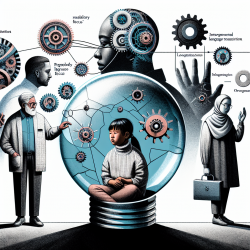
School Culture: The Invisible Handshake That Shapes Everything
School culture is the stuff you feel before you can name it. It’s the tone in the hallway, the way adults talk about kids when kids aren’t in the room, and the collective response to a student who’s struggling: “How do we help?” versus “Here we go again.”
Educational psychologists know this, of course. You’re often the people translating climate into action: turning staff frustration into functional hypotheses, turning “that kid is unmotivated” into “what’s the barrier and what’s the next best support?”
Here’s the good news: culture isn’t just vibes. Culture is a set of observable behaviors. And observable behaviors can be shaped. Which is deeply comforting, because “vibes” are hard to put in an intervention plan.
Why Culture Matters (Even When the Schedule Says It Doesn’t)
In schools, we love what can be scheduled, measured, and color-coded. Culture resists the spreadsheet. Yet it influences nearly every variable we do measure: attendance, engagement, behavior referrals, staff retention, and the fidelity of interventions.
From a data-driven lens, culture functions like a multiplier. A strong MTSS framework in a collaborative culture tends to produce better outcomes than the same framework in a culture where everyone is operating as a separate island with a shared copier.
When culture is healthy, the system does a few powerful things consistently:
It reduces friction in problem-solving (fewer “territory” conversations, more “team” conversations).
It increases follow-through (interventions happen as planned, not as imagined).
It normalizes support (students get help early, not only after they’ve collected a binder of incident reports).
In other words: culture is the difference between a plan and a plan that actually happens.
The Educational Psychologist as Culture Architect (Yes, You)
Educational psychologists are uniquely positioned to influence culture because your work sits at the intersection of data, human behavior, and systems. You’re often the person who can say, kindly and clearly, “We’re seeing a pattern,” and then help the team respond without blame.
But let’s be honest: influencing culture can feel like trying to steer a bus with a sticky note. So let’s make it practical.
Three Culture Levers You Can Pull This Week
1) Make “precision language” the norm.
When teams use vague labels, they get vague interventions. When teams use precise descriptions, they get actionable plans. One simple culture shift is to model language like:
Instead of “He’s noncompliant,” try “He leaves his seat within 2 minutes of independent work and refuses prompts in 4/5 opportunities.”
Instead of “She’s anxious,” try “She avoids oral presentations, reports stomachaches before reading aloud, and requests to visit the nurse during timed tasks.”
Precision language is not about being clinical for fun. It’s about making support doable.
2) Build a default assumption of skill gaps, not willpower gaps.
When staff assume “won’t,” they reach for consequences. When staff assume “can’t yet,” they reach for instruction and scaffolds. This single assumption changes the emotional temperature of meetings. It also changes how students experience school.
3) Protect the team from “initiative fatigue.”
If everything is a priority, nothing is. Culture improves when teams can say: “This is our focus. This is how we’ll measure it. This is when we’ll review it.” If you can help a team narrow the target and define success, you reduce burnout and increase fidelity.
Communication: The Often-Missed Cornerstone of School Culture
School culture isn’t only about behavior expectations and staff morale. It’s also about communication access: whether students can understand, be understood, and participate meaningfully in learning and relationships.
When communication needs are overlooked, students may be mislabeled as “defiant,” “unmotivated,” or “not trying.” Educational psychologists are often the first to notice when a student’s profile doesn’t match the narrative.
Here are a few data patterns that should trigger a communication lens:
Behavior spikes during language-heavy tasks (writing, reading comprehension, word problems).
Frequent “shut down” responses when asked open-ended questions.
Social conflict tied to misunderstandings, sarcasm, or figurative language.
Discrepancy between nonverbal reasoning and academic output.
When culture encourages curiosity, teams ask, “Could this be a language processing issue?” rather than, “Why is this student like this?” That’s a culture win with real downstream effects.
Where Telepractice Fits: Not a Trend, a Tool
Let’s address the elephant in the Zoom room: online services in schools can be incredible, and they can be implemented poorly. The difference is rarely the platform. It’s the system around it.
When implemented thoughtfully, speech therapy telepractice can improve access, reduce service gaps, and support consistency—especially when staffing shortages or geography make in-person services difficult.
From a school culture perspective, telepractice works best when it’s treated like a real service, not a “backup plan.” That means:
Clear roles for on-site facilitators and educators.
Protected time that isn’t repeatedly bumped for assemblies, picture day, or the mysterious recurring event known as “something came up.”
Communication loops so teachers know goals, strategies, and how to generalize skills in class.
When schools do this well, telepractice doesn’t feel like an add-on. It feels like part of the team.
Evaluations: Culture Shows Up in the Referral Question
In many schools, the referral question is a cultural artifact. It reveals what the team values, what they notice, and what they assume.
A strong culture produces referral questions like:
“What barriers are preventing this student from accessing instruction, and what supports are most likely to help?”
“What does the data suggest about skill deficits versus performance factors?”
A stressed culture produces referral questions like:
“Can you test him so we can get him out of class more?”
“Can you evaluate her because she’s failing and we’ve tried nothing except repeated reminders?”
This is where educational psychologists can gently redirect. One of the most powerful culture moves is to help teams refine the question before the testing begins.
When a speech therapy evaluation is part of the picture, the same principle applies: the goal is not to “prove” a problem. The goal is to understand functional communication in the contexts that matter—classroom discourse, peer interaction, curriculum demands—and then match supports accordingly.
Humor Break: The “Culture Audit” You Can Do Without a Survey Tool
If you want a quick read on culture, try this highly scientific method:
Listen to how adults talk about students in the staff room.
Notice what happens when someone says, “I need help.”
Track how often meetings end with a clear plan versus a vague sense of shared concern.
If the dominant tone is “kids these days” plus a sigh that could power a small wind turbine, you’ve got cultural work to do. If the tone is “what’s the function?” plus “who’s doing what by when?” you’re in a healthier place.
What TinyEYE Sees Across Schools (And What Works)
At TinyEYE, we partner with schools to provide online therapy services, and one pattern shows up consistently: outcomes improve when services are integrated into the school’s culture of collaboration.
Schools get the best results when they:
Align service delivery with MTSS and use progress monitoring to guide decisions.
Prioritize carryover by sharing strategies with teachers and support staff.
Use data meetings effectively to adjust intensity, groupings, and goals.
Protect student dignity by normalizing support services as part of learning, not a mark of failure.
None of this requires perfection. It requires consistency and a shared belief that students can grow when adults coordinate.
An Inspired Takeaway: Culture Is a Clinical Intervention
If you’re an educational psychologist, your daily work already shapes culture—through the questions you ask, the language you model, and the way you guide teams back to data and compassion.
Culture isn’t separate from outcomes. Culture is the environment that determines whether evidence-based practices take root.
So if you’re feeling the weight of the year, consider this a permission slip: improving school culture is not “extra.” It is core work. And when culture improves, students don’t just behave better or score better. They belong better. They communicate more. They take more risks. They learn.
And that’s the kind of outcome worth building—one meeting, one hypothesis, one well-supported student at a time.
Learn more about TinyEYE’s online therapy services for schools at https://www.tinyeye.com.