
Wondering If Your Child Needs Speech or Occupational Therapy?
Many families ask the same question: “Is this just a phase, or does my child need extra support?” The good news is that speech-language therapy and occupational therapy (OT) are designed to help children build skills for everyday success at home and at school. Early support can make a big difference, and it doesn’t have to feel overwhelming.
What Speech Therapy Helps With
Speech-language pathologists (SLPs) support more than just pronunciation. They help children communicate clearly, understand language, and use communication skills in real-life situations like the classroom, the playground, and at home.
- Speech sounds: trouble saying certain sounds (like “r,” “s,” or “k”) past the expected age
- Hard-to-understand speech: family or teachers often ask your child to repeat
- Language delays: difficulty learning new words, forming sentences, or answering questions
- Following directions: struggles with multi-step directions (especially in busy environments)
- Stuttering: repeated sounds, stretched sounds, or getting “stuck” on words
- Voice concerns: a very hoarse voice, frequent vocal strain, or unusual pitch
- Social communication: trouble taking turns in conversation, staying on topic, or reading social cues
What Occupational Therapy Helps With
Occupational therapy focuses on the skills children need to participate in daily activities. In schools, OT often supports fine motor skills, sensory processing, self-regulation, and independence with classroom routines.
- Fine motor challenges: difficulty with pencils, scissors, buttons, zippers, or opening containers
- Handwriting struggles: messy writing, slow writing, or fatigue during written work
- Coordination issues: appears “clumsy,” bumps into things, or struggles with playground skills
- Sensory sensitivities: strong reactions to noise, textures, clothing tags, or messy hands
- Seeking sensory input: constant movement, crashing into things, chewing non-food items
- Self-regulation: big emotional reactions, difficulty calming down, trouble with transitions
- Daily routines: challenges with dressing, feeding, or managing personal items at school
Speech Therapy or OT: Which One Is It?
Sometimes it’s clearly one or the other, but many children benefit from support in both areas. For example, a child might have strong ideas but struggle to express them (speech/language), and also find writing those ideas down difficult (OT). If you’re unsure, that’s normal—and it’s exactly why evaluations exist.
What an Evaluation Usually Looks Like
In a school setting, a therapy evaluation typically includes observations, skill checklists, and child-friendly activities. Families and teachers may share input about what they’re noticing day to day. The goal is to understand how your child’s skills affect learning and participation—not to label or judge.
- Strengths are identified along with challenges
- Goals are practical and tied to school success
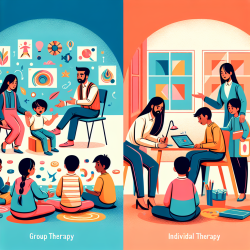
- Support may include direct therapy, small groups, or classroom strategies
How Online Therapy Can Support Schools and Students
At TinyEYE, we provide online therapy services to schools, helping students access speech-language and occupational therapy support when in-person staffing is limited. Online sessions can be engaging, structured, and effective—especially when paired with strong collaboration among therapists, educators, and families.
For more information, please follow this link.