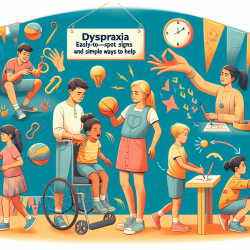
Understanding Dyspraxia in Children (Also Called DCD)
Dyspraxia is a brain-based difference that affects how a child plans and carries out movements. You may also hear it called Developmental Coordination Disorder (DCD). Children with dyspraxia often know what they want to do, but their body has trouble organizing the steps to make it happen smoothly.
This is not about laziness, low intelligence, or “not trying.” In fact, many children with dyspraxia work much harder than their peers to complete everyday tasks. When adults understand the signs early, children can get the right support at school and at home.
Why Dyspraxia Can Be Hard to Spot
Dyspraxia doesn’t look the same in every child. Some children struggle mostly with gross motor skills (big body movements like running or jumping). Others struggle more with fine motor skills (small movements like using scissors or writing). Many children experience a mix, and symptoms can change as school demands change.
Because children develop at different rates, dyspraxia is sometimes mistaken for clumsiness, immaturity, or behavior concerns. A closer look usually shows a consistent pattern: tasks that require planning, sequencing, timing, and coordination are more difficult.
Common Dyspraxia Symptoms in Children
Below are signs families and educators often notice. A child does not need to have every symptom to benefit from support.
Gross Motor Signs (Whole-Body Movement)
- Appears “clumsy” or accident-prone (bumps into desks, trips, falls more often than peers)
- Difficulty learning new physical skills (riding a bike, swimming, skating)
- Trouble with balance and coordination (standing on one foot, hopping, navigating stairs)
- Awkward running style, difficulty changing direction, or slower movement planning
- Struggles in gym class, team sports, or playground games that require quick timing
Fine Motor Signs (Hands and Fingers)
- Messy handwriting, inconsistent letter sizing, or slow writing speed
- Difficulty using scissors, glue, rulers, or other classroom tools
- Trouble with buttons, zippers, tying shoelaces, or opening containers
- Challenges with utensil use (spilling, awkward grip, fatigue during meals)
- Difficulty building with small pieces (blocks, LEGO, puzzles) due to planning and precision demands
Speech, Language, and Oral-Motor Related Signs
Dyspraxia can overlap with speech and language needs for some children. Not every child with dyspraxia has speech concerns, but it can happen.
- Difficulty coordinating mouth movements for clear speech (speech may sound “effortful”)
- Trouble imitating new sounds or words
- Challenges with sequencing longer words or sentences
- May avoid speaking in groups due to fear of being misunderstood
Organization, Planning, and Daily Living Skills
- Trouble following multi-step directions (especially when rushed)
- Difficulty organizing materials (desk, backpack, binder)
- Needs extra time to get ready for transitions (lining up, packing up, changing for gym)
- Struggles with routines that require sequences (morning routine, bedtime routine)
- May seem forgetful, but often it is “task overload” rather than memory
Sensory and Emotional Signs
When movement is hard, school can feel exhausting. Over time, a child may develop stress around tasks that other children do automatically.
- Frustration, tears, or shutdown during writing, dressing, or sports
- Avoidance of tasks that highlight coordination challenges
- Low confidence or negative self-talk (“I’m bad at everything”)
- Sensitivity to noise, touch, or busy environments (not always, but common)
- Fatigue after school due to the effort of keeping up
How Dyspraxia May Show Up at School
In school settings, dyspraxia often becomes more noticeable as academic and independence expectations increase. Here are common classroom “pain points”:
- Writing demands: copying from the board, timed writing, note-taking, and long written assignments
- Classroom participation: cutting, coloring, lab work, art projects, and hands-on activities
- Transitions: packing up, changing for gym, moving between classes
- Play and peer interaction: joining games, catching/throwing, or keeping up with fast-paced group play
Sometimes dyspraxia is misread as inattention or behavior. A child may wiggle, avoid tasks, or act silly to distract from a skill that feels too hard. Looking at the “why” behind the behavior is key.
When to Seek an Evaluation
If coordination challenges are interfering with learning, independence, or social participation, it’s worth exploring an evaluation. Families can start by talking with their child’s teacher, school team, or pediatrician.
Depending on the child’s needs, evaluations may involve professionals such as:
- Occupational therapists (fine motor skills, handwriting, daily living skills, sensory supports)
- Physical therapists (gross motor skills, balance, strength, coordination)
- Speech-language pathologists (speech clarity, motor planning for speech, language organization)
- Psychologists or educational specialists (learning profile, attention, executive functioning)
Dyspraxia can also co-occur with other learning and attention differences. A thorough evaluation helps the team create supports that fit the whole child.
Practical Supports That Help Right Away
Support does not have to wait for a perfect plan. Small changes can reduce stress and help a child show what they know.
In the Classroom
- Reduce copying: provide notes, printed directions, or a photo of the board
- Offer alternative ways to respond: typing, speech-to-text, multiple choice, oral responses
- Break tasks into steps: use short checklists and model each step
- Allow extra time: especially for writing, tests, and transitions
- Teach tools explicitly: pencil grips, slant boards, lined paper, graphic organizers
- Grade fairly: separate content knowledge from handwriting neatness when appropriate
At Home
- Practice skills in short bursts: frequent, low-pressure practice works better than long sessions
- Use visual routines: picture schedules for morning and bedtime steps
- Choose “easy wins”: clothing with simpler fasteners, shoes with Velcro while skills build
- Build confidence: highlight strengths (art ideas, storytelling, kindness, problem-solving)
- Make movement fun: obstacle courses, swimming, dance games, or playground time with supportive adults
How Online Therapy Can Support Students with Dyspraxia
Schools often look for ways to provide consistent services, especially when staffing is tight or students are spread across large areas. Online therapy can be a practical option for many children, particularly when sessions focus on coaching, skill-building, and strategies that carry over into the classroom and home routines.
Through online sessions, therapists can:
- Teach motor planning strategies using clear visuals and step-by-step instruction
- Support handwriting and written expression with structured practice and accommodations
- Coach families and educators on routines, tools, and environmental supports
- Help students build self-advocacy skills (asking for extra time, requesting alternatives)
- Address speech and language needs when dyspraxia overlaps with communication challenges
Most importantly, therapy should feel encouraging and achievable. Children with dyspraxia benefit from adults who notice effort, reduce shame, and celebrate progress that others might overlook.
A Final Encouraging Note
Dyspraxia can make daily tasks harder, but it does not define a child’s potential. With the right supports, children can gain skills, confidence, and independence. When schools and families work as a team, students are more likely to feel successful—academically, socially, and emotionally.
For more information, please follow this link.