Why Special Education Knowledge Matters for Every Educator
Special education is not a separate “place” in a school—it is a set of supports, services, and instructional decisions designed to help students with disabilities access learning and make meaningful progress. Whether you are a general education teacher, school leader, related service provider, or a district decision-maker, understanding the foundations of special education helps you collaborate more effectively, reduce confusion during meetings, and most importantly, create better outcomes for students.
At TinyEYE, we partner with schools to deliver online therapy services that fit into real school schedules and real compliance requirements. That work has taught us something simple: when teams share a common understanding of the special education process, students get support faster, meetings run smoother, and services are delivered with greater consistency.
What Is Special Education?
Special education is instruction that is specially designed to meet the unique needs of a child with a disability. Under the Individuals with Disabilities Education Act (IDEA), eligible students have a legal right to receive special education and related services at no cost to families through public schools.
Special education can be delivered in many settings depending on student need, including the general education classroom, small groups, specialized classrooms, and sometimes in other environments. The goal is not “separation”—the goal is access, progress, and preparation for life beyond school.
Who Is Eligible—and How Eligibility Is Determined
Eligibility for special education is determined through a thorough evaluation process. A student must meet criteria under one of IDEA’s disability categories and meet any additional state criteria. Importantly, a student cannot be found eligible solely because of limited English proficiency or lack of appropriate instruction in reading or math.
Families are essential members of the eligibility team. Once the evaluation is completed and reviewed, the team determines whether the student qualifies and, if so, begins planning supports through an Individualized Education Program (IEP). Schools must provide families the evaluation report and eligibility documentation at no cost.
FAPE: The Civil Right at the Center of Special Education
Free Appropriate Public Education (FAPE) is a civil right rooted in the Fourteenth Amendment and reinforced through IDEA. In practical terms, FAPE means a student with a disability is entitled to special education and related services that are:
- Provided under public supervision and direction, at no cost to families
- Aligned with state educational standards
- Appropriate for preschool, elementary, or secondary education
- Delivered according to an IEP that is developed and implemented properly
FAPE may include instruction and supports such as speech-language services, occupational therapy, physical therapy, transportation, counseling, and other services required for the student to benefit from special education.
IEPs: Turning Needs Into a Plan the Whole Team Can Follow
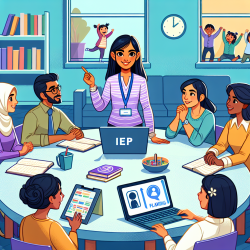
An IEP is the written plan that describes a student’s strengths, needs, goals, services, accommodations, and how progress will be measured. It is collaboratively created and reviewed multiple times throughout the year, with at least an annual review required.
Who Is on the IEP Team?
While teams vary, IDEA requires specific roles to be represented. Common required members include:
- The family/guardian
- At least one general education teacher (when the student participates or may participate in general education)
- At least one special education teacher or service provider
- A public agency representative who can supervise services and allocate resources
- An individual who can interpret evaluation results (may be one of the above)
- The student, when appropriate—especially when transition planning is discussed
Additional participants may include related service providers (such as speech-language pathologists), individuals with special expertise, and representatives from transition agencies when transition services are being planned.
Why Schools Hold IEP Meetings
- To develop, review, or revise the IEP
- To review evaluation results and determine instructional implications
- To respond to changes in academic or behavioral progress
- At the request of families or educators
- To complete the required annual review
Running an Effective IEP Meeting: Tone, Agenda, and Closure
IEP meetings can feel high-stakes for families and educators alike. The most productive meetings are structured, welcoming, and data-informed.
Before the Meeting: Preparation That Prevents Problems
- Schedule the meeting at a mutually agreed time and place and notify required team members
- Send the meeting notice and procedural safeguards to the family
- Collect current performance data, work samples, and service provider input
- Draft the IEP and agenda so the team can focus on decisions, not paperwork
- Prepare a space that is comfortable, private, and free from distractions
During the Meeting: Use a Clear Agenda
Many teams use an agenda that includes introductions, review of current services, family questions, progress on goals, general curriculum progress, evaluation data (if applicable), identification of needs, new goals, accommodations/modifications, and decisions about placement and services.
Just as important as the agenda is the tone. Teams should start with introductions, clarify the purpose, and ensure families understand procedural safeguards and feel comfortable asking questions.
Ending the Meeting: Make the Next Steps Obvious
- Summarize decisions and services offered
- Clarify who is responsible for what (and by when)
- Explain when the finalized IEP will be provided if it is not given immediately
- Thank the family and team members and invite follow-up questions
Related Services and Supplemental Aids: The Supports That Make Access Real
Many students need more than specialized instruction to succeed. Related services can include speech-language pathology, occupational therapy, physical therapy, counseling, audiology, transportation, interpreting services, and more.
Supplemental aids and services help students participate in general education and school activities to the maximum extent appropriate. Examples include:
- Preferential seating or altered room arrangement
- Additional staff support (instructional assistants, behavior specialists)
- Specialized equipment (AAC devices, computers)
- Adjusted pacing (breaks, extended time, home materials)
- Presentation supports (taped lectures, sign language, primary language supports)
- Assignment modifications (shortened tasks, step-by-step directions)
Behavior Support That Teaches, Not Just Reacts: FBA, BIP, and PBIS
When behavior interferes with learning, the most effective response is structured, data-driven, and proactive.
Functional Behavioral Assessment (FBA)
An FBA gathers information to understand the function of a behavior—what triggers it, what maintains it, and what the student gains or avoids. Strong FBAs define behavior in observable terms, collect data across settings, and summarize patterns that guide intervention.
Behavior Intervention Plan (BIP)
A BIP uses FBA insights (or team knowledge when appropriate) to outline strategies that prevent problem behavior, teach replacement skills, and reinforce desired behaviors. Effective BIPs include clear roles, timelines, training needs, and a plan for monitoring data and revising supports.
PBIS: A Tiered Framework for Schoolwide Support
Positive Behavioral Interventions and Supports (PBIS) is a three-tiered framework that improves outcomes through consistent systems and evidence-based practices:
- Tier 1: Universal supports for all students across settings
- Tier 2: Targeted supports for students at risk
- Tier 3: Intensive, individualized supports (often including FBA/BIP)
When implemented with fidelity, PBIS is associated with improved social-emotional outcomes and reduced exclusionary discipline practices.
Inclusion That Works: Co-Teaching, Push-In, Pull-Out, and UDL
Inclusion is most successful when it is intentionally designed. That means aligning instruction, supports, and staffing so students can access grade-level learning while receiving what they need to make progress.
Co-Teaching Models to Know
- Team Teaching
- One Teach, One Support
- Station Teaching
- Parallel Teaching
- Alternative Teaching
Each model can be effective when roles are clear and co-planning time is protected.
Push-In vs. Pull-Out Services
- Push-in services reduce transitions and keep students in the general education environment, but can be harder to individualize without strong planning.
- Pull-out services allow highly tailored instruction with fewer distractions, but can reduce collaboration and may impact student connection to the classroom community if not managed carefully.
Universal Design for Learning (UDL)
UDL is a proactive planning framework that reduces barriers by offering multiple ways for students to engage, access information, and demonstrate learning. It supports many learners at once, but it does not replace specially designed instruction required by an IEP.
Where Online Therapy Fits: Strengthening Capacity Without Adding Chaos
Schools are balancing growing student needs with staffing shortages and scheduling constraints. Online related services—when delivered by qualified providers and aligned with the IEP—can help districts maintain service continuity and reduce missed minutes.
TinyEYE’s online therapy services are designed to support school teams with:
- Consistent access to related service providers (such as speech-language therapy and occupational therapy)
- Service delivery that aligns with IEP goals and documentation needs
- Collaboration with educators and families to support carryover into the classroom
- Flexible scheduling that reduces disruptions to instruction
When schools pair strong special education processes with reliable service delivery, students experience support that feels coordinated instead of fragmented.
Final Takeaway: Special Education Works Best as a Team Sport
Special education is built on collaboration: families, general educators, special educators, administrators, and related service providers working from shared information toward shared goals. When teams understand eligibility, FAPE, IEP meeting practices, behavior supports, and inclusive instruction, they create a school experience where students with disabilities are supported with dignity and high expectations.
For more information, please follow this link.