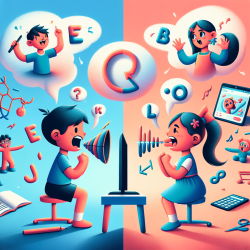
When a child struggles to be understood, adults often hear “speech sound errors” and assume it’s all the same. In reality, different speech challenges have different causes and need different therapy approaches. Two terms that are frequently confused are childhood apraxia of speech (often called apraxia) and articulation disorder. Understanding the difference can help schools and families respond sooner and more effectively.
What is an articulation disorder?
An articulation disorder is a difficulty making specific speech sounds correctly. The child generally knows what they want to say and can coordinate speech movements, but certain sounds are produced inaccurately. These errors are often consistent and follow predictable patterns.
Common signs of an articulation disorder may include:
- Consistent sound substitutions (for example, saying “wabbit” for “rabbit”)
- Distortions (for example, a lisp on “s”)
- Difficulty with a small set of sounds, often developmentally later sounds like “r,” “s,” “th,” or “l”
- Speech that becomes clearer when the child slows down or is reminded of the “right sound”
In many cases, articulation therapy focuses on teaching accurate sound placement and practice in increasingly complex contexts (sound, syllable, word, sentence, conversation).
What is childhood apraxia of speech?
Apraxia is a motor planning disorder. The child knows what they want to say, but the brain has difficulty planning and sequencing the movements needed for clear speech. This is not a muscle weakness issue; it’s about coordination and planning.
Common signs of apraxia may include:
- Inconsistent errors (the same word may sound different each time)
- Difficulty moving smoothly from one sound or syllable to another
- Groping or visible effort when trying to form words
- Vowel errors (vowels are often more affected than in articulation disorders)
- Better performance on shorter, familiar words and more breakdown on longer words or phrases
- Prosody differences (speech may sound “choppy,” monotone, or have unusual stress patterns)
Therapy for apraxia typically requires more frequent, structured practice with carefully chosen word targets, strong visual and tactile cues, and a focus on movement patterns rather than individual sounds alone.
Why the difference matters in schools
Because apraxia and articulation disorders respond to different therapy methods, accurate identification is essential for making progress. In a school setting, speech-language pathologists (SLPs) consider:
- How consistent the errors are across repeated attempts
- Whether vowels and prosody are affected
- How the child performs when words get longer or less familiar
- How intelligibility impacts classroom participation, literacy, and social connection
It’s also important to remember that children can have overlapping needs. Some students may present with both articulation errors and motor planning challenges, or have additional language or phonological processing needs that should be addressed alongside speech production.
How TinyEYE can help
Access to consistent speech therapy can be a challenge for schools, especially when caseloads are high or specialists are hard to recruit. TinyEYE provides online therapy services that help schools support students with a range of speech sound needs, including articulation goals and more complex motor speech profiles. With the right plan, clear data, and collaboration with educators and families, students can build speech skills that support confidence and learning.
For more information, please follow this link.