Florida’s Therapy Landscape: Why This State Feels Different
Florida has a therapy market that doesn’t look like most other states—and families feel that difference every day. A major reason is the “Step Up For Students” scholarship (Unique Abilities), which channels state funds into the private market. In plain terms, it creates more ways for families to pay for services outside of traditional insurance and Medicaid systems.
As someone with a special education background, I’ve seen how funding structures shape access. When money can move more flexibly, services often follow. But when systems are rigid—especially in high-need areas—waitlists grow, staffing becomes unstable, and families are left trying to patch together support on their own.
The Wait Time Crisis: What Families Are Reporting
Across Florida, families commonly describe a two-part delay:
- Evaluations: 6–12 weeks is a typical wait for an initial evaluation.
- Therapy openings: an additional 6+ months for an ongoing therapy slot at standard insurance-based clinics.
For Medicaid recipients, the barriers can be even more severe. Families frequently run into “closed panels,” meaning clinics are not accepting new Medicaid clients. This is often tied to network disruptions and concerns about provider quality and availability. The result is predictable: students who need support now are asked to wait, and that wait can stretch across an entire semester—or longer.
In schools, these delays don’t stay contained in the medical system. They show up as:
- increased classroom frustration and behavior related to communication challenges
- slower progress on IEP goals due to inconsistent service delivery
- greater stress on families trying to coordinate multiple systems
- pressure on school teams to “hold the line” while outside services lag
The “Private Fast Lane”: How Some Families Bypass the Line
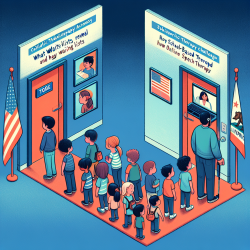
Florida’s scholarship economy has created something many families describe as a “fast lane.” Certain private clinics advertise “No Waitlist” or near-immediate openings for families who can self-pay or use scholarship funds.
Examples cited in Florida include clinics such as Playful Paths (Tampa) and MTA of Jacksonville, which promote quicker access specifically for self-pay and scholarship patients. By accepting the Step Up scholarship, these providers can offer families a way around the bottlenecks that exist in traditional insurance and Medicaid pathways—while still using state funding rather than purely out-of-pocket payment.
Here is the key insight: in Florida, the ability to pay through a scholarship can change the timeline dramatically. It is not simply about “more providers.” It is about which funding stream a provider is able (or willing) to accept.
Wait Time Estimates: A Tale of Two Systems
Based on the information families report, Florida often looks like two separate markets:
- Private (Scholarship/Self-Pay): 0–2 weeks
- Medicaid/Insurance: 6–12 months
That gap matters. In child development and learning, time is not neutral. A six-month delay can mean:
- a student misses the window for early intervention intensity
- skills that could have been addressed proactively become entrenched
- confidence and participation decrease, especially for students with speech-language needs
- teachers and caregivers spend more energy managing barriers than building strengths
“Parent Coaching” as a Bridge: Helpful, but Not the Whole Answer
Florida also reflects a growing trend: parent coaching offered as a product to bridge the gap while families sit on ABA and speech waitlists. Focus Florida is one example mentioned that provides parent coaching in a way that resembles approaches used in other states.
Parent coaching can be valuable when it is:
- practical and specific (not generic advice)
- aligned to the child’s real communication or learning needs
- paired with measurable goals and follow-up
- designed to reduce stress rather than add “one more thing” to a parent’s plate
But coaching is not a replacement for direct therapy when direct therapy is needed. Many students require skilled, ongoing intervention delivered by qualified clinicians—especially when IEP goals are involved or when progress depends on consistent, structured practice.
What Schools Can Do When Community Waitlists Are Out of Control
When families can’t access outside services, schools often become the most stable point of support. Yet school teams face their own staffing shortages, caseload concerns, and scheduling constraints. The question becomes: how do you increase access without lowering quality?
One practical option is to add an online service delivery model that expands capacity while keeping services connected to the school day.
TinyEYE Therapy Services: An Online Option for Schools
TinyEYE Therapy Services provides online therapy services to schools, helping districts and school teams deliver support when in-person staffing is limited or when student needs outpace available providers.
In a state like Florida—where families may experience a 6–12 month wait through Medicaid/insurance systems—school-based online therapy can be a stabilizing solution. It can help reduce service gaps by:
- supporting continuity: services can occur consistently during the school week
- reducing missed time: families do not have to travel to appointments across town
- helping schools respond faster: when staffing is tight, online therapy can expand coverage
- aligning with educational goals: therapy can be coordinated with school teams and student plans
Most importantly, online therapy can help schools avoid the “waiting game” that families face in the community. When students receive timely support, teams can focus on growth rather than crisis management.
Key Takeaways for Florida Families and School Leaders
- Florida’s Step Up For Students (Unique Abilities) scholarship has created a “scholarship economy” that increases access to private services for some families.
- Wait times can look dramatically different depending on funding source: 0–2 weeks for private scholarship/self-pay versus 6–12 months for Medicaid/insurance.
- Parent coaching can be a helpful bridge, but it is not a substitute for direct therapy when direct services are required.
- Schools can play a major role in reducing access gaps by using online options like TinyEYE Therapy Services to support students sooner.
For more information, please follow this link.