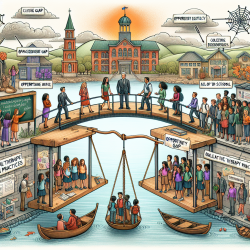
Across the U.S., many districts saw a familiar pattern intensify after extended school closures: more behavioral challenges, more academic regression, and more referrals to special education—especially under categories such as intellectual disability, emotional disability, or “other health impairment” (often ADHD). These patterns were not evenly distributed. African American students, English learners, boys, and economically disadvantaged students were more likely to be identified and removed from general education settings, sometimes into more restrictive placements.
When identification is inaccurate or inflated, the consequences are serious. Students can end up receiving supports that don’t match their actual needs, miss access to grade-level instruction, and experience lowered expectations. That is why Lexington Public Schools (Lexington, Massachusetts) offers a valuable case study: it demonstrates how a district can reduce overidentification while simultaneously improving achievement for historically underserved students and raising performance overall.
For school leaders and service partners—including organizations like TinyEYE that provide online therapy services—Lexington’s work is a reminder that strong systems, clear data practices, and inclusive supports can reduce pressure on special education by ensuring students get the right help at the right time.
Why Overidentification Happens—and Why It Matters
Overidentification rarely comes from a single bad decision. It’s usually the result of a system under strain:
Teachers facing new or intensified behaviors without enough tools, training, or time to respond effectively
Academic skill gaps (especially in literacy) that look like disability when they are actually instructional need
Bias and inconsistent expectations that shape referrals and placement decisions
Limited Tier 1 and Tier 2 supports, making special education feel like the only pathway to services
The Maryland State Department of Education briefing (April 25, 2023) highlights a key risk: disability codes such as intellectual and emotional disability are often associated with removal to more segregated settings. When students are misidentified, the curriculum and supports they receive can be misaligned—creating long-term harm rather than help.
Lexington’s Starting Point: A High-Performing District with Hidden Gaps
Lexington is an affluent Boston-area suburb with strong overall outcomes (for example, a 96.9% graduation rate in 2021). Yet the district faced major internal challenges when Superintendent Paul Ash began in 2005, including dysfunction across central administration, staffing issues, and an “out of control” approach to special education supports.
The most urgent equity issue surfaced clearly in 2007: 49% of African American/Black high school students were in special education. District leaders also heard directly from the METCO Director that many METCO students likely did not have disabilities. METCO is a long-standing program that brings students from Boston to attend school in suburban districts, and in Lexington it included many students of color.
Lexington’s challenge was not simply “close the gap.” It was to confront a deeper systems question: Were students being routed into special education because the general education system wasn’t built to meet their needs?
The Core Strategy: Build Capacity in General Education (Tier 1–3)
Lexington’s approach is best understood as a “raise all boats” strategy grounded in strong tiered supports. Rather than treating special education as the primary solution for struggling learners, the district invested in:
Stronger Tier 1 instruction (core teaching, curriculum alignment, consistent expectations)
Tier 2 interventions (targeted supports, intervention blocks, tutoring, extended learning time)
Tier 3 supports (intensive interventions, careful decision-making before special education referral)
This is important for today’s context: when schools have robust MTSS/RTI systems, special education becomes what it should be—specialized services for students with disabilities—rather than a workaround for gaps in instruction or support.
Key Moves That Drove Change
1) Start with data—and make it discussable
Lexington examined initial IEPs for METCO students to understand when and why placements happened. The district also commissioned a comprehensive report (the LaMura Report) that included both quantitative and qualitative findings.
Critically, the district didn’t keep the findings in a binder. Leaders held meetings in every school to discuss results, building shared urgency without creating panic.
2) Create a long-term cross-stakeholder task force
In 2008, Lexington established a K–12 Achievement Gap Task Force (AGTF) with teachers, administrators, and parents. It met monthly for years and produced a detailed four-year action plan with measurable goals.
This matters because reducing overidentification is not a quick fix. It requires sustained attention, shared ownership, and ongoing communication with staff and the community.
3) Redesign professional learning to change classroom practice
Lexington hired a K–12 Director of Professional Learning and rebuilt professional learning around student outcomes. Instead of one-off workshops, the district emphasized:
Multi-day learning with practice and feedback
Teacher collaboration time built into schedules
Coherent, consistent, systemic, sustained learning
The district also leaned into research on impact. For example, Lexington highlighted John Hattie’s findings on collective teacher efficacy (often cited with a very large effect size), reinforcing the idea that what teachers do together can dramatically shift student outcomes.
4) Normalize collaboration and feedback “in all directions”
Lexington emphasized collaboration among teachers, principals, specialists, parents, and even across schools. This is more than culture—it’s infrastructure. When collaboration is routine, schools are less likely to default to special education referrals because they have more tools to problem-solve early.
5) Strengthen intervention structures and instructional time
Lexington implemented practical Tier 1–3 initiatives such as:
Expanded K–5 literacy and math instructional time
Intervention blocks (K–12)
Common planning time (K–12)
Literacy and math coaches
These moves are especially relevant to related services. When core instruction improves and intervention time is protected, therapy services (speech-language, OT, mental health supports) can be integrated more effectively—supporting access and participation rather than compensating for missing instructional systems.
What Changed in Outcomes?
Lexington saw measurable changes in both special education identification patterns and achievement outcomes.
Special education identification declined (then later rose again)
For Grade 10 students in special education, Lexington reported the following percentage in special education from 2007–2015:
2007: 17.0%
2015: 11.2% (three-year average 2013–2015: 12.1%)
This decline suggests that strengthening Tier 1–3 supports and improving decision-making can reduce the number of students placed in special education—without lowering achievement expectations.
Notably, later years show increases again (for example, 14.7% in 2022). That’s an important reminder: systems require continuous monitoring. Shifts in student needs, staffing, or post-pandemic pressures can change identification patterns quickly.
African American student achievement rose sharply
Lexington’s results included substantial gains for African American/Black students. One striking indicator shared in the briefing: African American SAT scores increased by 294 points (2006–2014), compared to +55 for all students (based on a 2,400-point scale).
In 2015, a team of Harvard researchers concluded: “We find that Lexington has raised achievement among African American students as well as in the district overall.”
What This Means for Schools—and for Online Therapy Partners Like TinyEYE
Lexington’s story is not “special education is the problem.” It’s that systems determine pathways. When general education is not equipped to respond to academic and behavioral needs, special education becomes a catch-all. When Tier 1–3 supports are strong, referrals become more accurate and services become more targeted.
For districts partnering with TinyEYE, there are practical takeaways:
Related services work best inside strong MTSS systems: teletherapy can support intervention blocks, progress monitoring, and coaching models when aligned to school goals.
Data routines reduce bias: structured collaboration and consistent measures help teams separate “needs support” from “needs special education.”
Capacity-building protects equity: investing in teacher learning and shared practices reduces overreliance on restrictive placements.
Communication matters: Lexington’s sustained engagement with staff and families helped build buy-in for change that can otherwise trigger resistance.
Closing Thought: Equity and Excellence Are Reinforcing, Not Competing
Lexington’s case study challenges a persistent myth: that focusing on equity means lowering standards. Their work suggests the opposite. When districts strengthen instruction, build collaborative cultures, and create reliable intervention pathways, they can reduce inappropriate special education identification and improve outcomes for all learners.
For more information, please follow this link.