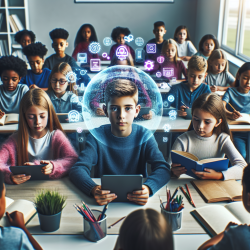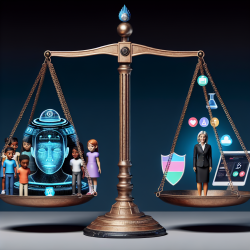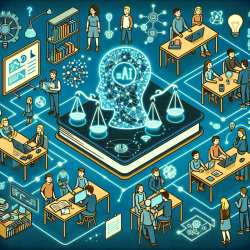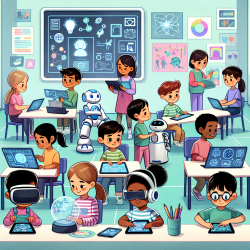
The rise of artificial intelligence (AI) has transformed numerous sectors, and education is no exception. As educators, it is crucial to introduce students to AI and digital literacy early in their academic journey. This approach not only prepares them for future technological advancements but also fosters critical thinking and ethical considerations. The Ministry of Education and Child Care has taken a proactive step in this direction by developing a comprehensive teaching and learning story for students in grades 3 to 5.
The Learning Experience
The curriculum designed for grades 3 to 5 under the Applied Design, Skills, and Technology (ADST) framework focuses on exploring simple tools and technologies. It encourages students to choose appropriate technologies for specific tasks and demonstrates a willingness to learn new technologies. The learning standards are integrated with other areas of education, such as Career Education, which emphasizes roles and responsibilities at home, school, and the community.
Core Competencies
- Thinking: Critical and Reflective Thinking is emphasized throughout the curriculum.
First Peoples Principles of Learning
- Learning is holistic, reflexive, reflective, experiential, and relational.
- Learning involves recognizing the consequences of one's actions.
- Certain knowledge is sacred and shared only with permission or in specific situations.
The Teaching Approach
The lesson on AI was introduced by asking students what they already knew about the subject. This was followed by a slide deck presentation that covered various aspects of AI, including its applications, ethical considerations, biases, and the policies regarding its use in schools. A brief video provided an overview of AI to supplement the slide deck.
A formative assessment was conducted by listening to student responses about ethical and non-ethical uses of AI. Students were encouraged to identify situations where AI could help or harm society. Visual examples demonstrated bias in AI systems and how simple mistakes could arise from basic commands.
The Unplugged Game: A Hands-On Learning Experience
An unplugged game was introduced where one student played the role of a human while another acted as an AI. The game illustrated basic machine learning concepts by requiring the "AI" student to follow a set of rules while learning from mistakes. Students kept score and reflected on their results, gaining insights into how AI systems evolve over time.
The Impact on Students
This hands-on approach proved highly effective. Students were engaged and supportive of each other throughout the game. Those who were typically less participative became more involved and articulate about their learning experiences. They could identify responsible versus irresponsible uses of AI, providing relevant examples that related to real-life scenarios.
A Closer Look: Student Reflections
Student A:
This student acted as the AI during the game. They communicated with their partner about how the rules sometimes put them at a disadvantage but understood that mistakes were part of improving AI algorithms. They recognized that initial code might not be ideal but believed that better decisions could be made over time. Their reflections showed an understanding of responsible technology usage.
Student B:
This student played the human role in the game. They assisted their partner with finding algorithms for decision-making. Student B understood that humans had an initial advantage because AI needed time to learn from information. Their reflections demonstrated a thoughtful understanding of how AI works and its potential applications.
The Teacher's Perspective
The lesson successfully ensured that students grasped both what AI is and the digital literacy considerations they will encounter in life. The unplugged game was particularly successful due to high engagement levels among students who supported one another during gameplay.
The use of real-life examples helped convey complex ideas about AI's ethical implications effectively. Students were able to articulate both responsible and irresponsible uses of AI through thoughtful discussion and reflection.
If you are interested in exploring more about this educational initiative, please follow this link.