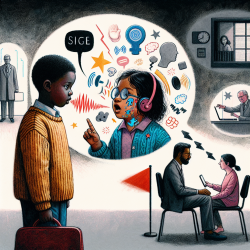
Many families hear a few “bumpy” moments in their child’s speech and immediately wonder: Is this normal, or is it something more? Stuttering can be confusing because it often changes day to day—better one week, worse the next. The good news is that many children go through a period of typical developmental disfluency and grow out of it. The more important news is that some children benefit from early support, and knowing what to watch for can make the next steps much clearer.
At TinyEYE, we work with schools to provide online speech-language therapy services, and we often hear the same questions from educators and caregivers: What counts as stuttering? What’s typical? When should we refer? This guide breaks down the difference between common disfluencies and stuttering “red flags,” plus what you can do right now.
First, What Is Stuttering?
Stuttering (also called a fluency disorder) is more than occasional word-finding trouble or excitement-related “rush” speech. It usually includes specific types of speech disruptions that can make it hard to get words out smoothly.
Common stuttering behaviors include:
- Repetitions (sounds, syllables, or words): “b-b-b-ball,” “ba-ba-baby,” “I-I-I want…”
- Prolongations (stretching a sound): “sssssometimes”
- Blocks (getting “stuck” with no sound coming out): mouth positioned to speak, but nothing comes out for a moment
Some children also show physical or behavioral signs, such as blinking, facial tension, looking away, tapping, or changing words to avoid stuttering.
What’s “Normal” Disfluency in Young Children?
Many preschool and early elementary children go through a phase where their language skills are growing faster than their ability to plan and coordinate speech. During these times, you might hear:
- Whole-word or phrase repetitions: “I want, I want, I want that.”
- Fillers: “um,” “uh,” “like”
- Revisions: “I want—can I have the red one?”
- Occasional pauses while thinking
These patterns can be typical, especially between ages 2 and 5, and often come and go. The key is not just that disfluency happens, but how it happens, how often, and whether it’s causing stress or avoidance.
When Should I Worry About Stuttering? Key Red Flags
If you’re unsure whether to seek help, consider the following indicators. One red flag alone doesn’t automatically mean a child will have persistent stuttering—but multiple red flags together are a strong reason to consult a speech-language pathologist (SLP).
1) The Stuttering Has Lasted More Than 6–12 Months
Typical developmental disfluency often resolves on its own. If stuttering-like behaviors persist beyond several months—especially if they’re consistent—an evaluation is a smart next step.
2) The Disfluencies Sound Like Stuttering (Not Just “Thinking”)
Be more concerned when you hear:
- Sound or syllable repetitions (“b-b-b-” or “ba-ba-”)
- Prolongations (“ssssss”)
- Blocks (silent “stuck” moments)
These are more characteristic of true stuttering than typical language-planning pauses.
3) There’s Visible Tension or Struggle
If a child looks like they’re working hard to get words out—tight lips, jaw tension, facial grimacing, or pushing through speech—this is an important sign to take seriously.
4) The Child Is Becoming Aware, Frustrated, or Avoidant
Emotional impact matters. Watch for:
- “I can’t say it” or “I’m stuck” comments
- Frustration, embarrassment, or shutting down during speaking
- Avoiding certain words, sounds, or speaking situations
- Letting others talk for them
Even mild stuttering can grow into a bigger challenge if a child begins to fear talking or withdraw socially.
5) Stuttering Is Increasing in Frequency or Severity
Some variability is normal, but a steady increase—more moments per day, longer blocks, more struggle—suggests the child may need support.
6) Family History of Stuttering
Stuttering can run in families. A family history doesn’t guarantee persistence, but it does raise the likelihood that stuttering may continue without intervention.
7) The Child Is Older Than 5 and Still Stuttering
Stuttering that continues past the preschool years is more likely to persist. Early elementary is still an excellent time for intervention, and support can be highly effective.
8) Co-Occurring Speech or Language Challenges
If a child also has speech sound difficulties, language delays, or other communication needs, it can add complexity to fluency development. An SLP can help determine what’s happening and create a plan that supports the whole communication system.
Why Early Support Matters (Even If You’re Not Sure Yet)
Families sometimes hesitate to seek help because they don’t want to “make it worse” by drawing attention to it. A quality fluency approach does not focus on telling a child to “slow down” or “take a breath” every time they stutter. Instead, therapy supports:
- Comfort and confidence in communication
- Healthy speaking patterns and reduced tension
- Strategies that fit the child’s age and needs
- Caregiver and teacher coaching to create a supportive environment
Early support can also prevent secondary issues like avoidance, anxiety about speaking, or negative self-talk.
What You Can Do Right Now: Practical, Supportive Steps
Whether you’re a caregiver or an educator, these approaches help reduce pressure and support smoother communication.
Create a Calm Communication Environment
- Give the child time to finish—avoid finishing sentences for them.
- Maintain natural eye contact and show you’re listening to the message, not the stutter.
- Use a slightly slower pace yourself (without telling the child to slow down).
- Build in “talk time” with fewer interruptions and less rushing.
Respond to What They Say, Not How They Say It
- Try: “That sounds exciting—tell me more.”
- Avoid frequent reminders like: “Slow down,” “Relax,” or “Start over.”
Notice Patterns Without Over-Spotlighting
It can help to track what you observe for a couple of weeks:
- When is it better (one-on-one, relaxed routines)?
- When is it harder (tired, excited, speaking in front of groups)?
- Are there signs of struggle or frustration?
This information is very useful for an SLP evaluation.
When to Seek an Evaluation at School
If you’re a teacher or school team member, a referral to the school SLP is appropriate when:
- Stuttering impacts classroom participation (answering questions, reading aloud, presentations).
- The student avoids speaking or appears distressed.
- Peers react negatively or the student is at risk socially.
- Stuttering persists over time or worsens.
School-based support can focus on functional communication—helping the student participate confidently in academic and social settings. With online therapy services, students can access consistent support even when staffing is tight.
What Does Stuttering Therapy Look Like?
Stuttering therapy is not one-size-fits-all. An SLP may work on:
- Education: helping the student understand stuttering in a healthy, shame-free way
- Fluency shaping strategies: techniques that support smoother speech (often taught gently and gradually)
- Stuttering modification strategies: reducing tension and increasing control during stuttering moments
- Confidence and self-advocacy: practicing how to participate in class and handle communication challenges
- Caregiver/teacher coaching: aligning adult responses so the child feels supported everywhere
Most importantly, therapy aims to support effective communication—not “perfect speech.” Many people who stutter communicate powerfully and successfully. The goal is to reduce struggle, increase confidence, and ensure the student’s voice is heard.
A Final Note for Caregivers and Educators
If you’re wondering whether to worry about stuttering, that question alone is worth honoring. You don’t need to wait until a child is deeply frustrated or avoiding speaking. A conversation with an SLP can provide clarity, reassurance, and a plan—whether that plan is active therapy or simple monitoring with supportive strategies.
For more information, please follow this link.