Fine Motor Skills for 4-Year-Olds: What Matters Most (and How to Build Them Through Play)
At age four, children are busy becoming more independent—zipping jackets, opening snack containers, drawing people with “real” details, and trying to write letters they see around them. Behind all of those milestones is one big area of development: fine motor skills.
Fine motor skills are the small movements of the hands and fingers that allow children to grasp, pinch, manipulate, and coordinate objects with control. For preschoolers, strong fine motor skills don’t just support “school readiness.” They support confidence. When a child can manage buttons, hold a crayon comfortably, or build with small pieces, they’re more likely to participate, persist, and feel capable.
What Fine Motor Skills Often Look Like at Age 4
Every child develops at their own pace, but many four-year-olds are working toward (or already showing) these skills:
- Using a more mature grasp on crayons/markers (often moving away from a full-fist grasp)
- Copying simple shapes (like a circle) and attempting crosses or basic letter-like forms
- Cutting with child-safe scissors along a line with improving accuracy
- Building with smaller blocks or interlocking toys
- Using both hands together (one hand stabilizes while the other works), such as holding paper while coloring
- Beginning to manage clothing fasteners (zippers, larger buttons) with support
- Stringing beads or placing small items with a pincer grasp (thumb and index finger)
These skills are foundational for later tasks like handwriting, classroom tool use, and independent self-care.
Why Fine Motor Skills Can Be Tricky at Four
Fine motor development depends on more than just the fingers. It also relies on:
- Hand strength and endurance (so hands don’t tire quickly)
- Shoulder and core stability (so the hand can move with control)
- Bilateral coordination (both hands working together)
- Visual-motor integration (eyes and hands teaming up accurately)
That’s why a child might be bright and eager, but still struggle with tasks like cutting, coloring within a space, or using utensils neatly. It’s not about effort—it’s about readiness and practice.
Signs a 4-Year-Old May Need Extra Support
It can be helpful to pay attention to patterns. Consider extra support if a child frequently:
- Avoids coloring, drawing, puzzles, or crafts
- Uses very tight pressure (breaks crayons) or very light pressure (marks are faint)
- Has difficulty using scissors even with help and practice
- Struggles to manipulate small objects (beads, small blocks, snack packaging)
- Gets frustrated quickly with hand-based tasks
- Has trouble coordinating two hands (one hand doesn’t “help”)
If these challenges are affecting participation at home or school, an occupational therapy perspective can be very useful.
Play-Based Fine Motor Activities That Actually Work
You don’t need worksheets to build fine motor skills. In fact, play is often the best “therapy” because it’s motivating and naturally repetitive. Try these short, simple activities:
1) Build Hand Strength
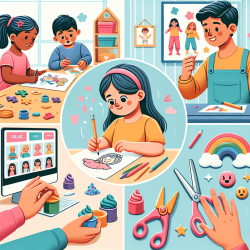
- Playdough “work”: roll snakes, pinch tiny balls, hide and find beads in dough
- Use spray bottles to “clean” windows or water plants
- Clothespin games: clip onto a box edge or pick up pom-poms
2) Practice Pincer Grasp and Control
- Pick up small items with tweezers or tongs (cotton balls, pom-poms)
- Sticker play: peel and place stickers on drawn targets
- Coin drop: push coins through a slot in a container lid
3) Support Scissor Skills (Without the Stress)
- Start with snipping playdough “worms” or fringe on thick paper
- Cut along short, bold lines before moving to curves or shapes
- Use “helper hand” cues: one hand holds the paper, the other cuts
4) Make Pre-Writing Fun
- Draw roads and have toy cars “drive” along lines
- Trace big shapes with fingers in sand, shaving cream, or flour
- Use short crayons or broken crayons to encourage a more efficient grasp
How Schools Can Help (Even When Specialists Are Hard to Find)
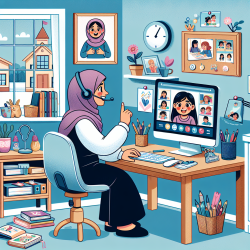
Many schools are working hard to meet growing student needs with limited staffing. That’s where online therapy services can make a real difference. At TinyEYE, we support schools by providing access to qualified clinicians through secure online platforms—helping students build the foundational skills they need to participate confidently in classroom routines.
Whether a child needs support with hand strength, coordination, or the building blocks for handwriting, early intervention can reduce frustration and boost independence.
For more information, please follow this link.