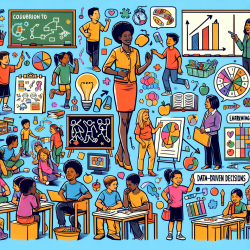

Motivation is not a “nice-to-have” in education—it is a prerequisite for learning. Ronald L. Girmus, Ph.D. argues that “a learning event does not occur without a preceding motivational event,” a claim supported by both psychological research and neuroscience. In other words, before students invest effort in reading, problem-solving, or communication, their brains make a rapid judgment: “Is this worth my attention?”
For schools navigating academic recovery, attendance challenges, and increasing student needs, motivation is also a systems issue. It is influenced by classroom practices, student beliefs, emotional safety, and the degree to which students feel capable and connected. For service partners like TinyEYE—supporting schools through online therapy—motivation matters because engagement is the gateway to progress, whether the goal is language development, social communication, self-advocacy, or academic participation.
Why motivation and learning are inseparable
Girmus highlights an important neurophysiological insight: motivational processing occurs slightly ahead of cognitive processing. Functional brain imaging studies suggest the brain evaluates value and relevance before it fully engages in learning and problem-solving. This helps explain why stress and anxiety can “shut down” learning—emotional and motivational centers in the lower brain influence higher-order thinking in the cerebral cortex.
From a classroom perspective, this means motivation is not simply a student trait. It is shaped by the learning environment and can be taught, strengthened, and supported. Teachers can build conditions that reduce threat, increase perceived value, and promote persistence.
Core frameworks that help educators understand motivation
Maslow’s hierarchy of needs (still relevant)
One of the earliest motivation models remains useful in schools: students are motivated to meet basic needs first. If a student is hungry, unsafe, or socially excluded, it is unrealistic to expect consistent engagement with higher-level learning goals. This framework is also a reminder that belonging and esteem are not “extras”—they are motivational drivers.
Intrinsic and extrinsic motivation (both matter)
Intrinsic motivation refers to an internal drive—interest, enjoyment, or personal meaning. Extrinsic motivation refers to external incentives—recognition, privileges, grades, or tangible rewards. While educators have debated which is “better,” Girmus notes a more practical consensus: both influence engagement, and they interact. In many classrooms, extrinsic supports are most helpful when initial interest is low—especially when rewards are clearly tied to learning goals and delivered in ways that reinforce competence.
Interest as the bridge: individual vs. situational
Interest and motivation are closely related. Individual interest is stable and long-lasting; situational interest is triggered by environmental conditions (novelty, movement, games, discussion, hands-on experiences). The instructional opportunity is powerful: teachers can use situational interest to spark attention, then build toward individual interest over time.
Four contemporary theories schools see in action
Girmus points to four widely used theories in educational psychology:
Self-efficacy theory: students’ belief that they can succeed influences effort and persistence.
Attribution theory: how students explain success/failure (effort, ability, luck, task difficulty) shapes future motivation.
Self-worth theory: students protect self-esteem; some avoid effort to avoid “proving” inability.
Achievement goal theory: mastery goals (learning-focused) vs. performance goals (appearance-focused) create different behavior patterns.
These theories converge on a critical point: emotions and beliefs drive behavior patterns. In classrooms, “unmotivated” behavior may show up as failure avoidance, learned helplessness, work avoidance, or passive aggression. Interventions are more effective when they address the underlying belief/emotion—not only the visible behavior.
What motivating classrooms do differently
Research comparing motivating versus non-motivating classrooms finds a consistent trend: motivating classrooms are “flooded” with supportive practices. Teachers in these environments tend to:
Create a positive, compassionate tone with a clear emphasis on learning
Plan lessons that are meaningful, interesting, and structured for success
Project high expectations while providing scaffolding and feedback
Teach procedures explicitly so students know how to succeed
Build self-regulation by helping students take ownership of routines and tasks
Model learning behaviors, interpersonal skills, and persistence
This aligns with what many schools observe: when classroom systems are predictable and supportive, students spend less energy on uncertainty and more on learning.
Nine practical motivation strategies educators can use (with classroom-ready examples)
Girmus summarizes nine broad instructional strategies. Below are classroom-friendly interpretations, with examples drawn from the workshop content.
1) Social interaction and cooperative learning
Structured peer interaction can increase engagement and deepen understanding—especially when students explain concepts in their own words.
Peer support: students who work quickly and accurately help a struggling peer by re-teaching in “student lingo.”
Find Your Match: students match vocabulary to definitions or equivalent forms (fractions/decimals/percent) using cards.
Facilitated debate: instead of correcting immediately, guide students through discussion that builds ownership.
2) Extrinsic rewards (used strategically)
Extrinsic rewards work best when they reinforce learning behaviors, are time-sensitive, and connect clearly to goals. Verbal praise is also a powerful extrinsic motivator.
Class jobs as rewards: leadership roles (line leader, materials manager, messenger) tied to on-task behavior.
Ticket systems: reward specific behaviors (homework completion, thoughtful discussion), then draw for privileges.
Focus on improvement: announce personal progress (e.g., mile run time improvements) rather than only top performance.
3) Situational interest
Novelty, movement, games, and hands-on experiences can “hook” attention long enough to create momentum.
Beach ball review: toss a question ball; students answer based on where their thumb lands.
Math Bingo: students solve problems to cover answers they placed on their own bingo boards.
Readers Theater: students perform a text without memorization, focusing on expressive reading.
4) Student autonomy and choice
Choice increases ownership. Even small choices (topic selection, product format, partner choice) can improve effort and quality.
Choice menus: students select from multiple project options aligned to the same learning target.
“Question mark” option: students propose their own writing topic if it fits the assignment.
Student-as-teacher: students find a science topic in a magazine and teach it through a mini-lesson or demonstration.
5) Competition (carefully designed)
Competition can energize learning when it is structured, time-bound, and psychologically safe. Many teachers reduce risk by using teams and emphasizing participation.
Team whiteboard challenges: groups solve problems under time limits and explain strategies afterward.
Review games: “Science Baseball” or similar formats that keep students actively retrieving information.
6) Goal setting
Goals convert effort into a plan. They also help students see progress—one of the strongest motivators for persistence.
PDSA cycle (Plan-Do-Study-Act): set a class goal, take action, evaluate results, and adjust.
Weekly grade checks: students set weekly improvement goals tied to concrete actions (retakes, missing work).
Daily self-monitoring logs: simple routines that reinforce accountability and self-regulation.
7) Real-world connections
When students see authentic purpose, motivation rises. Real-world tasks also support generalization—skills used beyond the classroom.
Write for real audiences: publish, submit to contests, write for younger students, or create persuasive letters.
Personal finance math: compound interest and budgeting scenarios tied to student goals.
Project-based planning: plan a road trip with a budget to integrate geography, economics, and collaboration.
8) Relevancy and meaning-making
Relevancy is not automatic; it is often taught. Explaining “why this matters” improves attention and effort.
Modernize literature: rewrite classic texts to reflect contemporary contexts while preserving themes.
Interest inventories: use student interests to build rapport and tailor examples.
Pre-reading discussions: connect themes to students’ experiences to increase comprehension and engagement.
9) Teacher motivation and modeling
Teacher motivation is not separate from student motivation. Girmus notes that unmotivated teachers can undermine student motivation, and that stress, self-efficacy, and emotion influence teacher motivational states. Supporting educators—through collaboration, manageable systems, and access to specialized services—can indirectly improve student engagement.
Where online therapy fits into a motivation-focused school strategy
Motivation is deeply connected to communication, confidence, and emotional safety—areas often supported through school-based therapy. When schools partner with TinyEYE for online therapy services, they can expand access to consistent support that helps students participate more fully in learning. For example, therapy goals that strengthen self-advocacy, comprehension strategies, or social communication can reduce frustration and increase a student’s belief that effort leads to success.
Importantly, many of the strategies above translate well to virtual or hybrid supports: structured choice, goal tracking, situational interest through interactive activities, and frequent feedback are all compatible with online service delivery.
For more information, please follow this link.