
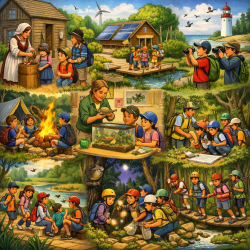
Elementary educators are under constant pressure to deliver curriculum outcomes while keeping students engaged, active, and curious. That’s why hands-on learning outside the classroom continues to be one of the most reliable ways to boost participation, deepen understanding, and build lasting connections to concepts like ecology, sustainability, history, and community.
With more than 60 years of experience in environmental conservation and education, the Toronto and Region Conservation Authority (TRCA) has built a reputation across the GTA for curriculum-linked programming in authentic, local environments. Their vision—“The Living City,” where human settlement can flourish as part of nature’s beauty and diversity—shows up in the way their programs combine real-world learning with a stronger sense of place.
For schools, the appeal is simple: TRCA offers a “one-stop-shop” of outdoor, environmental, geography, science, arts, and cultural heritage programs—delivered by Ontario Certified Teachers (OCT) and environmental education professionals.
What Makes TRCA Programs a Strong Fit for Elementary Schools
TRCA’s guide is designed to make planning easier, not harder. Programs are clearly connected to grades and subject areas, and many options are available as half-day, full-day, in-class, or overnight experiences.
- Curriculum-linked learning: Programs align with Ontario curriculum areas such as Science and Technology, Social Studies (K–6), Geography, History, The Arts, and more.
- Authentic environments: Students learn in forests, wetlands, meadows, heritage buildings, and urban wilderness spaces—not just through worksheets.
- Qualified staff and safety practices: TRCA staff are trained in Standard First Aid and CPR, follow Ontario Physical Education Safety Guidelines (OPHEA), and TRCA holds a provisional Ontario Camps Association (OCA) certification membership.
- Flexible delivery: Choose from day programs at major sites, in-class visits at your school, and immersive overnight trips.
Day Trips: Three Standout TRCA Destinations (and What Students Actually Do There)
1) Black Creek Pioneer Village: Where History Becomes Something Students Can Touch
If you’re looking for a field trip that makes social studies and history feel immediate, Black Creek Pioneer Village offers interactive experiences in a living example of an 1800s Ontario crossroads community.
- Sensory Adventures (Pre-school to Grade 1): Students explore the Village using all five senses—meeting farm animals, smelling baking bread and herbs, and carding wool.
- Yesterday’s Child (Grades 1–3): Learners compare life “then and now” through clothing, chores, toys, and games while exploring different perspectives from the 19th century.
- Back to School (Grades 2–8): A full-day experience in an 1860s schoolhouse—slates, spelling bees, 19th-century games, and the 3Rs—plus heritage building exploration.
- Many Hands (Grades 2–6): Students cook on a wood stove, churn butter, card wool, weave on a barn loom, and explore tools and woodworking.
- Farm Life (Grades 2–8): Hands-on farming tasks like grinding grain, threshing, winnowing, planting seeds, and ending with bread and butter from the bake oven.
Learn more at www.blackcreek.ca.
2) Kortright Centre for Conservation: Sustainability and Stewardship, Made Real
Kortright immerses students in a natural setting where sustainable living and environmental responsibility become practical and memorable.
- Maple Syrup (Pre-school to Grade 8): A spring favorite—identify maple trees, see tapping methods, and taste the final product (March to early April).
- Insects (Kindergarten to Grade 6): Students collect organisms with bug-catchers across different habitats and learn classification and life cycles.
- Habitats and Communities (Grade 4): Learners explore forests, streams, wetlands, and meadows while identifying producers, consumers, and decomposers—and discussing human impacts.
- Conservation of Energy and Resources (Grade 5): Renewable energy demonstrations and hands-on challenges using solar panels, wind turbines, bikes, and hand pumps.
- Water Systems (Grades 7–8): Aquatic invertebrate dipping, water quality testing, and a look at water conservation measures (April to November).
Learn more at www.kortright.org/education.
3) Tommy Thompson Park: Urban Wilderness Minutes from Downtown
Tommy Thompson Park is a powerful reminder that “nature education” doesn’t require a long bus ride. Students explore wildflower meadows, cottonwood forests, and coastal marshes while learning about wildlife in cities and the phenomenon of bird migration.
- Animal Detectives (Grades 2–3): Students search trails for animal clues (mid-April to October).
- Wetlands: Soak It Up (Grades 2–8): A first-hand wetlands experience tied to habitat restoration and the idea of wetlands as nature’s filter (May to October).
- City Life, Wildlife (Grades 4–6): Habitat investigation, invasive species, and reflection on human impacts in natural spaces.
- Pollination Investigation (Grades 4–6): A close look at insect pollinators and their habitats (mid-May to October).
- Winged Migration (Grades 4–7): Observation and data collection focused on migratory species (a.m. only, mid-April to October).
Learn more at www.tommythompsonpark.ca/education.
Can’t Leave the School? TRCA Can Bring the Program to You
Transportation costs, accessibility needs, or scheduling constraints can make off-site trips difficult. TRCA’s in-class visits solve that by bringing instructors and materials directly to your school through programs like Watershed on Wheels and Beyond the Park.
- Kinder Season (Kindergarten): Outdoor play-based learning that connects students to their natural surroundings (year-round).
- Leaf Links (Grade 3): Tree identification and the role trees play, using the trees on your school ground or in your community (year-round).
- Wetland Ecosystems (Grades 3, 4, and 7): Interactive learning about wetland roles and wetland species (year-round).
- Instincts for Survival (Grades 4 and 7): A predator-prey simulation that reinforces food webs, energy flow, and human impacts (year-round).
- Climate Calamity (Grades 5 and 7): Students separate fact from fiction using a greenhouse gas game and discuss stewardship actions (year-round).
Explore options at www.trca.ca/in-class-visits.
Overnight Trips: The “Class Culture” Accelerator (With Curriculum Built In)
TRCA’s overnight programming is designed to help students grow as individuals and as a group—building confidence, leadership, and stronger relationships. Trips are curriculum-linked, customizable, and delivered by OCTs at three locations:
- Albion Hills Field Centre (Caledon)
- Claremont Nature Centre (Pickering)
- Lake St. George Field Centre (Richmond Hill)
Overnight programs often include high-engagement experiences such as orienteering, stream or pond study, wilderness survival skills, group dynamics/low ropes, cross-country skiing (seasonal), and even night hikes.
Planning Tips Teachers Can Use Immediately
TRCA’s guide includes practical planning supports that reduce the “field trip admin load.” Here are a few that stand out for busy school teams:
- Use the grade and curriculum symbols: When multiple grades are listed, TRCA adapts the program to your classroom needs.
- Plan around the school calendar: Many programs are seasonal (maple syrup in early spring, wetland programs in warmer months).
- Build in inclusivity early: TRCA notes that education centres can accommodate students with mobility concerns—share needs during planning.
- Reduce per-student transportation costs: Consider inviting another class or grade to share the bus while booking different programs.
- Keep payments simple: TRCA highlights a straightforward deposit and balance approach, with schools controlling collections and payment plans.
How This Connects Back to Student Support (and Why TinyEYE Cares)
At TinyEYE, we work with schools to deliver online therapy services that support student communication, learning access, and overall participation. Field trips and experiential learning can be powerful opportunities for students to practice real-world communication, social interaction, and classroom vocabulary in meaningful contexts.
When educators intentionally plan for accessibility—whether that’s mobility, sensory needs, or communication supports—students are more likely to engage confidently and benefit from the experience. TRCA’s emphasis on safe learning environments, trained staff, and adaptable programming aligns well with the broader goal schools share: helping every student participate fully.
For more information, please follow this link.
