Ontario’s Current Reality: High Need, Unstable Access
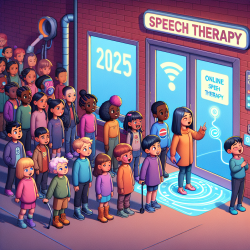
Ontario is Canada’s largest—and most volatile—landscape for pediatric speech-language pathology (SLP) services. Families, schools, and clinicians are navigating a system under intense pressure, where demand continues to rise while pathways to consistent therapy remain unpredictable.
A major driver is the destabilization of the Ontario Autism Program (OAP). When a primary funding and service pathway becomes clogged, the impact doesn’t stay contained. It spills into publicly funded preschool services, school-based rehabilitation, and the private sector—creating a chain reaction that affects children’s communication development at the very time early intervention matters most.
1) The Ontario Autism Program (OAP) Crisis and Its Ripple Effects
The OAP is the primary funding vehicle for neurodevelopmental therapy in Ontario. As of late 2024, the waitlist for “Core Clinical Services” funding exceeded 60,000 children, with wait times stretching beyond five years.
For families, this can mean years of uncertainty—years in which children may miss out on consistent, individualized intervention. For schools and community providers, it means the needs don’t disappear; they show up elsewhere.
How OAP delays spill into other systems
Spillover into publicly funded services: When families can’t access OAP funding to build private multidisciplinary teams, many turn to publicly funded options. This increases pressure on programs that were not designed to absorb that volume.
Children queue for limited “block therapy”: Children who might otherwise receive more intensive services privately may end up waiting for short public therapy blocks, even when their needs are complex and ongoing.
Private sector instability: Some private clinics expanded staffing in anticipation of OAP funding flowing to families. When funding is frozen or delayed, families may be unable to afford services—leaving private capacity unevenly used while public waitlists grow.
2) Public Preschool Services: Assessment Moves, Treatment Stalls
Ontario’s Preschool Speech and Language (PSL) program is delivered through regional organizations such as First Words (Ottawa), Surrey Place (Toronto), and ErinoakKids (Peel). In many areas, PSL programs have managed to keep assessment wait times somewhat controlled—often around four to six months.
The bigger problem is what happens after assessment.
The intervention bottleneck: “Revolving door” therapy
After a child is assessed, families may face a second waitlist for intervention. When therapy is available, it is often delivered in short blocks (for example, six to eight weeks). After the block, families may be required to take a “break” or be discharged so other children can be seen.
From a special education and early intervention perspective, this model can be especially challenging because:
Skills need repetition and routine: Communication development is built through consistent practice across environments (home, school, community).
Breaks can lead to regression: Parents frequently report that their child loses momentum during mandatory gaps, particularly if the child benefits from structure and predictability.
Caregiver stress increases: Families may feel they are constantly “starting over,” re-explaining their child’s needs and rebuilding progress.
3) The Kindergarten Transition: When Support Can Disappear
When children enter kindergarten, they typically transition from PSL to School-Based Rehabilitation Services (SBRS). This handoff is widely known to be inefficient, and in some school boards, SBRS waitlists can reach one to two years.
That gap matters. Kindergarten is not just a change of building—it’s a major shift in expectations:
More group instruction and fewer adult supports
Increased language demands (following directions, participating in routines, early literacy foundations)
Higher social communication expectations (peer play, conflict resolution, self-advocacy)
When therapy support is delayed during this transition, schools may be left trying to meet complex communication needs without timely clinical input, and children may struggle to access the curriculum and classroom routines.
4) The Private Sector: High Density, High Cost, Limited Prime-Time Slots
Ontario has the highest density of private clinics in Canada, especially in the Greater Toronto Area (GTA). In cities like Toronto, Vaughan, and Mississauga, families can often find clinics nearby, and daytime availability can be strong.
But two barriers consistently show up:
Scheduling: after-school and weekend demand
While daytime appointments may be easier to secure, the most practical times for many families—after school (roughly 4 p.m. to 7 p.m.) and weekends—are highly competitive. Clinics may have internal waitlists for these slots, which can delay therapy even when a clinic technically has capacity.
Cost and insurance limitations
Private SLP rates in Ontario commonly range from $160 to $200 per hour. Access is often tied to insurance, but many plans cap SLP coverage at around $500 per year—enough for only two to three sessions. Even families with stronger plans may find coverage runs out quickly when therapy needs are ongoing.
5) Regional Variations: Ottawa and Toronto as Examples
Ontario is not one uniform system. Families’ experiences can differ significantly by region.
Ottawa: The First Words program is often described as robust, but it is also overwhelmed. Private clinics such as Achieve Therapy and Key to Speech help absorb demand, yet families may still face delays depending on scheduling and funding.
Toronto: Surrey Place carries a significant public load, but the wait for autism-specific services can push families who are able to do so into the private market—where cost and prime-time availability remain major barriers.
6) Practical Ways Schools and Families Can Respond
When systems are strained, the goal becomes twofold: protect learning and communication progress now, and reduce the likelihood of long gaps in service.
For schools: strengthen support while waiting
Use classroom-based strategies that don’t require specialized equipment: visual schedules, first-then boards, simplified directions, and predictable routines support many learners.
Build communication opportunities into the day: structured turn-taking, peer partner routines, and intentional “wait time” can increase student participation.
Document functional impact: clear notes on how communication affects learning, behavior, and participation can support referrals and planning.
For families: focus on consistency, not perfection
Choose one or two high-impact routines: for example, mealtime requesting, bedtime storytelling, or getting ready for school. Repeated practice in a predictable routine can be more powerful than scattered activities.
Ask for carryover strategies: if your child receives a short therapy block, request simple home and school strategies that can be used during gaps.
Coordinate with educators: even brief alignment between home and school language goals can improve generalization.
7) An Online Option for Schools: TinyEYE Therapy Services
In a landscape where waitlists, staffing shortages, and scheduling barriers can disrupt continuity, online therapy can be a practical way for schools to increase access and reduce service gaps. TinyEYE Therapy Services provides online therapy services to schools, supporting students who need speech-language and other related services without requiring families to compete for limited after-school appointments or travel across the city.
For many school teams, online service delivery can help:
Improve consistency: students can receive services during the school day, reducing missed sessions due to transportation or family scheduling conflicts.
Support continuity during transitions: especially when students move from preschool services into school-based systems with long waitlists.
Extend reach across regions: including boards and communities where local clinician availability is limited.
Online therapy is not a cure-all for systemic instability, but it can be one meaningful tool schools use to keep students supported while broader funding and service pathways remain unpredictable.
For more information, please follow this link.