
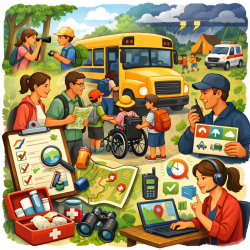
As a Special Education Director, I’m often asked what “good field trip planning” looks like—especially when schools are balancing instructional value, student safety, accessibility, and staffing realities. Field trips can be powerful learning experiences, but they also introduce variables we don’t face in a typical school day: travel logistics, unfamiliar environments, medical needs, and communication challenges.
Below is a practical checklist-style guide to help school teams plan an academic field trip with clarity, compliance, and student-centered support. While every district has its own procedures, these planning elements are widely applicable and align with strong risk management and inclusive practice.
1) Start With Clear Goals and Objectives
Before selecting a destination or booking transportation, identify the instructional purpose. This step prevents “activity-first” planning and helps justify decisions if questions arise later from families, administrators, or auditors.
- What standards, units, or learning outcomes does the trip support?
- What will students do on-site that they cannot do in the classroom?
- How will student learning be demonstrated (reflection, project, lab notes, presentation)?
- For students with IEPs or 504 plans, what skills or goals might the trip reinforce (communication, social interaction, functional routines)?
2) Build the Itinerary and Confirm the Destination Details
A strong itinerary reduces confusion and supports supervision. It also helps families make informed decisions and helps staff anticipate needs.
- Trip destination, purpose, and travel itinerary (route, rest stops, meal stops)
- Lodging information (if applicable)
- Transportation information (bus company, departure/return times, seating plans if needed)
- Summary of activities and the physical requirements students will need to meet
- Any known or unusual circumstances requiring advanced preparation or equipment
Tip from the field: ask the site for a written schedule and a map. If the location is large (museum campus, nature preserve, multi-building venue), designate meeting points and time checks.
3) Assess, Mitigate, and Communicate Risks Before Departure
Risk planning is not about eliminating every possible issue—it’s about identifying foreseeable hazards, reducing likelihood, and preparing the team to respond consistently.
- Identify hazards specific to the location (water, wildlife, traffic patterns, steep terrain, allergens, weather exposure)
- Document mitigation steps (supervision assignments, boundaries, buddy systems, restricted areas)
- Communicate expectations to students and families in both verbal and written formats
Orientation Session: Verbal and Written Communication
The field trip leader(s) should conduct an orientation session prior to departure. The level of detail will depend on the trip, but both verbal and written communication are essential. Orientation materials should include:
- Trip destination, purpose, and travel itinerary (route, rest and meal stops)
- Lodging information
- Transportation information
- Appropriate clothing and/or gear
- Emergency and check-in protocol
- Hazards or risks specific to the location and mitigation measures
- Summary of activities and physical requirements
- Any known or unusual circumstances requiring advanced preparation or equipment
From an inclusion standpoint, consider providing the orientation materials in accessible formats (plain language, translated versions, visual schedules, or audio supports), especially for students who benefit from predictable routines.
4) Create an Emergency Response Plan and Contingency Plans
Even with excellent planning, complications happen: injuries, weather changes, transportation delays, or unexpected site closures. A written emergency response plan helps staff act quickly and consistently.
- Determine a protocol for circumstances that may require a leader to leave the group to accompany an injured or ill participant
- Provide participants with instructions on how to summon assistance for all emergency types (medical, safety, violence, harassment) and how to report injuries or hazards
- Anticipate likely complications and develop contingency plans in advance
- Ensure team leader(s) have emergency contact information for each participant and group
School-based best practice: clarify who is the primary decision-maker on-site, who contacts the school/district, and who contacts families. Avoid “everyone calls everyone” in a crisis—assign roles.
5) Confirm Communication Devices and a Check-In Protocol
Communication is a safety issue. Teams should confirm how they will communicate during travel and at the destination.
- Ensure communication devices are available (cell phones, radios if needed)
- Inform all participants about the check-in protocol
- Confirm cell service at the site in advance; arrange alternatives if coverage is limited
Practical approach: schedule check-ins at predictable times (arrival, lunch, transition points, departure) and use a simple roster system to confirm all students are accounted for.
6) Plan Accommodations During Travel
Travel itself can be a barrier for some students and staff. Plan for rest breaks, sensory needs, mobility access, and medication schedules.
- Accessible seating and mobility supports
- Restroom access and scheduled breaks
- Support for students who experience motion sickness, anxiety, or sensory overload
- Clear supervision assignments during loading/unloading
7) Ensure First Aid Supplies and Expertise
For groups of any size, at least one member must be certified in standard first aid and have access to a first aid kit. For remote locations where civic emergency services are not readily available, at least two participants should be trained in wilderness first aid and have a wilderness-type kit (including a thermometer and other site-relevant items).
- Confirm who is first-aid certified and document it
- Check kit contents and expiration dates
- Plan for location-specific needs (heat illness supplies, blister care, epi-pen storage considerations)
8) Address Medical Needs and Pre-Existing Conditions
Medical planning protects students and staff and reduces last-minute emergencies.
- Encourage participants to consult their doctors to ensure they are physically fit for fieldwork activities (including allergy review and immunization updates such as tetanus)
- Encourage participants to update recommended immunizations and/or vaccines
- Plan accommodations for participants with disabilities or special requirements
From a school compliance lens, ensure medication administration procedures align with district policy, and confirm who is authorized and trained to administer medication on the trip.
9) Clarify Clothing, Personal Equipment, and Field Equipment
Inadequate clothing and gear can turn a learning experience into a safety issue. Communicate expectations early and clearly.
- Inform participants of expected weather conditions to support appropriate clothing choices
- List required gear (closed-toe shoes, rain gear, sun protection, water bottles)
- Identify what the school provides versus what families provide
10) Organize Transportation
Transportation is a major operational and supervision component. Team leader(s) may choose to make transportation arrangements to get participants to and from the destination.
- Confirm pick-up/drop-off locations and times
- Review supervision expectations on the bus
- Plan for students who require specialized transportation supports
- Ensure emergency contact lists are accessible during travel
11) Plan Food, Water, and On-Site Supplies
Food and hydration planning is both a health and equity issue. Students may have allergies, dietary restrictions, or limited access to packed meals.
- Inform participants of arrangements for food and water
- Practice safe food handling methods to reduce sharing of food and utensils (avoid self-serve buffets; have servers serve food when possible)
- Plan for allergy-aware seating and cleaning routines
12) Provide Mandatory Safety Training for Location-Specific Risks
Some field trips require targeted training. For example, remote locations may involve wildlife risk, terrain hazards, or water safety.
- Ensure participants are well-informed on local wildlife and how to respond to hazardous encounters
- Confirm wilderness first aid training when appropriate
- Provide any additional training specific to the risks or hazards of the location
13) Complete Necessary Forms and Secure Permissions
Documentation is not “paperwork for paperwork’s sake.” It protects students, staff, and the district, and it ensures respect for public and private property.
- Obtain permission to enter and carry out activities on the land base (owners/managers)
- Prepare required forms such as certificates of insurance, waivers, authorizations, and permits
- Confirm district-level approvals and timelines
Bringing It All Together: A School Team Mindset
The most successful field trips are planned by a team: administrators, educators, related service providers, and families. When we plan with goals, safety, and accessibility in mind, we reduce last-minute surprises and increase the likelihood that every student can participate meaningfully.
For more information, please follow this link.
