Why This Comparison Matters
When a child struggles with speech, language, social communication, or feeding, families often face an immediate question: should we seek private speech therapy, rely on school speech therapy, or do both? The answer depends on the child’s needs, how those needs affect learning, and what services are available. Understanding the differences can reduce stress, clarify expectations, and help everyone make a plan that supports real progress.
As an online therapy provider partnering with schools, TinyEYE often helps teams and families navigate this exact decision. The goal is not to position one option as “better,” but to explain what each setting is designed to do, how they can complement each other, and what questions to ask along the way.
The Core Difference: Purpose and Setting
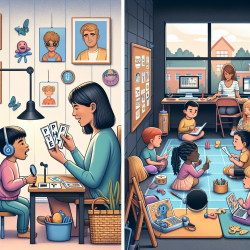
Private speech therapy and school speech therapy are both delivered by qualified speech-language pathologists (SLPs). The biggest difference is the purpose of the service.
School speech therapy is an educational service. It targets communication skills that affect a student’s ability to access and make progress in the school curriculum.
Private speech therapy is a clinical service. It can address a broader range of communication needs, often with goals that extend beyond school participation into home, community, and daily life.
Both can be highly effective. They simply operate under different rules, timelines, and priorities.
Eligibility: Who Qualifies and How Decisions Are Made
School-Based Speech Therapy Eligibility
In schools, students typically receive speech therapy through special education services (often via an Individualized Education Program, or IEP) or through other school support structures depending on local policies. Eligibility is determined by an evaluation and a team decision.
Most school systems look at two key questions:
Is there a communication disorder or delay?
Does it negatively impact educational performance? This can include academics, classroom participation, social communication at school, or functional communication needed to access instruction.
This means a child may have a noticeable speech sound difference, language delay, or fluency concern and still not qualify for school-based services if the team determines it does not significantly affect school functioning.
Private Speech Therapy Eligibility
Private therapy is typically based on clinical need rather than educational impact. Families can seek an evaluation at any time. Depending on the provider and funding source, eligibility may be determined by:
Clinical assessment results
Medical diagnosis or referral (in some cases)
Insurance requirements or private pay preferences
Because private therapy is not tied to educational criteria, it can be easier to start services quickly and to address concerns that are meaningful at home even if school impact is subtle.
Goals: What Each Setting Typically Targets
Common Goals in School Speech Therapy
School-based goals are designed to support success in the school environment. They often connect to classroom routines, curriculum vocabulary, comprehension of instructions, and peer interactions. Examples include:
Following multi-step directions in class
Using grade-level vocabulary and sentence structure for writing and speaking
Producing speech sounds that affect intelligibility in the classroom
Social communication skills needed for group work and peer conversation
Using AAC (augmentative and alternative communication) to participate in instruction
Common Goals in Private Speech Therapy
Private therapy goals can include school-related targets, but may also emphasize communication across daily life. Examples include:
Speech clarity for extended family and community interactions
Early language development for toddlers and preschoolers
Stuttering support that includes emotional coping strategies and confidence building
Pragmatic language and social skills across settings (home, sports, community)
Feeding and swallowing therapy (when offered and appropriate)
Private therapy may also allow for more specialized focus on a particular area, depending on the clinician’s expertise and the family’s priorities.
Service Delivery: Frequency, Group Size, and Scheduling
How therapy is delivered can look very different across settings.
School Therapy Service Delivery
Scheduling is typically during the school day.
Frequency is determined by the IEP team and must fit within school resources and schedules.
Group sessions are common, especially when students have similar goals.
Collaboration with teachers is often built in, which can help skills generalize to the classroom.
School SLPs also manage compliance tasks, evaluations, meetings, documentation, and large caseloads. This doesn’t reduce the quality of care, but it does shape how services are structured.
Private Therapy Service Delivery
Scheduling is often after school or during family-available times.
Frequency can be more flexible, depending on clinical recommendations and family availability.
Individual sessions are more common, though groups exist in some clinics.
Family coaching may be a larger component, with home practice plans and caregiver training.
Private therapy can sometimes move at a different pace, especially when families can consistently attend and practice between sessions.
Progress and Generalization: Where Skills Show Up
One of the most important questions is not just “Is my child improving?” but “Are the skills showing up where they matter?”
School therapy has a natural advantage for classroom carryover. Skills can be practiced in the environment where they’re needed most, and SLPs can coordinate with educators.
Private therapy often has a natural advantage for home and community carryover, especially when caregivers are present and coached on how to practice in real routines.
Many students benefit when school and private providers communicate (with family permission) so goals align and strategies are consistent. Even small coordination steps, like sharing cueing strategies or target sounds, can make practice more efficient.
Can a Child Receive Both?
Yes, and it can be a strong combination when done thoughtfully. A child might receive school speech therapy to support academic access and classroom communication, while also receiving private therapy to address broader needs or to intensify practice.
To avoid confusion or overload, it helps to:
Prioritize a small number of high-impact goals at a time
Use consistent language and cues across settings
Share progress updates between providers when possible
Watch for fatigue, especially for younger children
Where Online School Therapy Fits In
Many schools partner with online therapy providers to expand access to services, reduce gaps, and support consistent delivery. Online speech therapy in schools can be especially helpful when a district faces staffing shortages or needs specialized support.
When online therapy is integrated well, students can receive high-quality services that remain connected to school goals, classroom expectations, and IEP requirements. For schools, this can mean improved continuity. For families, it can mean greater confidence that services are being delivered consistently and documented appropriately.
Questions Families Can Ask to Decide What’s Best
What specific communication challenges are showing up at school, at home, or both?
Is my child eligible for school services, and what criteria were used?
What are the current goals, and how will progress be measured?
How can I support carryover at home, even if services are school-based?
If we add private therapy, what goals should it target to complement school therapy?
A Practical Takeaway
School speech therapy is designed to support educational access and success. Private speech therapy is designed to support communication across life settings and can be more flexible in timing and scope. Many children thrive with one or the other, and some benefit from both when goals are coordinated.
For more information, please follow this link.