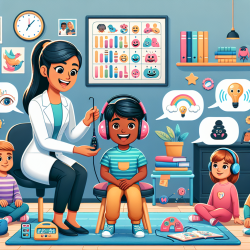
When “Hearing” Isn’t the Same as “Understanding”
Many students can hear perfectly well and still struggle to understand what is said to them. That difference matters in school, where directions come quickly, vocabulary grows fast, and learning depends on understanding spoken language. Receptive language refers to how we take in and make sense of words, sentences, and meaning. When a child has a receptive language delay, they may have difficulty understanding language compared to peers, even if they can speak clearly or appear chatty.
Because receptive language challenges can look like inattention, behavior concerns, or “not trying,” they are sometimes missed. The good news is that early identification and targeted support can make a meaningful difference. Schools are in a powerful position to notice patterns, collaborate with families, and connect students to services.
What Is Receptive Language?
Receptive language is the ability to understand:
- Words and their meanings (vocabulary)
- Directions and instructions
- Questions (who/what/where/when/why/how)
- Sentence structure (grammar, word order)
- Concepts (before/after, same/different, more/less)
- Social language (tone of voice, implied meaning, idioms)
Receptive language is foundational. If a student struggles to understand classroom language, it can affect reading comprehension, writing, math word problems, social relationships, and confidence.
Common Signs of Receptive Language Delay
Receptive language delay can show up differently depending on age, classroom demands, and the student’s strengths. Below are common signs educators and families may notice.
1) Difficulty Following Directions
- Struggles with multi-step directions (for example: “Take out your math book, turn to page 12, and solve the first three problems.”)
- Needs directions repeated often
- Watches peers to figure out what to do
- Starts tasks late or completes the wrong task
2) Trouble Answering Questions Accurately
- Answers “off topic” or with unrelated information
- Responds with “I don’t know” frequently
- Has difficulty with WH-questions (who, what, where, when, why, how)
- Misunderstands yes/no questions, especially when phrased negatively (for example: “Don’t you have your pencil?”)
3) Limited Understanding of Vocabulary and Concepts
- Does not understand grade-level vocabulary (including curriculum words)
- Struggles with basic concepts like size, time, location, and quantity
- Misinterprets words with multiple meanings (bat, bank, trunk)
4) Appearing “Not Listening” or “Daydreaming”
- Looks inattentive during lessons, especially language-heavy instruction
- May be compliant but confused
- May shut down when language demands increase
This is one of the most common misunderstandings: receptive language difficulty can look like a behavior or attention problem. A student may be trying hard but missing key information.
5) Difficulty Understanding Stories, Lessons, or Class Discussions
- Has trouble retelling events in order
- Misses the main idea or key details
- Struggles to make inferences (figuring out what is implied but not stated)
- Needs visuals, gestures, or simplified language to keep up
6) Social Communication Challenges
- Misunderstands jokes, sarcasm, idioms, or figurative language
- Has difficulty reading tone of voice
- May seem “out of sync” in conversations because they misread what others mean
7) Increased Frustration, Avoidance, or Behavior Concerns
- Becomes upset during language-heavy tasks
- Avoids participation (for example, reluctant to answer questions aloud)
- May act out to escape confusing situations
When students repeatedly feel lost, their stress can rise. Supporting receptive language can support emotional regulation and classroom engagement.
How Receptive Language Delays Impact Learning
Receptive language is woven into nearly every school activity. A delay may affect:
- Literacy: reading comprehension, understanding story structure, learning new vocabulary
- Math: word problems, understanding comparative language (greater than/less than), following multi-step procedures
- Writing: understanding prompts, organizing ideas, using precise vocabulary
- Science and social studies: learning technical terms, understanding cause/effect and sequencing
- Classroom routines: transitions, expectations, and independent work
Students may compensate with strong memorization, copying peers, or relying on visuals. Those strategies can help, but they don’t replace direct support for comprehension skills.
What Educators and Families Can Do Right Away
If you suspect receptive language challenges, small changes can reduce confusion and help a student show what they know.
Classroom-friendly supports
- Use clear, short directions and pause between steps
- Ask the student to repeat directions back in their own words (not just “Do you understand?”)
- Pair spoken directions with visuals (checklists, pictures, written steps)
- Pre-teach key vocabulary before lessons
- Highlight or rephrase important information (for example: “The most important part is…”)
- Check comprehension with specific questions (for example: “What do you do first?”)
- Reduce language load when possible during assessments or new tasks
Family-friendly supports
- Use routines and visual schedules at home
- Give one direction at a time, then build to two-step directions
- Read together and pause to discuss “who, what, where, why”
- Play simple listening games (Simon Says, barrier games, scavenger hunts with clues)
When to Seek Speech-Language Support
If receptive language concerns persist over time and across settings (classroom, home, community), it may be appropriate to consult a speech-language pathologist (SLP). An SLP can assess receptive language skills, identify strengths and needs, and develop targeted goals that support classroom learning.
Support is especially important when receptive language difficulties interfere with:
- Academic progress
- Participation in class discussions
- Peer relationships
- Following routines and expectations
- Confidence and willingness to try
How TinyEYE Online Therapy Services Support Schools
Schools need therapy solutions that are effective, flexible, and student-centered. TinyEYE provides online therapy services to schools, helping districts support students who need speech-language therapy, occupational therapy, and mental health support.
Why online therapy can be a strong fit for receptive language needs
- Consistent access to qualified clinicians: Students can receive services even when local staffing is challenging.
- Engaging, interactive sessions: Digital tools can support visual cues, vocabulary instruction, and comprehension practice.
- School-based collaboration: Therapy is most effective when goals connect to classroom demands. Online providers can collaborate with school teams to align strategies.
- Data-informed progress monitoring: Clear goals and ongoing tracking help teams see what is improving and what needs adjustment.
What therapy may target for receptive language delays
- Following one-step to multi-step directions
- Understanding and answering WH-questions
- Building vocabulary and concept knowledge
- Improving listening comprehension for stories and lessons
- Understanding sentence structure (for example: “before/after,” “if/then,” passive voice)
- Developing strategies for asking for clarification and self-advocacy
Most importantly, receptive language therapy is not about drilling random skills. It is about helping students understand the language of learning so they can participate more fully, demonstrate knowledge, and feel successful at school.
Receptive Language Support Is a Pathway to Confidence
When students understand what is being asked of them, their world opens up. They can join discussions, follow routines with less stress, and show their strengths. If you are noticing signs of receptive language delay, trust the pattern you are seeing and start the conversation. With the right supports, many students make strong progress.
For more information, please follow this link.