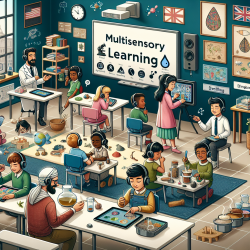
Sensory play is sometimes misunderstood as “just messy play” or an optional extra for early learning. In reality, sensory experiences are one of the brain’s most efficient ways to build meaning, store memories, and support development across communication, motor skills, attention, and emotional regulation. At TinyEYE, we work with school teams every day who are looking for practical, inclusive ways to support learners with diverse needs. Sensory play is one of the most flexible tools available because it can be adapted for different ages, abilities, and learning goals.
Think about how quickly a smell, sound, or texture can bring back a memory. Many adults can name a fragrance that instantly transports them to a specific place or person. This isn’t sentimental trivia—it’s neuroscience in action. When children gather information through their senses and those sensations guide their thinking and choices, they are using sensory pathways that connect directly to strong, lasting memory systems. In school settings, that matters: the more meaningful the input, the more likely learning is to “stick.”
Why sensory input matters for learning and growth
Children learn through their senses: taste (gustatory), smell (olfactory), touch (tactile), movement (kinaesthetic), hearing (auditory), and sight (visual). These systems help children pay attention to the world, explore curiosity, and make sense of new information. In the early years especially, children are encountering many experiences for the first time. Sensory input becomes the foundation for concepts, vocabulary, and relationships.
Sensory experiences also support social-emotional development. A child may notice their heart beating faster when excited, or feel calmer with deep pressure from a hug or the soothing texture of a soft fabric. These are not small details; they are early lessons in body awareness and self-regulation. When educators intentionally create sensory opportunities, they are also creating opportunities for children to learn what their bodies are telling them—and what strategies help them feel safe and ready to learn.
How sensory play strengthens the brain: the power of multi-sensory learning
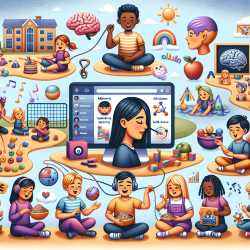
A multi-sensory approach gives children multiple pathways to understand and remember information. When the brain receives input through more than one sense, it can create stronger and more durable neural connections. In practical terms, this means children have more “routes” to retrieve learning later—through a smell, a movement, a visual pattern, a sound, or a tactile experience.
This approach can be especially supportive for neurodiverse learners, including students who experience sensory processing differences. Some children may need support to interpret body signals, manage big feelings, navigate social situations, or cope with anxiety and frustration. Sensory play—when thoughtfully planned—can become a structured way to practice regulation skills and communication in a safe, motivating context.
Two essentials for sensory play success in school settings
Successful sensory play is not about buying expensive equipment. It is about how adults design, guide, and participate in the experience. Two elements matter most.
1) Educator intentionality
Intentionality means being purposeful and thoughtful about the experience: knowing the children, anticipating needs, preparing materials, and staying present. In school-based practice, this can look like:
- Knowing students’ sensory preferences and sensitivities (what they seek, what they avoid, what helps them regulate).
- Having a simple plan and a clear learning purpose (language, turn-taking, fine motor, calming, problem-solving).
- Preparing resources in advance so transitions are smooth and supervision is safe.
- Actively inviting participation so no child is left on the edge of the group.
2) Responsiveness to delight, surprise, and engagement
Sensory play works best when adults notice what children notice. Whether you are directly involved or observing, your attention matters. When educators stay mentally present, they can catch the “teachable moments”: a child’s new word, a brave try of an unfamiliar texture, a successful calming breath, or a shared laugh that builds connection.
Practical sensory play ideas across the six senses
Below are school-friendly ideas for each sensory system. Many can be scaled up for classrooms or scaled down for small groups, therapy sessions, or calm corners.
Taste (gustatory): building vocabulary, flexibility, and descriptive language
- Herb tasting: roll fresh herbs between fingers, then taste. Pair with emotion faces or a word bank (sweet, bitter, strong, mild).
- Flavour exploration: offer small samples of sweet, sour, bitter, spicy, and plain flavours (with allergy awareness and family permissions as needed).
- Cooking activities: taste ingredients separately, then taste as they combine. Talk about how flavours change.
- Cultural food tasting: offer tiny “try sizes” to reduce pressure. Encourage “lick or bite” as a safe first step.
- Pretend café role play: co-create a menu, practice social scripts, and build conversational turn-taking.
Smell (olfactory): memory, connection, and emotional language
- Herb smelling: invite children to smell and describe (fresh, spicy, sweet, strong). Thai basil is often a hit.
- Flower investigations: bring cut flowers, compare scents, and ask “Where does the smell come from?”
- Nature smell collection: compare dry versus wet leaves, soil, twigs, and moss. Add new vocabulary (musty, damp, moist).
- Cooking smells: pause near baking and invite children to describe what they notice and what it reminds them of.
- Smells from different cultures: introduce new fragrances gradually and help children connect them to familiar foods or experiences.
Touch (tactile): fine motor growth, tolerance, and sensory language
- Sensory circle: pass around textures (soft, rough, sticky, scratchy) and invite children to describe favourites and “not for me” textures.
- Goop play: cornflour mixtures for squeezing and squishing (monitor for sensory aversions and safe use).
- Fluffy paint: shaving cream mixed with paint for finger painting and creative expression.
- Spaghetti or alternatives: cooked oiled spaghetti for patterns and letter shapes, or use wool/fishing line if avoiding food materials.
- Clay exploration: build hand strength, bilateral coordination, and problem-solving while discussing what clay is and how it changes with pressure.
Movement (kinaesthetic): regulation, coordination, and readiness to learn
- Box breathing: breathe in for four seconds, hold for four, exhale for four, hold for four. Repeat to support calm and focus.
- Obstacle courses: design-and-create challenges that work for varied abilities (for example, “the floor is lava” problem-solving).
- Fundamental movement skills: practice hopping, skipping, jumping, spinning, throwing during games and transitions.
- Core-strength games: quick “Simon says” sequences that include bending, rolling, stretching, and getting up from the floor.
- Dance and statues: stop-start music games to practice impulse control and body awareness.
- Stretch and release: big stretches to small muscle squeezes (tense, hold, relax) to support downshifting after active play.
Hearing (auditory): listening skills, self-regulation, and connection
- Music sharing: invite children to choose favourite songs and introduce new music across cultures and time periods.
- Sound-and-feeling conversations: explore how loud, soft, fast, and slow sounds affect bodies and emotions.
- Sound hunts: identify sounds inside and outside, then label how they feel (calm, startling, exciting).
- Voice recordings: record short stories or animal sounds and listen back to compare pitch, speed, and expression.
- Make-your-own instruments: bottles with sand, sticks, or found objects to practice reciprocal listening and turn-taking.
- Audiobooks with drawing: build receptive language while children illustrate what they imagine.
Sight (visual): perception, memory, and pattern recognition
- Pattern-making: find patterns in the classroom, books, or art, then recreate them with blocks, beads, or drawing tools.
- Memory games: matching pairs or “what’s missing?” games to strengthen visual memory and attention.
- Treasure hunts: adjust difficulty so the challenge sits just above current skill, encouraging persistence and problem-solving.
- Spot-the-difference: change item positions or remove items to build careful observation.
- Picture book “reading”: invite children to narrate from images, predict, and describe details.
- Magnifying glass exploration: investigate nature up close to spark curiosity and rich descriptive language.
Inclusive and trauma-aware considerations for sensory play
Sensory play should feel safe, not overwhelming. In special education practice, “more sensory” is not always better—“better matched” is better. Consider these supports:
- Offer choice and consent: allow children to watch first, use tools (spoons, gloves), or opt out.
- Use predictable routines: clear start and finish signals, visual schedules, and simple rules.
- Plan for sensory differences: reduce strong smells, manage noise levels, and provide calming alternatives.
- Connect sensory play to communication goals: model vocabulary, feelings words, and functional requests (more, stop, help, my turn).
- Collaborate with specialists: occupational therapists and speech-language pathologists can align sensory activities with IEP goals.
How TinyEYE supports schools with sensory-informed practice
Schools often ask how to translate sensory play into measurable, educational outcomes. Through TinyEYE’s online therapy services, school teams can collaborate with clinicians to:
- Identify sensory strategies that support attention and classroom participation.
- Build language goals into sensory routines (describing, requesting, sequencing, narrating).
- Support self-regulation with practical tools that generalize across settings.
- Design inclusive activities that work for whole classes and targeted small groups.
Sensory play is not a trend; it is a developmentally grounded, brain-based approach to learning. When educators intentionally engage children’s senses, they engage the whole child—body, emotions, relationships, and thinking. In short, when we use the senses well, we help more children stay connected to learning.
For more information, please follow this link.