Hearing a two-year-old talk can be delightful—little opinions, big feelings, and brand-new words showing up every day. So when a child isn’t talking as much as expected, it’s natural for families and educators to wonder: “Is this a speech delay?”
The good news is that many toddlers who are late to talk make strong progress with the right support. The earlier we understand what’s going on, the sooner we can help a child communicate more easily—at home, in childcare, and later in school.
This article breaks down speech delay in a 2-year-old in a clear, practical way, and explains how TinyEYE Therapy Services supports schools in providing timely, effective online speech-language therapy.
What does “speech delay” mean at age 2?
At age two, children are developing both:
Speech: how clearly they say sounds and words (pronunciation, clarity)
Language: what they understand and express (vocabulary, combining words, using language to communicate)
A child may have a delay in speech, language, or both. For example, a toddler might understand everything you say but use very few words (expressive language delay). Another child may talk a lot, but their speech is hard to understand (speech sound delay).
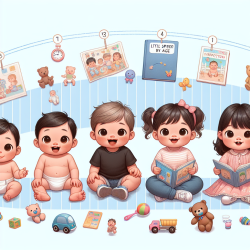
Typical communication milestones around age 2
Children develop at different rates, but by about 24 months many toddlers:
Use at least 50 words (often more)
Combine two words (like “more milk,” “mommy go,” “big truck”)
Follow simple directions (especially with familiar routines)
Point to show interest and share attention (pointing at a dog, then looking back at you)
Use gestures along with words (waving, nodding, reaching)
If a child is not meeting several of these milestones, it may be time to look more closely.
Signs a 2-year-old may have a speech or language delay
One sign alone doesn’t always mean there is a delay, but patterns matter. Consider reaching out for guidance if a 2-year-old:
Uses fewer than about 50 words
Is not combining words yet
Rarely tries to communicate (few gestures, limited pointing, limited attempts to get your attention)
Seems frustrated often because they can’t express needs
Doesn’t respond to name consistently or seems not to hear (hearing should be checked)
Has lost words they previously used
Is difficult for familiar adults to understand most of the time
Families sometimes hear “They’ll grow out of it.” Sometimes children do catch up, but waiting can also mean missing an opportunity for early support—when the brain is especially ready to learn language.
What causes speech delay in a 2-year-old?
Speech and language delays can have many contributing factors. Some common possibilities include:
Hearing differences: frequent ear infections or undetected hearing loss can affect speech and language learning
Developmental language delay: a child may need more time and targeted practice to build vocabulary and combine words
Speech sound differences: difficulty coordinating sounds can make speech hard to produce
Autism spectrum differences: some children show differences in social communication, gestures, and shared attention
Motor speech challenges: in some cases, planning and coordinating speech movements is difficult
Environmental and opportunity factors: language exposure, routines, and interaction patterns can influence growth (this is never about blame—just about identifying helpful supports)
Because there are many possible reasons, a speech-language evaluation is the best way to understand a child’s strengths and needs.
What to do if you’re concerned
If you suspect a speech delay, these steps are a practical starting point:
Talk with your child’s pediatrician
Share specific examples: how many words you hear, whether they combine words, and how they communicate needs.Check hearing
A quick hearing screening can rule out a key factor and provide peace of mind.Request a speech-language evaluation
In many communities, early intervention services are available, and schools can also support children as they approach preschool age.Start supportive strategies at home
Small changes in daily routines can make a big difference while you’re waiting for services.
Easy, everyday ways to support speech and language at home
Families are already doing a lot right—especially when they’re tuned in to their child. Here are a few evidence-informed strategies that are simple and realistic:
Follow your child’s lead
Join what they’re doing and talk about it. If they’re stacking blocks, you can say, “Up! Big block. Uh-oh, fall down!”Model short, useful phrases
Instead of asking lots of questions, offer phrases your child can copy: “Help please,” “More bubbles,” “My turn.”Use “one step ahead” language
If your child uses single words, model two-word phrases. If they use two words, model three.Pause and wait
After you model a word or phrase, pause for a few seconds. This gives your child time to try.Build language into routines
Snack time, bath time, and getting dressed are perfect for repeating the same helpful words daily.Read simple books repeatedly
Repetition is powerful. Point to pictures, label them, and let your child turn pages and point.
These strategies don’t replace therapy when it’s needed, but they can support progress and reduce frustration.
How TinyEYE supports schools (and why that matters for 2-year-olds)
TinyEYE provides online therapy services to schools, helping districts and education teams deliver speech-language therapy and related supports when in-person staffing is limited or when students need consistent access to services.
While many two-year-olds receive services through early intervention or community programs, school systems play a major role as children approach preschool services and beyond. Strong school-based support can help ensure that children who need speech-language therapy don’t fall through the cracks due to:
SLP shortages
Long waitlists
Rural or hard-to-staff locations
Scheduling barriers for families
TinyEYE’s model helps schools provide:
Access to qualified clinicians who understand child development and school-based service delivery
Consistent therapy sessions delivered online in a structured, student-friendly format
Collaboration with school teams to support functional communication goals that carry over into classroom routines
Family-centered communication so caregivers understand goals and can reinforce skills at home
For children with early speech and language needs, consistency is key. When schools can reliably provide services, children are more likely to build foundational skills that support learning later—like following directions, participating in groups, and expressing needs clearly.
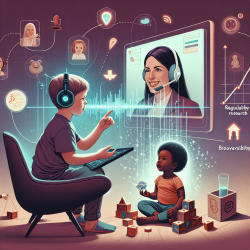
What online speech therapy can look like for young children
Online therapy for young learners is most effective when it is interactive, engaging, and developmentally appropriate. Sessions often include:
Play-based activities that target early words and phrases
Simple turn-taking games that build social communication
Visual supports to help children understand and use language
Coaching for adults (educators and caregivers) to use strategies between sessions
In many school settings, an on-site facilitator or support staff member helps the child attend to the session and participate successfully. This team approach can be especially helpful for young children who are still learning how to engage in structured activities.
When to seek help: trust your instincts
If you’re worried about a speech delay in a 2-year-old, it’s worth asking questions now. Early support is not about labeling a child—it’s about giving them tools to communicate, connect, and learn.
And if you’re an educator or school leader seeing an increase in students with early communication needs, know that staffing challenges do not have to mean delayed services. TinyEYE Therapy Services helps schools expand access so students can get support when it matters most.
For more information, please follow this link.