Speech sound disorders (SSDs) are common in childhood and can affect how clearly a student speaks. When speech is hard to understand, it can impact classroom participation, reading and spelling, confidence, and social connections. The good news is that early support makes a real difference—and schools can play a key role in identifying concerns and connecting students to therapy.
What is a speech sound disorder?
A speech sound disorder is a difficulty producing speech sounds correctly or using sound patterns that are expected for a child’s age. Some students may leave out sounds, substitute one sound for another, or say sounds in a way that makes speech unclear.
Common signs to watch for
Every child develops at their own pace, but these signs may suggest it’s time to consult a speech-language pathologist (SLP):
- Speech is difficult for familiar adults (and especially unfamiliar listeners) to understand
- Frequent sound substitutions (saying “wabbit” for “rabbit”)
- Leaving out sounds (saying “ca” for “cat”)
- Adding extra sounds (saying “buhlue” for “blue”)
- Difficulty with specific sounds beyond what’s typical for age (often noticed with “s,” “r,” “l,” “sh,” “ch,” or “th”)
- Speech errors that cause frustration, avoidance of speaking, or reduced participation
- Being teased or frequently asked to repeat themselves
- Spelling and reading challenges that may be connected to weak sound awareness
Why it matters in school
Clear speech supports learning. When students struggle to be understood, they may:
- Participate less in class discussions
- Have difficulty with phonics and spelling
- Feel anxious during presentations or group work
- Miscommunicate with peers, affecting friendships
How TinyEYE helps schools support students
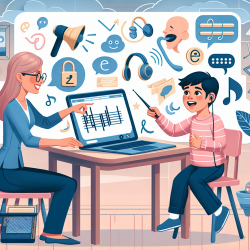
TinyEYE provides online speech-language therapy services to schools, making it easier to deliver consistent support—even when in-person staffing is limited. With teletherapy, students can access high-quality services in a familiar school setting, while educators and families stay informed and involved.
- School-based convenience: Therapy fits into the school day with minimal disruption
- Qualified clinicians: Students work with experienced SLPs using evidence-based approaches
- Engaging sessions: Interactive activities help students practice target sounds in motivating ways
- Progress monitoring: Goals and growth are tracked so teams can make informed decisions
- Collaboration: Support for IEP teams and communication with school staff
What to do if you suspect a concern
- Write down examples of the speech errors you’re hearing
- Ask teachers what they notice in class and with peers
- Request a speech-language screening or evaluation through the school
- Follow through with recommended therapy and home practice strategies
For more information, please follow this link.