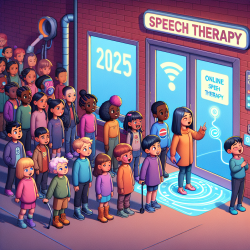
North Carolina’s Speech Therapy Landscape: Why Location Matters
In North Carolina, access to speech-language pathology services can feel like two different realities depending on where a child lives and where a school is located. Families and educators in the Raleigh-Durham area and Charlotte often report faster access to services, while schools and families in outer metro areas and rural communities may face long delays.
This gap is not just inconvenient; it can directly affect student progress. In special education, timing matters. When a student needs support for speech sound production, language development, fluency, voice, social communication, or AAC, delays can ripple into reading, writing, classroom participation, and confidence.
North Carolina’s “Research Triangle advantage” helps explain why some communities have more options than others, and it also highlights why online therapy services can be an important part of a school’s service delivery plan.
The Research Triangle Advantage: A Pipeline of Professionals
The Raleigh-Durham region benefits from a concentration of universities and training programs that produce speech-language pathologists (SLPs). When an area has a steady pipeline of graduates and clinical placements, it tends to have:
- More SLPs entering the local workforce
- More private clinics and pediatric therapy providers
- Greater competition, which can reduce wait times
- More specialized services due to larger provider networks
Charlotte also benefits from being a major metro area with a larger healthcare and education ecosystem, which typically supports a stronger provider base than smaller communities.
What Availability Looks Like in Raleigh-Durham
In the Raleigh area, some private clinics actively market quick access. For example, Cary Speech and All About Therapy (Raleigh) advertise “No Waitlist” and quick appointments. All About Therapy also notes that a “NEW Clinic in North Raleigh” is accepting new patients, using expansion as a clear signal of availability.
From a special education lens, this is an important detail: when providers can expand locations and staffing, families and schools often see shorter gaps between referral and the start of therapy.
Estimated Wait Times
- Raleigh private therapy: approximately 1–3 weeks
What Availability Looks Like in Charlotte
Charlotte’s market includes providers such as KidSpeak and Speech Bubbles, serving families in the metro area. Like Raleigh-Durham, Charlotte’s larger population base and service infrastructure can translate into more options and faster access compared to surrounding regions.
Estimated Wait Times
- Charlotte private therapy: approximately 1–3 weeks
The Sharp Contrast: Outer Metro and Rural North Carolina
Moving even a short distance outside major hubs can drastically change availability. Carolina Kidz in Gastonia (outside the main hubs) reports being on a waitlist. This is a helpful example because it illustrates a pattern schools frequently experience:
- Metro areas may have multiple providers competing for clients
- Outer metro areas may have fewer providers and longer backlogs
- Rural communities may struggle to recruit and retain SLPs, resulting in significant delays
For school teams, this can create a difficult situation. A student’s need does not change based on geography, but the service options often do.
Estimated Wait Times
- Outer metro and rural areas: approximately 3–5 months
Why Wait Times Matter for Students and Schools
When therapy is delayed, schools may see:
- Slower progress toward IEP goals
- Increased classroom frustration and behavior related to communication breakdowns
- Reduced participation in discussions, group work, and presentations
- Compounding academic impacts, especially in early literacy and writing
- Increased pressure on school staff to “fill the gap” without specialized support
In special education, consistency is a key ingredient for progress. Long gaps can mean a student starts services later than planned, receives less total intervention over the year, or misses the window when early support is most powerful.
How Schools Can Respond: Practical Options to Consider
Districts and school teams can take several steps to reduce the impact of local shortages and waitlists. The right mix will vary based on staffing, student needs, and scheduling realities.
- Review service delivery models: Consider a combination of individual therapy, small group therapy, classroom-based support, and consultation, aligned to student needs and IEP requirements.
- Strengthen referral and screening processes: Early identification and clear documentation help teams prioritize appropriately and avoid unnecessary delays.
- Build partnerships: Collaborate with community providers when possible, while ensuring coordination with school goals.
- Add online therapy capacity: Teletherapy can help schools serve students when local hiring is difficult or when caseloads spike.
TinyEYE Therapy Services: An Online Option for North Carolina Schools
When in-person availability varies widely across a state, online therapy can be a stabilizing option for schools. TinyEYE Therapy Services provides online therapy services to schools, helping districts and special education teams maintain service continuity even when local staffing is tight.
For many schools, teletherapy is not about replacing in-person services; it is about ensuring students receive support on time. Online therapy can be especially helpful when:
- A district has open SLP positions and recruitment is slow
- Rural schools struggle to attract providers due to travel distance
- Caseloads increase unexpectedly mid-year
- Students need consistent services despite scheduling constraints
- Schools want to reduce missed sessions caused by provider travel between buildings
From an implementation standpoint, schools often find that teletherapy works best when it is integrated into a clear routine: a consistent time, a prepared space, and an on-site support person when needed (depending on student age and independence). When those pieces are in place, students can build strong rapport and make meaningful progress.
Key Takeaways: North Carolina Wait Times at a Glance
While individual experiences vary, the overall pattern is clear:
- Raleigh/Charlotte private therapy: about 1–3 weeks
- Outer metro/rural areas: about 3–5 months
- Major driver: provider density near university hubs compared to areas with fewer training pipelines and fewer clinics
- School solution to consider: online therapy services, including TinyEYE Therapy Services, to improve access and continuity
For more information, please follow this link.