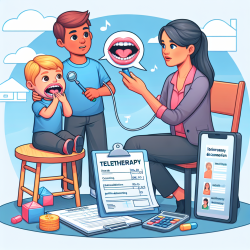
Families often ask a practical question after speech-language services begin: “What paperwork do I need if I want to submit therapy costs to my insurance?” One document that comes up frequently is a speech therapy superbill.
What is a speech therapy superbill?
A superbill is an itemized receipt that includes the key details an insurance company may require to consider reimbursement. It is not the same as an insurance claim form, and it does not guarantee payment. Instead, it gives families the information they need to submit a claim to their insurer (often called “out-of-network reimbursement”).
What information is usually on a superbill?
While formats vary, a strong superbill typically includes:
- Client/student name and date of birth
- Provider name, credentials, and contact information
- Provider NPI (National Provider Identifier), when applicable
- Service dates (and sometimes start/end times)
- Place of service (in-person or teletherapy/telehealth)
- Procedure codes (often CPT codes) describing the service provided
- Diagnosis code (often ICD-10), when appropriate and permitted
- Fees charged and amount paid (if any)
- Tax ID or other billing identifiers, depending on the provider
How do families use a superbill?
Families generally submit the superbill to their insurance company along with any required claim form. Each insurer has its own rules, so it’s wise for families to call the member services number on the insurance card and ask:
- Do you reimburse for speech-language therapy from an out-of-network provider?
- Do you cover teletherapy/telehealth services?
- What forms and codes do you require?
- Are there deadlines for submitting superbills?
Why does this matter for schools and online therapy?
In school settings, services are typically provided as part of a student’s educational program. However, families may still request documentation for their records or for coordination with outside providers. For districts managing therapist shortages, online therapy can expand access—so having clear, consistent documentation practices helps reduce confusion and supports positive family communication.
For more information, please follow this link.