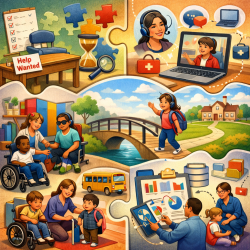
Special education teachers do some of the most important work in a school building. They support students with complex learning needs, coordinate services, write and manage IEPs, collaborate with families and staff, and respond to behavior and emotional needs that can shift hour by hour.
That is meaningful work. It is also heavy work.
Across education, “well-being” and “burnout” have become everyday topics. Social media often frames burnout as a personal problem with a personal solution: sleep more, exercise, set boundaries, take a bubble bath. Those strategies can help, but they are incomplete when burnout is happening inside the work environment.
Research on special education teachers’ well-being makes a clear point: if burnout grows from the interaction between a person and their workplace, then the workplace has to be part of the solution.
Well-being vs. burnout: What do we mean?
Well-being can be thought of as the positive mental and physical health that comes from feeling like you are doing well at work and meeting the challenges in front of you. In other words, it is not just “feeling good.” It is feeling capable, supported, and resourced to do the job.
Burnout is different from having a stressful week. Burnout tends to show up after prolonged stress in a specific context (like a school role) and can include one or more of these dimensions:
Emotional exhaustion: feeling drained, tired all the time, mentally fatigued.
Depersonalization: emotionally pulling back from students or colleagues as a protective response.
Lack of personal accomplishment: feeling like the work is not meaningful or not making a difference.
It is also important to separate burnout from a few common look-alikes:
Stress: you can be stressed and still feel supported and effective.
Job dissatisfaction: you can dislike parts of the job (pay, hours) without being burned out.
A personal weakness: burnout is context-specific and often signals a mismatch between demands and resources.
Why special education teachers are at higher risk
Special education teachers (SETs) are asked to meet students’ needs while navigating competing demands in schools: policies, funding limitations, scheduling constraints, parent communication, and constant documentation requirements. Studies consistently show SETs report higher emotional exhaustion than other educators.
And burnout is not only a teacher issue. It is a student access issue.
When teachers experience burnout, research links it to:
Teacher health concerns (including more frequent physical symptoms like pain and recurring illness).
Higher attrition (teachers leaving positions or the profession).
Lower student outcomes, including lower academic outcomes and less IEP goal attainment.
Reduced impact of interventions, meaning evidence-based practices may not be implemented as effectively when educators are depleted.
For schools, this becomes a cycle: fewer staff, higher caseloads, less planning time, more burnout, and more turnover.
A helpful lens: Demands and resources must balance
Several research-based models help explain why burnout happens and what schools can do about it. Two of the most practical ideas are:
Role theory: when responsibilities are unclear or conflicting, stress rises. Special educators often experience:
Role conflict (two responsibilities compete, and both cannot be done well).
Role ambiguity (unclear expectations, especially in co-teaching or shared service models).
Role dissonance (the job is not what the teacher expected, a common issue for novice teachers).
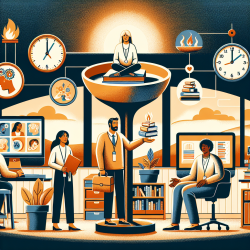
Job demands-resources thinking: when job demands are high and resources are low, burnout risk increases. When resources rise (support, time, materials, training), motivation and well-being improve.
Another key idea is that teachers naturally try to protect and gather resources (time, energy, support, materials). When resources keep getting depleted, burnout becomes more likely.
What “working conditions” really include
When people hear “working conditions,” they often think only of salary. In special education research, working conditions are broader: the features of the school context that shape whether teachers can do their work effectively.
Common demands for special educators
Instruction across multiple grades and subjects, even with small groups.
High paperwork load, including IEPs, documentation, compliance timelines.
Behavioral crises and urgent student needs that interrupt planning and instruction.
Managing and training paraprofessionals, sometimes with limited preparation or high turnover.
Extra duties unrelated to instruction (coverage, administrative tasks, scheduling logistics).
When these demands become unmanageable, teachers are more likely to experience burnout, use fewer effective instructional practices, and consider leaving.
Resources that make a measurable difference
Social resources: administrator support, collegial support, paraprofessional support, a school culture that values students with disabilities, and teacher autonomy.
Informational resources: high-quality professional development and mentoring that actually matches the needs of the role (not generic training that ignores special education realities).
Logistical resources: planning time, collaborative planning time, and access to appropriate curricular materials and technology.
One resource stands out again and again in research: time. When special educators have sufficient planning time, workloads feel more manageable and emotional exhaustion decreases.
Relationships matter, but they are not a substitute for support
Strong teacher-student relationships can protect well-being. They also build the foundation for effective behavior support and learning. Teachers who feel more capable in classroom management tend to report lower burnout.
At the same time, relationship-heavy work can come with emotional costs, including secondary traumatic stress when teachers regularly support students with significant trauma histories. This is another reason schools need systems of support, not just encouragement to “practice self-care.”
What school leaders can do (clear, practical steps)
Supporting special education teacher well-being does not require a perfect system. It does require intentional choices. Here are high-impact actions school and district leaders can take.
Protect planning time by reducing preventable interruptions and building schedules that include collaborative planning.
Clarify roles early (especially in co-teaching) so special educators are not treated like paraprofessionals or “extra hands.”
Reduce invisible work by identifying duties special educators are doing that are not in the job description and deciding what can be reassigned.
Provide usable curriculum resources for the grade levels and subjects teachers actually teach, including adapted materials when needed.
Offer targeted professional development that matches real classroom needs (behavior support, literacy instruction, progress monitoring, IEP quality).
Invest in paraprofessional training so support staff reduce workload rather than unintentionally adding to it.
Build administrator capacity in special education beyond legal compliance, including how to evaluate, coach, and support special educators.
Where online therapy services can support the system
At TinyEYE, we work with schools through online therapy services. While therapy is not a “burnout intervention,” it can reduce pressure on school teams when implemented thoughtfully.
For example, strong related services support can:
Improve service consistency when staffing shortages make in-person delivery difficult.
Support IEP implementation by ensuring students receive mandated services, reducing compliance stress on teams.
Strengthen collaboration through clear communication, shared goals, and coordinated supports for students.
Help schools stabilize workloads so special educators are not constantly compensating for gaps in services.
When schools treat staff well-being as a systems responsibility, students benefit. When students benefit, staff feel more effective. That is the cycle we want.
A final thought: Community care, not just self-care
Special educators deserve more than reminders to take care of themselves. They deserve working conditions that make it possible to do the job well without sacrificing their health.
Burnout is not a personal failure. It is often a signal: demands and resources are out of balance. The most meaningful solutions are the ones that restore that balance inside the school day, not only after hours.
For more information, please follow this link.