In schools, we often hear concerns like: “I can’t understand what they’re saying,” or “They speak in short words,” or “They leave off the ends of words.” One common speech pattern behind those concerns is final consonant deletion. It can be easy to miss at first, but it can have a big impact on a student’s ability to be understood, participate in class, and build confidence communicating with peers and adults.
As a Special Education Director, I’ve sat in hundreds of meetings where families and educators are trying to pinpoint why communication seems “stuck.” I’ve also managed the realities of staffing shortages and service delivery constraints. The good news is that final consonant deletion is well understood, measurable, and highly treatable with consistent, targeted intervention. That is exactly where TinyEYE online therapy services can support districts—by helping schools deliver high-quality speech-language services even when in-person staffing is tight.
What Is Final Consonant Deletion?
Final consonant deletion is a speech pattern where a child leaves off the last consonant sound in a word. This changes the word structure and can make speech much harder to understand.
- “cat” may sound like “ca”
- “dog” may sound like “do”
- “bus” may sound like “bu”
- “jump” may sound like “ju”
This pattern is considered a type of phonological process—a predictable, rule-based simplification some children use as they learn to talk. Many phonological processes are typical at younger ages, but when they persist beyond expected developmental timelines, they can indicate a speech sound disorder and warrant evaluation and intervention.
Why Final Consonant Deletion Matters in School
Final consonants carry important meaning in English. When they’re missing, listeners may struggle to figure out what a student is saying, especially in the classroom where there is background noise, fast-paced conversation, and academic vocabulary.
In practical terms, final consonant deletion can affect:
- Intelligibility: Students may be understood only by familiar listeners, and even then inconsistently.
- Class participation: Students may avoid speaking, answering questions, or reading aloud.
- Peer relationships: Communication breakdowns can lead to frustration or social withdrawal.
- Literacy skills: Speech sound awareness supports phonological awareness, spelling, and early reading. If a child does not consistently produce or perceive final sounds, it can complicate sound-letter mapping.
When teams review classroom performance, it’s important to remember that communication access is an educational issue. If a student cannot be understood, their ability to demonstrate learning can be compromised.
What Causes Final Consonant Deletion?
Final consonant deletion is not caused by “laziness” or lack of effort. It is typically related to how a child’s speech system is developing and organizing sound patterns. Common contributing factors may include:
- Developmental phonological delay: The child is using a pattern expected at a younger age.
- Reduced speech sound awareness: The child may not yet be attending to the final sound in words.
- Motor planning or coordination challenges: Some students have difficulty sequencing sounds, especially at the ends of words.
- Hearing history: Recurrent ear infections or fluctuating hearing can sometimes contribute to unclear speech patterns (teams may consider hearing screening data as part of a comprehensive view).
A thorough evaluation by a Speech-Language Pathologist (SLP) helps determine whether final consonant deletion is present, how frequently it occurs, and whether other patterns (like cluster reduction or fronting) are also impacting speech.
How SLPs Identify and Measure It
In a school setting, we rely on clear data to make decisions about eligibility, goals, and progress monitoring. Final consonant deletion can be identified through:
- Standardized articulation/phonology assessments
- Connected speech samples (conversation, story retell, picture description)
- Intelligibility ratings across settings and communication partners
- Error pattern analysis (how often final consonants are omitted and in which sound contexts)
This data becomes the foundation for IEP goal development, service planning, and ongoing progress monitoring.
What Effective Treatment Looks Like
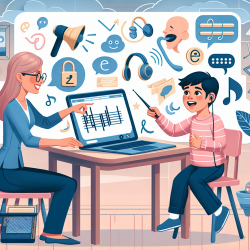
The most effective therapy is structured, targeted, and consistent—while still engaging for the student. Intervention often focuses on helping the student hear, recognize, and produce final consonants across words and contexts.
Common therapy components may include:
- Auditory discrimination: Helping students hear the difference between “bee” and “beep,” or “bow” and “boat.”
- Minimal pairs: Using word pairs that differ only by the final consonant (e.g., “bow” vs. “boat”) to highlight meaning changes.
- Explicit placement and production practice: Teaching how the mouth and voice work to produce final sounds.
- Structured practice to generalization: Moving from single words to phrases, sentences, reading, and conversation.
- Home/school carryover supports: Simple practice routines that reinforce skills outside of therapy.
From a leadership perspective, the key is ensuring therapy is delivered with fidelity and that teams can document progress in a way that supports educational decision-making.
How TinyEYE Therapy Services Support Schools
Many districts are navigating SLP shortages, high caseloads, and difficulty hiring in hard-to-staff areas. These challenges can lead to missed sessions, compliance concerns, and frustration for families and staff. TinyEYE’s online therapy model is designed to help districts maintain service delivery and provide students with consistent, high-quality support.
Here are practical ways TinyEYE can help when addressing needs like final consonant deletion:
- Access to qualified clinicians: TinyEYE helps schools connect with SLPs who can deliver therapy remotely, supporting continuity of services.
- Consistent scheduling: Regular sessions are critical for phonological progress. Teletherapy can reduce disruptions caused by travel time and staffing gaps.
- Engaging digital therapy tools: Interactive activities can support high practice trials—important when building new speech patterns.
- Data-informed progress monitoring: Schools need clear documentation for IEP reporting. Online platforms can support efficient tracking and communication.
- Collaboration with school teams: Effective teletherapy includes coordination with educators and caregivers so skills generalize beyond the session.
When a student is working on final consonant deletion, consistency and repetition matter. Teletherapy can be a strong fit because it allows clinicians to deliver structured practice, provide immediate feedback, and maintain momentum over time.
What Families and Educators Can Watch For
If you suspect final consonant deletion, consider the following indicators:
- The student is frequently misunderstood, especially by unfamiliar listeners.
- Words sound “cut off” or “unfinished.”
- The student avoids longer words or speaking in groups.
- Teachers report difficulty understanding the student during academic tasks.
- Spelling and sound awareness seem inconsistent (especially with ending sounds).
When concerns arise, schools can follow their established problem-solving process, consult with the SLP, and determine whether a speech-language evaluation is appropriate.
Keeping the Focus on Student Outcomes (and Compliance)
From a district perspective, speech services are not only about improving sounds—they are about ensuring students can access instruction and demonstrate learning. When final consonant deletion significantly impacts intelligibility, it can become an educational barrier. Addressing it early and consistently helps prevent secondary impacts on participation, confidence, and literacy development.
And importantly, consistent service delivery supports legal compliance with IEP implementation. When staffing shortages threaten that consistency, partnering with an online provider like TinyEYE can be a practical solution to protect student services and maintain trust with families.
For more information, please follow this link.