Speech sound development in toddlers can feel like a moving target: one day your child says “ball,” the next day it’s “bah,” and both can be completely typical. Toddlers learn speech sounds gradually, and they often simplify words while their mouths, brains, and language systems mature. Understanding what sounds are commonly heard at different ages can help families and school teams know when to reassure, when to monitor, and when to reach out for support.
How speech sounds develop (and why errors can be typical)
Toddlers don’t learn all speech sounds at once. Early sounds are usually easier to see and feel (like lips coming together for “m” and “b”). More complex sounds (like “s,” “r,” and “th”) typically come later. It’s also common for toddlers to use “phonological processes,” or patterns that simplify speech, such as leaving off final sounds (“ca” for “cat”) or swapping a tricky sound for an easier one (“wabbit” for “rabbit”). Many of these patterns are typical early on and fade with time.
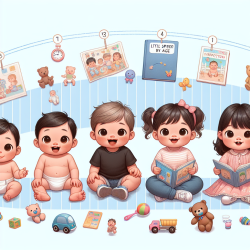
Toddler speech sounds by age (general guide)
Every child develops at their own pace, and bilingual development can follow a different (still typical) timeline. The milestones below are broad expectations—not pass/fail rules.
Around 12–18 months
- Common sounds: m, b, p, d, n, h, w
- Words may be approximations (e.g., “ba” for “ball”)
- Communication includes gestures, pointing, and simple words
Around 18–24 months
- Common sounds expand to include: t, k, g, f, y (some children begin these earlier or later)
- Vocabulary grows quickly; two-word combinations may appear (“more milk”)
- Speech may still be hard for unfamiliar listeners to understand
Around 2–3 years
- Many children use: m, n, p, b, t, d, k, g, f, h, w, y
- Some begin: s, z, sh, ch, j, l (often emerging, not consistent)
- Intelligibility improves; familiar adults understand much more of what the child says
Around 3 years (transitioning out of “toddler”)
- Speech is often understood by familiar listeners most of the time
- Later-developing sounds (like r and th) are still typically developing and may not be expected yet
When to consider extra support
It can be helpful to consult a speech-language pathologist (SLP) if you notice any of the following:
- Your toddler is very difficult to understand compared to peers, even for familiar adults
- They use only a small set of sounds, or speech seems “stuck” in the same patterns over time
- They frequently omit many sounds (especially at the beginnings of words)
- Frustration, tantrums, or withdrawal increases because they can’t be understood
- You have concerns about hearing, frequent ear infections, or limited response to sound
How TinyEYE supports schools and families
Early support works best when it’s consistent, collaborative, and built into a child’s learning environment. TinyEYE provides online therapy services to schools, helping districts access qualified clinicians and maintain service continuity.
- School-based collaboration: TinyEYE clinicians partner with educators and support teams to align goals with classroom routines.
- Evidence-informed intervention: Therapy targets speech sound skills in developmentally appropriate steps, focusing on functional communication.
- Family-friendly carryover: When schools and families share simple practice ideas, toddlers make faster, more confident progress.
Simple ways to encourage speech sounds at home and school
- Model, don’t demand: Repeat the word correctly (“Yes, a cat!”) without forcing a repeat.
- Use short, clear phrases: “More bubbles,” “Big ball,” “Up, up!”
- Play with sounds: Animal noises, vehicle sounds, and songs build early speech patterns.
- Celebrate communication: Respond to the message, even if the sounds aren’t perfect.
For more information, please follow this link.