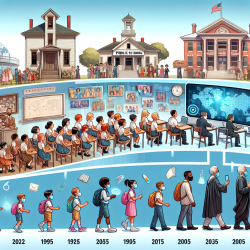
The landscape of public school enrollment in the United States is undergoing significant changes. Recent studies have shown a decline in public school enrollment, a trend that was expected to gradually unfold even before the COVID-19 pandemic. However, the pandemic accelerated this shift, leading to a sudden shock in student numbers across various states.
Factors Contributing to Enrollment Declines
The declining fertility rate in the U.S., which has been below replacement levels for years, is one of the primary factors contributing to smaller cohorts of school-age children. The pandemic intensified this issue by prompting many families to explore alternative education options such as homeschooling and private schooling. This shift has left millions of children unaccounted for in any formal educational setting.
According to data from the National Center for Education Statistics (NCES), public school enrollment increased only by 2% between 2012 and 2019. The impact of COVID-19 further exacerbated this decline, with steep enrollment losses reported in states like Massachusetts, Virginia, Michigan, and California.
Fiscal Implications and School Closures
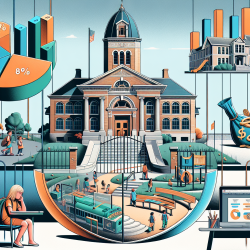
The decline in student numbers creates immediate fiscal stress for schools since state and federal aid are often allocated on a per-pupil basis. As a result, district leaders are considering measures such as adjusting school capacity, redistricting, or even closing campuses to balance budgets. These steps are politically sensitive but necessary to address fiscal pressures.
Recent evidence suggests that steeper enrollment losses significantly increase the likelihood of permanent school closures. For example, states like Washington D.C., Mississippi, and Arkansas have experienced frequent closures due to substantial enrollment drops.
Enrollment Shifts Across Demographics
Enrollment declines have not affected all student groups equally. Kindergarten enrollment has seen sharper declines among black and low-income children compared to white and higher-income students. Such patterns raise concerns about potential re-segregation and resource inequality within public schools.
The trend towards non-traditional education options is evident across different racial and socioeconomic groups. In districts with predominantly black students, non-traditional public school (TPS) enrollment rose from 25.4% in 2015-16 to 34.1% in 2023-24. Similarly, predominantly Hispanic and white districts have also seen increases in non-TPS enrollments post-pandemic.
The Future of Public School Enrollment
The future of public school enrollment remains uncertain as districts navigate these challenges. Projections indicate that if families continue opting for alternatives at current rates, traditional public schools could lose up to 8.5 million students by mid-century.
Districts must adapt to these changing dynamics by understanding why parents choose alternative education paths and exploring policy tools that preserve educational quality and equity. Some districts are experimenting with strategies such as preserving school budgets despite shrinking rolls or introducing new curricula to attract students back.
Conclusion
The COVID-19 pandemic has reshaped American K-12 education by prompting families to reconsider where and how their children learn. While some parents may eventually return to pre-pandemic habits due to practical considerations like work demands, others may continue seeking alternatives that better suit their needs.
As public schools face declining enrollments and tighter budgets, it is crucial for district leaders to develop innovative solutions that address these challenges while ensuring equitable access to quality education for all students.
For more information, please follow this link.