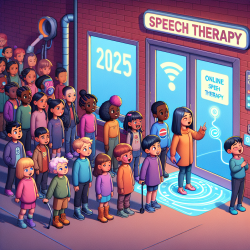
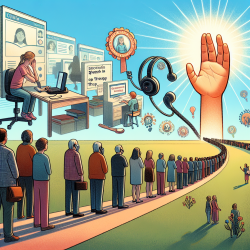
The New Reality in 2025: Speech Therapy Has Become “Pay-for-Access”
The pediatric speech therapy market in 2025 is being shaped by a hard truth: access is increasingly tied to ability to pay. Families who can afford private services often find a faster path—at least on paper—while families relying on public systems or insurance face longer delays, more cancellations, and fewer consistent weekly openings.
For schools, this isn’t just a healthcare issue. It’s an educational access issue. When students can’t receive timely services, the impact shows up in classroom participation, literacy development, behavior, and social connection. And when families can’t secure outside therapy, the school becomes the most reliable setting for consistent support—if the school can staff it.
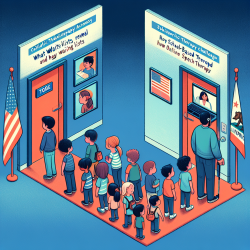
The “Hidden” Waitlist: Why a 2-Week Evaluation Can Still Mean Months Without Therapy
One of the most important operational findings in the current market is what many families and educators experience but rarely name: the “eval-to-treat” gap.
Here’s how it often looks in real life:
- A family calls a clinic and is told, “We can evaluate your child in two weeks.”
- The evaluation happens, and the child qualifies for therapy.
- Then the family hears, “The next available weekly therapy slot is in four months—especially after school hours.”
This is why it’s essential to separate two different types of capacity:
- Intake capacity: How quickly a provider can schedule an evaluation or intake appointment.
- Treatment capacity: How quickly a provider can begin ongoing therapy at the frequency the child needs.
In 2025, many systems can still “get you in the door” for an evaluation. The bottleneck is ongoing service delivery—especially the high-demand times like 4:00 PM weekly appointments.
For schools, the parallel is clear. A student may be identified quickly, and an IEP may be developed appropriately—but if staffing shortages prevent consistent service minutes, the student experiences the same gap: identified needs without timely treatment.
Why This Matters for Schools: Availability Is Becoming a Clinical Standard
Traditionally, “quality” in therapy has been framed around credentials, techniques, and outcomes. Those still matter. But in a market defined by delays, availability is becoming the new clinical standard—because services that start months late can’t deliver the same impact as services that start promptly.
From a special education lens, delayed intervention can mean:
- Missed windows for early language development
- Compounding academic challenges (especially reading and writing)
- Increased frustration and avoidance behaviors
- Reduced confidence in speaking and participating
- More intensive needs later that require more time and resources
In other words, access isn’t just a scheduling problem. It’s an outcomes problem.
State-by-State Differences: Where the Need Is Most Urgent
Not all regions are experiencing the same level of strain. The market shows major state-specific differences, and these differences matter for districts planning staffing models and service delivery options.
High-Need, High-Opportunity States
States such as Nevada and New Mexico have been highlighted as places where public sector systems are under severe pressure. When public access collapses or becomes inconsistent, families turn to schools and private providers—and schools often carry the weight of being the most stable service environment.
For districts in these regions, the need is not subtle. It shows up as:
- Unfilled SLP vacancies
- Growing caseloads
- Difficulty meeting service minutes consistently
- Increased referrals as teachers notice unmet needs
Saturated Markets Where “Fast” Isn’t Enough
In more saturated areas—examples include Raleigh, NC and Dallas, TX—speed alone may no longer differentiate providers. In these regions, families may have more options, but competition is higher, and specialization can become the deciding factor.
Specialized services that often stand out include:
- Feeding therapy support and consultation
- AAC (Augmentative and Alternative Communication) assessment and intervention
- Complex speech sound disorders
- Language therapy for higher-level academic demands
For schools, this is a reminder that staffing isn’t only about “having an SLP.” It’s also about having access to the right expertise when student needs are complex.
The Future Outlook: Teletherapy as the “First Line” for Speech Support
Looking ahead, the market outlook is blunt: without major changes to insurance reimbursement rates or a significant increase in the graduate pipeline, the current split system will harden.
That means:
- In-person therapy may increasingly become a premium service, especially for complex cases or families with more financial flexibility.
- Teletherapy will continue absorbing overflow demand—and may become the default “first line” option for many students with speech and language delays.
For schools, this is not a distant prediction. It’s already happening. Districts are being asked to do more with fewer applicants, fewer substitutes, and fewer local providers able to fill gaps quickly.
What Stakeholders Can Do Now: Engineer for a 14-Day Start of Care
The most actionable insight for 2025 is this: facilities that can guarantee a start of care within 14 days of inquiry will dominate. That’s true in private settings—and it’s increasingly true in school settings, too, where families and educators are watching how quickly support becomes real service.
So what does “engineering for access” look like in a school environment?
- Separate evaluation scheduling from ongoing service planning so students don’t get “stuck” after eligibility is determined.
- Build service delivery models that can flex (individual, small group, consultative, classroom-based) while still meeting IEP requirements.
- Use teletherapy to stabilize coverage when vacancies, leaves, or caseload surges threaten consistency.
- Track the eval-to-treat gap internally by measuring time from referral to first session—not just time to evaluation.
This is where online therapy services can be a practical, student-centered solution. TinyEYE Therapy Services is an online option that helps schools provide consistent speech-language support when in-person staffing is limited, when specialized expertise is needed, or when districts want to reduce service disruptions. For many schools, teletherapy isn’t a backup plan anymore—it’s part of a sustainable access strategy.
A Clear Bottom Line for 2025
The speech therapy market is no longer defined only by clinical need. It’s defined by operational reality: who can start services quickly and deliver them consistently.
The “hidden waitlist” problem—the gap between evaluation and actual weekly therapy—has changed how families experience care and how schools must plan services. In this environment, availability becomes more than convenience. It becomes a core ingredient of effective intervention.
For more information, please follow this link.