
Why the World Keeps Watching Finland
Education leaders across the globe continue to study Finland—not because Finnish schools chase trends, but because they have built a coherent system that reliably supports learners. In international comparisons, Finland has repeatedly performed strongly, and the country’s approach is often described with three words:
Free. Equal. Quality.
What stands out most is not a single program or “silver bullet.” Finland’s success comes from aligned choices: publicly funded education, a national curriculum with local flexibility, highly educated teachers, and a strong commitment to student wellbeing and early support. For anyone working in schools—especially those serving students with diverse learning needs—Finland offers a useful lens for thinking about what sustainable, inclusive education can look like.
Equity as a Design Principle (Not a Slogan)
One of the greatest strengths of Finnish education is its commitment to equal opportunity regardless of social or financial background. In practice, this is reinforced by how the system is funded and organized.
Education is publicly financed through tax revenue. Private “premium” education markets are limited in practice, and even privately run institutions follow the same objectives and standards as public schools.
The local school principle reduces segregation. Most students attend the school closest to home, helping prevent schools from sorting by family income or status.
Core learning resources are free in basic education. Tools, supplies, and materials used in teaching are provided at no cost to families.
From a special education perspective, equity is not only about access to a seat in a classroom. It is also about access to the supports that make participation meaningful—timely intervention, individualized instruction when needed, and services that reduce barriers to learning.
Starting School Later—With Strong Early Foundations
Finnish children typically begin school at age seven. This reflects a national belief that children need time and space to grow and develop. That later start is not “less education.” It is paired with structured early childhood education and care and a year of pre-primary education at age six.
Early childhood services include pedagogical goals, regulated competence requirements for staff, and university degrees for day care teachers. Families also benefit from long family leaves and supported child care options. If needed, a child’s readiness for school can be assessed, and school can begin a year earlier or later.
For schools elsewhere, the takeaway is not necessarily to change the school start age. The deeper lesson is that early development, emotional safety, and social skills are treated as essential learning foundations—not extras.
A Daily Practice of Wellbeing: The Free School Lunch
Finland has provided a free daily hot meal to students since 1948. This is more than a nutrition policy; it is part of the curriculum and a practical example of how wellbeing supports learning.
Every student receives a healthy meal (often including salad, milk or another beverage, and bread).
Special diets are considered, and many schools offer vegetarian options and environmentally friendly choices.
Lunch is a learning moment for health, nutrition, and social skills.
When students’ basic needs are met consistently, educators can spend less time managing preventable barriers and more time teaching. This is a key special education insight: learning improves when the environment is designed to reduce stressors and support regulation.
National Standards, Local Flexibility
Finland uses a national core curriculum that sets consistent objectives and subject areas across the country. Municipalities build their local curricula from that core, and schools create their own plans. This structure aims to ensure that the level and scope of teaching remain consistent nationwide while still allowing local emphasis and additions.
Importantly, Finland does not rely heavily on continuous high-stakes testing. Learning outcomes are monitored through national assessments using random sampling (about 5–10% of an age group). This reduces the pressure to “teach to the test” and supports a more balanced view of student growth.
Highly Educated Teachers—and a Culture of Trust
Teacher preparation is a cornerstone of the Finnish model. Comprehensive school teachers are required to hold a Master’s degree. Teacher training is highly respected and competitive, with far more applicants than available spots.
That investment enables something many systems say they want but struggle to implement: professional trust. Teachers follow the national curriculum, but they have the freedom to choose teaching methods and learning materials. They are treated as specialists who understand both the common goals and the individual needs of their students.
For school leaders, this raises a practical question: what would change if we built systems that assume competence and provide support, rather than systems that assume compliance and require constant proof?
How Finland Approaches Learning: Skills for Life, Not Just School
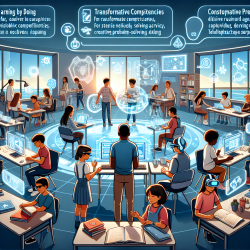
Finland’s curriculum and classroom practices increasingly emphasize learning environments beyond the traditional classroom. Students learn outdoors, visit museums and companies, and use digital and virtual environments. Teaching methods vary across subjects, and technology is integrated as part of daily learning.
The curriculum highlights broad, transferable competencies such as:
Problem-oriented learning and goal setting
Interaction and expression skills
Responsibility-taking and self-assessment
Everyday life skills and self-care
Multiliteracy, including interpreting and producing information across formats (verbal, visual, auditory, kinesthetic)
From a special education lens, this matters because students with learning differences often thrive when learning is flexible, multi-modal, and connected to authentic purposes. When classrooms allow multiple ways to engage and demonstrate learning, more students can succeed without needing “extra” accommodations to access the core experience.
Early and Ongoing Support: A Strength Worth Studying
Finland’s system explicitly states that students are entitled to special support as soon as the need arises. Common supports include remedial teaching in small groups and one-on-one guidance. Students can receive individualized teaching aligned to their prerequisites even while learning with peers.
Many schools have special needs teachers and assistants, and when more extensive or permanent learning difficulties are identified, an individual learning plan is created. Students with mild to moderate learning difficulties typically learn in the same schools and classrooms as others, with additional resources allocated to schools to make that possible.
For students with significant disabilities or complex needs, Finland may provide special classrooms or schools, and for some students compulsory education lasts 11 years. The emphasis is on ensuring the right support in the right setting, rather than forcing a one-size-fits-all model.
Where TinyEYE Fits: Strengthening Support Through Access
At TinyEYE, we provide online therapy services to schools, and Finland’s approach reinforces a message we see every day: timely support changes trajectories. Whether a student needs speech-language therapy, occupational therapy, or mental health supports, access and consistency matter.
Many school systems face practical barriers—staffing shortages, geographic distance, scheduling constraints, and growing caseloads. Online therapy can help schools protect service continuity and reduce wait times, especially when paired with strong school-based collaboration. The goal is not to replace what schools do best, but to extend their capacity so that students receive support when it is most effective: early, consistently, and in coordination with educators and families.
Practical Takeaways Schools Can Use Now
Design for equity. Audit whether supports (interventions, assistive tools, wellbeing services) are distributed by need rather than by neighborhood, funding quirks, or staffing luck.
Prioritize early support. Build systems that make it easy to notice concerns and respond quickly, before difficulties compound.
Invest in professional trust. Provide clear goals and strong training, then give educators room to use their expertise.
Support the whole child. Nutrition, safety, belonging, and emotional regulation are learning supports, not “extras.”
Use flexible learning environments. Multi-modal instruction and varied settings benefit many learners, including those with disabilities and those learning a new language.
For more information, please follow this link.