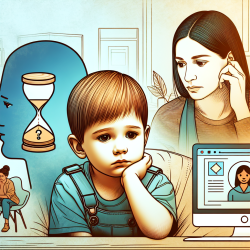

In every classroom, there is a moment when a teacher asks a question and a student doesn’t respond. Sometimes it is a simple case of distraction or uncertainty. Other times, the silence is consistent, confusing, and concerning. When a child regularly does not answer questions, it can affect learning, relationships, and how adults interpret the child’s abilities.
As educators and support teams, our job is to look beyond the silence and ask a better question: “What might be getting in the way of this child responding?” A child’s lack of response can be rooted in communication differences, anxiety, processing challenges, cultural and language factors, or past experiences. Understanding the “why” helps schools respond with support instead of pressure.
Why a Child Might Not Answer Questions
There is no single explanation, and more than one factor can be present at the same time. Below are common reasons seen in school settings.
1) The child may not understand the question
Understanding spoken language is a skill. Some students have receptive language difficulties, meaning they may miss key words, struggle with complex sentences, or have trouble understanding abstract concepts. If a question is long or includes multiple parts, the student may freeze rather than guess.
- They may understand some words but not the overall meaning.
- They may struggle with “wh-” questions (who, what, where, when, why, how).
- They may have difficulty with vocabulary, grammar, or figurative language.
2) The child may need more processing time
Some students process information more slowly, especially students with language delays, ADHD, learning disabilities, or auditory processing differences. In fast-paced classroom discussions, the question may move on before the child is ready to respond.
- They may know the answer but need extra seconds to organize their thoughts.
- They may benefit from “wait time” and predictable routines.
3) Anxiety may be blocking speech
For some children, speaking in front of others feels unsafe. Anxiety can show up as silence, avoidance, or a “shut down” response. In some cases, this may align with selective mutism, an anxiety-based condition where a child can speak in some settings but not others.
- The child may speak comfortably at home but not at school.
- They may whisper to one trusted peer but not adults.
- They may avoid eye contact or appear tense when called on.
4) The child may be unsure how to respond socially
Answering questions is not only a language task; it is also a social task. Students with social communication differences, including some autistic students, may not know what kind of answer is expected, how much detail to give, or when it is their turn to speak.
- They may not recognize that a question requires a response.
- They may worry about being “wrong” or misunderstood.
- They may respond in a different way (gestures, scripts, or off-topic comments).
5) Speech sound or fluency challenges may make speaking feel risky
If a child has difficulty pronouncing sounds or stutters, they may avoid speaking to prevent embarrassment. Silence can be a protective strategy, especially if the child has experienced teasing or frequent correction.
- They may give very short answers to “hide” speech difficulties.
- They may avoid words they find hard to say.
6) Hearing, attention, or sensory factors may be interfering
Sometimes a child does not respond because they did not hear the question clearly, were overwhelmed by noise, or were focused elsewhere. Even mild hearing loss, frequent ear infections, or classroom acoustics can impact understanding and response.
- They may respond better in small groups than whole-class settings.
- They may miss questions when the teacher is turned away or speaking quickly.
7) Language difference or cultural expectations may play a role
Multilingual learners may need time to translate, find words, or build confidence in a new language. Additionally, cultural norms can influence how comfortable a child feels answering adults directly or speaking in front of peers.
- The child may understand more than they can express in English.
- They may appear quiet while they are still learning classroom discourse norms.
What Not to Assume
When a child doesn’t answer, it is easy to assume they are being defiant, unmotivated, or unprepared. Those assumptions can damage trust and increase anxiety. Instead, it helps to remember that communication is a skill—and skills can be supported.
- Silence does not automatically mean the child doesn’t know.
- Silence does not automatically mean the child is refusing.
- Silence is often communication in itself: “This is hard for me right now.”
Practical Classroom Strategies That Support Responses
Many supports can be implemented right away, even while the team is still figuring out the root cause.
Use predictable question formats
- Start with easier question types (yes/no, choice questions) before open-ended questions.
- Provide sentence starters such as “I think…” or “The answer is…”
- Ask one question at a time and keep wording clear.
Increase wait time and reduce pressure
- After asking a question, pause for at least 5–10 seconds.
- Let the student know you will come back to them after a few other students respond.
- Avoid “rapid-fire” follow-up questions when the student is stuck.
Offer alternative ways to respond
- Allow pointing, showing, drawing, or writing.
- Use visual supports, picture choices, or response cards.
- Let the student record an answer or respond in a small group first.
Prime and preview
- Share discussion questions ahead of time when possible.
- Preview key vocabulary before a lesson.
- Check in privately: “I’m going to ask you about this in class. Let’s practice once.”
Respond to attempts, not just accuracy
- Praise effort: “Thanks for trying—that helps me understand your thinking.”
- Model the correct answer without shaming: “You’re close. Another way to say it is…”
- Limit public correction if the child is sensitive or anxious.
When to Involve the School Support Team
If a child frequently does not answer questions across settings, subjects, or weeks, it is time to look deeper. A collaborative approach prevents the child from being mislabeled and ensures the right support is put in place.
- Talk with caregivers to learn what communication looks like at home.
- Observe patterns: Is the child silent only during whole-class instruction? Only with certain adults? Only in certain subjects?
- Consider hearing screening and vision checks if concerns arise.
- Consult with the speech-language pathologist (SLP) for language, speech, and social communication factors.
- Consult with school psychology or counseling staff if anxiety or emotional factors are suspected.
How Speech-Language Therapy Can Help
An SLP can help determine whether the child’s silence is connected to language comprehension, expressive language, pragmatic (social) communication, speech sound production, or fluency. Therapy may include:
- Building comprehension skills for classroom questions and directions
- Practicing how to answer different question types with structured support
- Strengthening vocabulary, sentence formulation, and narrative skills
- Supporting social communication, turn-taking, and conversational confidence
- Collaborating with teachers to adjust classroom language demands
When anxiety is a major factor, SLPs often work alongside mental health professionals using supportive, gradual approaches that reduce pressure and build safety around communication.
How Online Therapy Supports Schools and Students
Schools are balancing growing needs with limited staffing. Online therapy can expand access to services and reduce wait times, especially when recruiting in-person specialists is difficult. For many students, teletherapy also offers a calm, structured environment that can make participation feel more manageable.
At TinyEYE, online therapy services are designed to fit within school routines and IEP goals while keeping collaboration central. Therapy sessions can target the exact skills that help a child answer questions successfully: understanding language, organizing responses, using clear speech, and building confidence to communicate in academic and social settings.
A Final Thought: Silence Is a Signal
When a child doesn’t answer questions, the most helpful response is curiosity paired with support. The goal is not to force speech in the moment, but to remove barriers and teach the skills that make responding possible. With the right strategies—and the right team—many students make meaningful progress in participation, learning, and self-advocacy.
For more information, please follow this link.