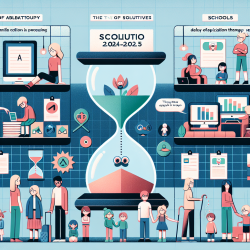

Why therapy timelines matter in schools
In special education, timing isn’t a small detail—it’s often the difference between a student gaining momentum or losing confidence. When a child is waiting for support, we frequently see the “in-between” costs: skills plateau, behaviors increase, attendance dips, and classroom participation becomes harder. For educators and school teams, delays can also strain resources as staff try to bridge gaps without the specialized time or training that therapy services provide.
Therapy services—whether speech-language therapy, occupational therapy, or mental health supports—work best when they are accessible, consistent, and aligned with classroom goals. Yet access can look very different depending on where a student lives and which pathway a family or school is using.
A snapshot of estimated wait times (2024–2025)
Wait times can vary widely by region and service pathway. The following estimates help illustrate what families and schools may encounter:
- WRHA Public Service (Intake) – Winnipeg: < 1 month (often described as a “no waitlist” policy)
- WRHA Public Service (Treatment) – Winnipeg: Variable (often episodic or consultative)
- Public Service (Rural) – Prairie Mountain / Southern: 6–12 months
- Private Assessment/Therapy – Winnipeg: Immediate to 1 month
Even when intake happens quickly, treatment timelines can be less predictable. And for rural regions, the difference can be dramatic—months of waiting during critical developmental and academic windows.
Understanding the difference between intake and treatment
One of the most common points of confusion for families is the difference between being “in the system” and receiving ongoing therapy. Intake may happen quickly, but treatment may be:
- Episodic: Short bursts of therapy with breaks in between
- Consultative: Guidance provided to caregivers or school staff rather than direct weekly sessions
- Prioritized: Based on severity, age, safety, or other criteria that can shift over time
None of these models are inherently “bad”—many students do well with consultative support when it’s timely and coordinated. The challenge is when a student needs consistent intervention and the system can’t match that need quickly enough.
What long waits can look like in real school terms
When a student is waiting 6–12 months, that can represent:
- Most of a school year
- A full cycle of report cards and goal reviews
- A missed opportunity to establish foundational skills early
- Increased reliance on informal accommodations that may not be sustainable
From a special education lens, we also know that students can internalize struggle. A child who can’t communicate clearly may withdraw. A child with sensory or motor challenges may avoid tasks that feel too hard. A student with anxiety may be labeled as “noncompliant” when they are actually overwhelmed.
Why regional differences hit equity the hardest
The rural wait-time estimate (6–12 months) highlights a familiar equity issue: students’ access to services can depend on geography. Schools in rural areas may have fewer local providers, longer travel times, and limited appointment availability. Families may face additional barriers such as transportation, work schedules, or childcare for siblings.
In practice, this can mean that rural schools are asked to do more with less—often with deeply committed staff who still need specialized support to meet complex student needs.
Private services: faster access, but not always feasible
Private assessment and therapy in Winnipeg may be available immediately to within a month, which can be a lifeline for some families. However, private services are not equally accessible to all. Cost, scheduling, and transportation can make private therapy unrealistic—especially when a student needs ongoing sessions, not just a one-time assessment.
This is where schools often step in, advocating for students and looking for solutions that can be delivered within the school day.
An online option schools can use: TinyEYE Therapy Services
When in-person services are limited, online therapy can help schools respond more quickly and consistently. TinyEYE Therapy Services provides online therapy services to schools, supporting students where they already learn and helping teams maintain continuity even when local provider availability is tight.
Online therapy is not about replacing the human connection that makes therapy effective—it’s about expanding access. In many cases, it can also reduce barriers like travel time, missed class due to commuting, and provider shortages in specific regions.
How online therapy can support students and school teams
- Improved access: Students can receive services even when local staffing is limited.
- Consistency: Regular scheduling supports skill-building and progress monitoring.
- School-based collaboration: Therapy goals can be aligned with classroom expectations and IEP/learning plans.
- Family communication: Clear updates help caregivers understand goals and strategies.
- Reduced logistical barriers: Less travel and fewer disruptions to the school day.
What schools can do while students are waiting
Even with the best planning, some students will still face delays. While a student is waiting for therapy, schools can take meaningful steps that protect learning and dignity. Consider the following supports (always tailored to the individual student):
- Use classroom-based strategies now: Visual schedules, simplified language, structured routines, and explicit instruction can reduce frustration.
- Support communication access: Offer choices, visuals, sentence starters, or AAC supports as appropriate.
- Build regulation into the day: Movement breaks, sensory tools, predictable transitions, and calm spaces can reduce escalation.
- Document what you see: Track patterns (time of day, task type, setting) to inform future therapy planning.
- Coordinate as a team: Regular check-ins between teachers, student services, and families prevent “wait time” from becoming “lost time.”
These steps don’t replace therapy, but they can stabilize the learning environment and preserve a student’s confidence until specialized services begin.
Choosing the best pathway: questions that help
When deciding between public, private, and online options, schools and families often benefit from asking:
- What is the student’s most urgent functional need right now? (Communication? Regulation? Fine motor? Participation?)
- How long is the estimated wait for direct treatment? (Not just intake.)
- What level of service is being offered? (Direct, consultative, episodic.)
- What can the school implement immediately?
- Could an online option like TinyEYE Therapy Services close the gap sooner?
When we focus on function—what the student needs to do at school and in daily life—we make better decisions, faster. And when we reduce delays, we reduce secondary impacts like anxiety, avoidance, and academic disengagement.
A hopeful takeaway
Wait times can be discouraging, especially when you’re watching a student struggle in real time. But there are practical ways to respond: clarify the pathway, understand the difference between intake and treatment, put classroom supports in place immediately, and consider service models that expand access.
For many schools, online therapy is a powerful part of that solution. TinyEYE Therapy Services offers an online option that can help schools support students sooner, more consistently, and in closer alignment with educational goals.
For more information, please follow this link.