
Schools are being asked to do more than raise test scores—they’re expected to remove barriers, expand opportunity, and ensure every learner can participate fully in academics, career pathways, and school life. That’s especially urgent for students who are members of special populations, including students with disabilities, English learners, students experiencing homelessness, youth in foster care, students from economically disadvantaged families, single parents, out-of-workforce learners, and students preparing for nontraditional fields.
The good news: there are proven, practical improvement strategies that districts and school leaders can implement without waiting for a “perfect” budget year. The even better news: many of these strategies work best when schools coordinate supports across teams—general education, special education, counseling, family engagement, and related services. This is also where online therapy services, like those provided by TinyEYE, can strengthen consistency and access by helping schools deliver services reliably, reduce scheduling bottlenecks, and support students wherever they are.
Start With the System: Find the Hidden Barriers
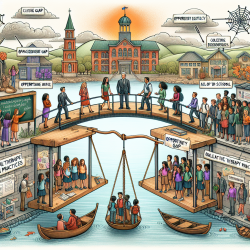
Before launching new initiatives, examine how existing systems may unintentionally perpetuate disparities. Equity gaps often aren’t caused by a lack of effort—they’re caused by friction points embedded in policies, communication patterns, and resource access.
- Explore how systems, policies, authority structures, communication practices, and social resources may be perpetuating disparities.
- Review “who benefits” and “who is burdened” by current processes (referrals, eligibility, course access, discipline, transportation, fees).
- Include student voice in equity audits and in the development of institutional policies and programs.
Tip for implementation: create a simple barrier log. Every time a staff member hears “I can’t because…,” capture it. Patterns will emerge quickly (transportation, translation, childcare, scheduling, stigma, fear of disclosure).
Build Staff Capacity: Professional Development That Changes Daily Practice
Professional development is most effective when it helps educators recognize how identity and perception influence student experience. Training should go beyond awareness and translate into classroom routines, communication habits, and decision-making.
- Implement professional development that builds capacity to understand how sex, race, class, language, ethnicity, and ability differences are perceived and treated—and how implicit bias and micro-messaging can shape outcomes.
- Learn and use culturally responsive teaching and leadership skills, including connecting students’ cultural backgrounds to instruction and valuing cultural diversity as an asset.
- Acknowledge, address, and respond to culturally traumatic or celebratory news and events so students feel seen and supported.
Where online therapy can help: school-based mental health and related service teams can reinforce staff training by providing consultation on student needs, trauma-informed responses, and communication strategies that reduce stigma and increase engagement.
Use “Wise Feedback” to Strengthen Self-Efficacy and Growth Mindset
Students in special populations may have experienced repeated signals—direct or subtle—that expectations are low. “Wise feedback” is a research-backed approach that pairs high standards with reassurance that the student can meet them.
- Use wise feedback and other strategies to build self-determination, self-efficacy, and a growth mindset.
- Use role models and mentoring to reinforce student identity and confidence.
This is especially powerful when paired with consistent, strengths-based language across adults: teachers, administrators, counselors, and therapy providers.
Make Belonging Real: Networks, CTSOs, and Social Capital
Opportunity often travels through relationships. Students who feel welcome and supported are more likely to persist in challenging programs and pursue career pathways.
- Use Career and Technical Student Organizations (CTSOs) to help students build social capital and supportive networks.
- Ensure students from special populations participate in work-based learning, supported employment, and apprenticeships that lead to economically self-sufficient employment.
- Partner with community-based organizations and support agencies; invite them to conduct outreach and provide services on campus.
Practical move: remove participation barriers (fees, uniforms, tools, transportation). If a program is “open to all” but requires costs or travel, it’s not truly accessible.
Coordinate Supports So No One Falls Through the Cracks
Many students don’t need “more programs”—they need fewer handoffs. Case management is a high-impact strategy for coordinating services, tracking follow-through, and reducing missed supports.
- Implement case management for students who are members of special populations to ensure services are coordinated.
- Involve caregivers in outreach, decision making, and support—while removing barriers such as transportation, child care, translation, location, and scheduling.
Where online therapy can help: virtual service delivery can reduce missed sessions due to staffing shortages or travel time, and it can support consistent scheduling across campuses. This consistency makes case management easier because services are more predictable and trackable.
Strategies by Student Group: What Schools Can Do Right Now
1) Individuals with Disabilities
- Ensure physical spaces are accessible (transportation, parking, door width, table heights, turn space, and more).
- Provide training on accommodations, privacy protection, and stigma reduction.
- Implement Universal Design for Learning (UDL) and differentiated instruction in all classrooms.
- Use para-professionals and special education service providers to support learning in and out of class.
- Strengthen IEP effectiveness by including all relevant staff (including CTE teachers) and training them to understand IEPs, raise expectations, and reduce bias.
- Request and implement approved accommodations for industry certification or licensure exams.
- Create safe ways for students and families to advocate for themselves (secure reporting, peer advocates).
2) Individuals from Economically Disadvantaged Families
- Build trust with students and families while maintaining privacy.
- Provide free books, materials, tools, uniforms, and required resources; cover dues and activity fees for low-income students.
- Make financial aid and scholarships easy to access and provide application support.
- Offer transportation supports (vouchers, bus passes, mileage reimbursement) aligned to program times and locations.
- Ensure access to healthy food by providing meals at school and events; coordinate food bank distribution on campus.
- Offer affordable or free licensed childcare on-site when possible.
- Create a business clothes closet for interviews and work; seek community donations.
3) Individuals Preparing for Nontraditional Fields
- Expose students early (elementary grades) to broaden career awareness.
- Address math anxiety and spatial visualization skill development with scaffolding and tutoring.
- Offer low-risk, hands-on experiences (after-school workshops, maker spaces, summer camps).
- Review curriculum and guidance practices for bias; ensure inclusive examples, language, and images.
- Use equitable cooperative learning with rotating responsibilities; avoid tokenism and stereotyping.
- Ensure safety equipment, uniforms, and tools fit all body sizes.
- Create informal support groups and enroll nontraditional students in cohorts of three or more.
- Enforce civil rights and sexual harassment policies; protect privacy and clarify reporting procedures.
- Personally invite underrepresented students to enroll so they feel welcome.
4) Single Parents, Including Single Pregnant Women
- Do not isolate teen parents in separate programs that limit access to CTE pathways.
- Allow attendance flexibility and alternative course completion options.
- Provide transportation support for both childcare and school—ideally co-located.
- Offer parenting/child development classes to build coping skills and persistence.
- Provide childcare options aligned to program schedules.
- Offer courses in multiple formats (asynchronous online, synchronous online, face-to-face, hybrid) at varied times.
- Ensure faculty accessibility with flexible office hours and timely online communication.
- Host family-friendly outreach and create single-parent support or study groups.
- Integrate life balance and financial literacy skills into curriculum and workshops.
5) Out-of-Workforce Individuals
- Coordinate services with WIOA programs and the American Job Center network.
- Help learners identify transferable skills and connect learning to high-demand careers.
- Provide supports like childcare, transportation, and financial aid for materials and tools.
- Organize support groups and study groups with practical participation supports (food, transportation, childcare).
- Offer career planning: resumes, interview skills, goal-setting, stress management, job-shadowing, and work-based learning.
- Identify paid training options (work-study, subsidized employment, apprenticeships).
- Use flexible learning approaches (evenings/weekends, online, independent learning).
- Offer short-term programs with stackable credentials that have workplace value.
6) English Learners
- Engage families and community to support EL participation in CTE and CTSOs.
- Provide interpreters for students and families.
- Use scaffolded instruction and gradual release of responsibility to build proficiency.
- Leverage technology for translation and vocabulary supports (word walls, audio directions, translation apps).
- Facilitate collaboration between CTE and ESL teachers.
- Connect content learning to language acquisition; position ELs as competent contributors through structured discussion and cooperative learning.
- Provide materials in multiple languages or use a flipped model with prep materials in the home language.
- Use visuals, demonstrations, graphic organizers, increased wait time, and clarification routines; focus on content over accent or minor grammar errors.
- Create cohorts or learning communities to help students navigate the institution.
7) McKinney-Vento (Students Experiencing Homelessness)
- Train staff to identify homelessness and respond to student needs.
- Connect with the McKinney-Vento Homeless Education team; ensure families know their rights and resources.
- Use Title I supports to maximize credit accrual and completion.
- Provide tutoring, credit recovery, partial credit options, independent study, transcript transfer supports, and online learning options.
- Provide practical supports: free meals, shower/laundry access, secure storage, quiet study space, supplies, technology, and internet.
- Coordinate wraparound services (transportation, healthcare, shelters, housing, employment) using trauma-informed approaches.
- Support extracurricular access and CTSO participation; ensure fee waivers are applied where required.
- Pair chronically absent students with mentors and use attendance follow-up to identify and remove barriers.
- Revise policies that create barriers for McKinney-Vento students.
8) Youth in Foster Care (Including Those Who Have Aged Out)
- Understand relevant requirements under the Fostering Connections Act.
- Build trust with students and foster families; prioritize safety and relationship.
- Be flexible with homework, due dates, and testing; coordinate around visitation schedules.
- Ensure access to school-based programs (AP, CTE, athletics, arts, Special Ed, Gifted Ed).
- Connect students to TRIO programs through local colleges (e.g., Upward Bound, Talent Search, Student Support Services).
- Support scholarship searches and applications for foster youth.
- Provide tutoring, counseling, mentoring, cultural enrichment, work-study, and financial literacy training.
9) Youth with a Parent on Active Duty
- Understand deployment-related stressors; refer to counseling when stress persists or functioning declines.
- Create support groups for military-connected students.
- Maintain predictable routines and structured schedules to reinforce stability.
- Respond to events calmly and protect students from unnecessary exposure to frightening reminders.
- Participate in outreach activities and connect families to available supports.
- Help students access free online tutoring at military.tutor.com.
- Use competency checklists to support continuity if students move due to reassignment.
- Know branch-specific education support services and local points of contact.
Where TinyEYE Fits: Turning Strategies Into Sustainable Support
Many of the strategies above depend on consistent, coordinated services—especially when students face barriers like transportation, scheduling conflicts, staffing shortages, or frequent transitions. TinyEYE’s online therapy services can help schools strengthen access and continuity by supporting service delivery models that are flexible, trackable, and easier to coordinate across teams.
When schools align improvement strategies with reliable service access, the result is more than compliance—it’s belonging, participation, and real opportunity.
For more information, please follow this link.