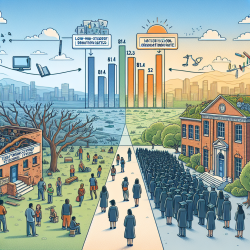
Achievement gaps are not new. For decades, schools across the United States have seen differences in academic performance between groups of students. These gaps often show up between:
- Students from low-income families and their more affluent peers
- Students who are English Learners and native English speakers
- Students with disabilities and students without disabilities
- Students from different racial and ethnic groups
At TinyEYE, we work with schools every day that are trying to solve a tough puzzle: how to make sure every student has real access to learning, not just access to a classroom seat. One important piece of that puzzle is understanding how federal education policy has tried to address achievement gaps, what worked, what didn’t, and what schools can do now to make progress.
Where this conversation started: ESEA and NCLB
The Elementary and Secondary Education Act of 1965 (ESEA) has directed federal resources to schools for more than four decades. The goal has been consistent: help ensure all children have equal access to a quality education.
In 2001, ESEA was reauthorized through the No Child Left Behind Act (NCLB). NCLB brought a major shift in accountability. One of its most important contributions was requiring states and districts to report student achievement by subgroups for the first time in a consistent way.
Why subgroup reporting mattered
Before subgroup reporting, average scores could hide serious inequities. A school might look “fine” overall, while a specific group of students was consistently being left behind. By requiring data to be broken out by subgroup, NCLB helped expose underachievement that had been easier to overlook.
In plain terms: it made invisible problems visible.
What didn’t work well under NCLB
Even though subgroup reporting was a positive step, NCLB also had major limitations that made it harder for schools to improve in meaningful, sustainable ways.
- Pass/fail benchmarks: Schools were often labeled as “failing” based on limited measures, even if students were improving.
- Growth wasn’t recognized: If a school made real progress but didn’t cross a specific benchmark, that improvement might not “count.”
- One-size-fits-all interventions: Mandated responses didn’t always match the unique needs of a school community.
- Restricted use of resources: Title I funds were tied to certain interventions, which could make it difficult to target support to the students with the greatest needs in the most effective way.
From a special education lens, this is especially important. Students with disabilities and English Learners may show progress in ways that are not captured well by a single test score snapshot. When systems ignore growth, schools can be discouraged from investing in interventions that take time, consistency, and specialized expertise.
ESEA flexibility: a shift toward smarter accountability
ESEA was due for reauthorization in 2007, but NCLB continued to govern education policy for more than a decade. While waiting for Congress to complete a new reauthorization, the U.S. Department of Education offered states ESEA flexibility (often described as waivers) from certain prescriptive parts of NCLB.
The big idea behind ESEA flexibility was to move away from top-down rules and support decisions informed by data and local expertise.
What states had to commit to
States participating in ESEA flexibility were required to show how their plans would:
- Maintain a high bar for student success
- Close achievement gaps
- Improve the quality of instruction
- Increase equity by targeting support and resources based on need
This matters because “equity” is not the same as “equal.” Equity means students get what they need to succeed, which may require different supports for different learners.
Key term refresher (in school-friendly language)
These terms come up often in achievement-gap conversations, so here is a quick translation.
- Student subgroups: Categories of students used for reporting and accountability, including students with disabilities, English Learners, low-income students, and major racial/ethnic groups.
- Title I: Federal funding that supports schools with a high percentage of students from low-income families, aiming to help all students meet state standards.
- Achievement gaps: Differences in academic performance between subgroups of students and their peers.
Why achievement gaps persist (and why early support matters)
Research and long-term national data show that achievement gaps have been documented for decades. The National Assessment of Educational Progress (NAEP), often called the nation’s report card, showed some narrowing of reading and math gaps in the 1970s and 1980s between African-American and White students. But in the last two decades, there has not been sustained progress toward narrowing those gaps.
Fast facts from NAEP-related findings underscore how stubborn these gaps can be:
- Between 1990 and 2007, only four states narrowed achievement gaps between Black and White students on NAEP eighth-grade math.
- Since the early 1990s, the Hispanic-White achievement gap has not narrowed for fourth- or eighth-graders on NAEP in reading or math, nationally and in almost every state.
One reason gaps persist is that support often arrives too late or too broadly. ESEA flexibility encouraged states to use more proactive “triggers” in accountability systems. In other words, instead of waiting for a school to fail overall, systems can identify when a particular subgroup is chronically underperforming and respond earlier.
What “better targeting” looks like in real schools
ESEA flexibility encouraged states to identify needs more precisely and respond more thoughtfully. Here are examples of how states proposed doing that:
- Kentucky: Planned to hold nearly 1,000 additional schools accountable for subgroup performance than under NCLB and implement statewide initiatives to help close gaps for students with disabilities and English Learners.
- South Carolina: Proposed an A–F grading system that grades schools not only on overall performance, but also on subgroup performance.
- Indiana: Used school performance data to identify achievement gaps within a school and compare subgroup performance to the same subgroups statewide, exposing gaps even in otherwise high-performing schools and targeting them for intervention.
Notice the theme: the goal is not to “catch” schools doing something wrong. The goal is to identify who needs help, where, and why, so supports can be timely and effective.
Where online therapy fits into closing achievement gaps
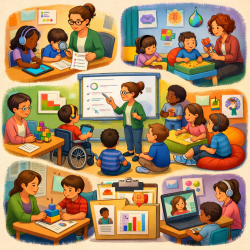
Achievement gaps are not only about curriculum. They are also about access to services that remove barriers to learning. For many students, especially students with disabilities and English Learners, progress depends on consistent support in areas like communication, language, social participation, and self-regulation.
This is where online therapy services can be a practical equity strategy for schools.
How online therapy supports targeted intervention
- Improved access: Schools facing staffing shortages can still provide services to students who need them.
- Consistency: Students benefit when services are delivered regularly, not interrupted by vacancies or scheduling gaps.
- Data-informed service delivery: Therapy goals and progress monitoring can align with school data systems and subgroup needs.
- Earlier intervention: When schools can start services sooner, students can build foundational skills before gaps widen.
- Support where it’s needed most: Resources can be targeted to students and schools with the greatest needs, aligning with the equity focus of ESEA flexibility.
At TinyEYE, our work with schools is grounded in the same principle ESEA flexibility emphasizes: decisions should be informed by data and expertise at the local level. When schools can identify a subgroup that is chronically underperforming, the next step is having real, workable options to respond. Online therapy can be one of those options, especially when in-person hiring is difficult.
A simple action checklist for school leaders
If your district or school is focused on closing achievement gaps, here are practical steps that align with the spirit of ESEA flexibility:
- Look beyond averages: Review performance by subgroup and ask which students are not being served well by current systems.
- Track growth, not just proficiency: Celebrate and build on improvement, even when students are not yet at benchmark.
- Use early triggers: Don’t wait for a crisis. Identify chronic underperformance early and respond quickly.
- Match interventions to needs: Avoid one-size-fits-all plans. Choose supports that fit the students in front of you.
- Strengthen service access: If staffing is a barrier, consider online therapy to provide consistent, specialized support.
Closing achievement gaps is long-term work. But when schools combine transparent subgroup data with targeted, timely supports, progress becomes more possible—and more measurable.
For more information, please follow this link.