Expanded Learning Opportunities (ELOs): What They Are and Why They Matter
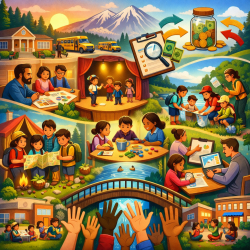
Expanded learning opportunities (ELOs) are structured programs that happen outside the traditional school day—typically after school and in the summer—designed to complement (not replicate) classroom instruction. Think clubs, tutoring, field trips, robotics, outdoor education, arts programming, and mentoring. The most effective ELOs connect back to what students are learning in school while also giving them hands-on, experiential ways to build skills and confidence.
One of the most compelling reasons districts invest in ELOs is simple: students spend only a fraction of their time in school. How they spend the remaining time can meaningfully shape academic outcomes, social-emotional development, and long-term opportunity.
Why ELOs Are a Strategic Equity Lever
ELOs are valuable for all students, but they can be especially impactful for historically underserved groups—students from low-income households, students of color, students with disabilities, multilingual learners, and others who may face systemic barriers to enrichment opportunities.
Family income strongly influences access to enrichment. Higher-income families can often afford tutoring, camps, and extracurriculars; lower-income families frequently cannot. Over time, those differences compound into opportunity gaps—gaps in access to experiences, relationships, and learning time that support success in school and beyond.
High-quality ELOs can help address these gaps by:
Providing access to enriching experiences that build academic and social-emotional competencies
Creating safe, supportive spaces for relationship-building and mentoring
Offering culturally responsive programming that reflects students’ identities and communities
Supporting career exploration and college readiness—especially for middle and high school students
Importantly, equitable ELO design is not automatic. Districts need to intentionally plan for access (transportation, cost, location, staffing, inclusion supports) and relevance (cultural responsiveness, youth voice, and programming aligned to student interests).
The Four-Step Framework: How Districts Can Get Started
Washington’s Expanded Learning Opportunities Guide lays out a practical four-step cycle that districts can use to build or strengthen ELO systems. The steps are straightforward, but the key is to treat them as a continuous improvement loop—not a one-time checklist.
Step 1: Set Clear ELO Goals (Start Small to Build Momentum)
Before choosing programs or partners, districts should define what they want ELOs to accomplish and who they most want to serve. A strong recommendation from the guide: focus on one or two goals at the start. Programs often struggle when they launch with too many expectations.
Useful planning questions include:
Which student groups are we prioritizing, and how will ELOs reduce opportunity gaps?
What academic outcomes are we targeting (for example, reading support for students not meeting standard)?
What broader outcomes matter (college and career readiness, self-advocacy, teamwork, confidence)?
How will we incorporate social-emotional learning goals?
Do we want to lead delivery, or should a community partner lead?
Using an equity lens early is essential. Too often, after-school programs unintentionally exclude students who would benefit most—due to scheduling, transportation, staffing constraints, or lack of inclusive design for students with disabilities.
Step 2: Form Partnerships That Expand Capacity and Reach
Partnerships with community-based organizations (CBOs) are repeatedly emphasized as both a best practice and a cost-effective way to scale ELOs. Community partners can bring specialized content (STEM, arts, mentoring), cultural expertise, trusted relationships with families, and staffing capacity—especially during after-school hours when school staff may be stretched thin.
Potential partners include:
Non-profits (Boys & Girls Club, YMCA, 4-H)
Culturally based organizations and ethnic community centers
Libraries and park departments
Colleges, universities, and vocational schools
Local businesses and civic groups (Rotary, Kiwanis)
Faith communities and housing authorities
Educational Service Districts (ESDs) and health departments
PTAs and family-led community groups
For rural districts with fewer local organizations, the guide suggests partnering across neighboring districts or leaning on ESDs to increase shared capacity.
Accessibility should be built into partnership planning. Districts should anticipate what staffing and training are needed to include students with disabilities and to ensure programs are culturally responsive and welcoming.
Step 3: Select ELO Content Collaboratively
Once goals and partners are in place, districts and partners should co-design the program. This is where many ELO efforts either strengthen or stall: clarity and collaboration upfront reduce confusion later.
The guide recommends a structured process:
Revisit district goals and target population
Share school policies and “school system” context with partners (including jargon and expectations)
Invite partners to share their approaches, policies, and culturally inclusive strategies
Create objectives together—ideally including students and families
Select content aligned to objectives
Example content areas from the guide include:
Academic support: science enrichment, English language support, learning via technology
Social-emotional support: leadership development, teamwork, mentoring
Life skills: career pathways, college exploration, arts and movement (like dance)
Step 4: Monitor and Assess (Then Refine)
Monitoring is not just about attendance counts—it’s about whether ELOs are delivering on goals and whether access is equitable. Districts should routinely assess:
Are programs meeting the academic and social-emotional outcomes we set?
Are partnerships effective and truly “two-way”?
Are programs accessible to the students we intended to serve?
What should change next cycle—goals, content, staffing, locations, or supports?
The guide also highlights the importance of data sharing (with appropriate protocols and FERPA protections). Data like attendance, grades, and behavior reports can help ELO providers better support students—especially when programs are designed to complement school-day needs.
Program Quality: The Difference Between “More Time” and “Better Outcomes”
More programming isn’t automatically better programming. The guide emphasizes that quality is measurable and improvable, and that trained staff are essential.
Washington’s Quality Standards for After-school and Youth Development outline nine domains that high-quality programs should strive to meet:
Safety and wellness
Cultural competency and responsiveness
Relationships
Youth leadership and engagement
Program and activities
Assessment, planning, and improvement
Ongoing staff and volunteer development
Leadership and management
Family, school, and community connections
Safety deserves special attention: physical safety (facilities, insurance, safe spaces) and social-emotional safety (belonging, supportive adult relationships, culturally responsive practice). Training and professional development are not “extras”—they’re foundational.
Funding ELOs: Build Sustainability by Braiding Multiple Streams
One of the most practical sections of the guide is funding. The central message: sustainable ELO systems rarely rely on a single funding source. Instead, districts and partners “braid” federal, state, local, and private funding.
Federal Funding Pathways
Title I: ELOs are an allowable use of funds to support students who are at risk of not meeting standards.
Title IV, Part A (Student Support and Academic Enrichment): can support well-rounded education, improved school conditions, and effective technology use—ELOs can fit well here.
21st Century Community Learning Centers (21st CCLC): the primary dedicated federal ELO funding stream, administered by OSPI in Washington, supporting after-school and summer programs (often for Title I populations).
Child Care and Development Fund (CCDF): subsidies for eligible families can support school-age care; licensing requirements and exemptions matter here.
USDA meal programs (CACFP/SFSP): after-school and summer meal reimbursement can support program sustainability and reduce barriers for families.
State, Local, and Private Funding Options
Learning Assistance Program (LAP): supports students below standard in ELA/math and can fund after-school and summer ELOs; a portion can support partnerships with CBOs.
No Child Left Inside: supports outdoor and natural resource-based education for underserved students.
Local levies and city/county funds: can be powerful when ELOs are explicitly included in levy proposals or supported through parks and recreation budgets.
Philanthropic grants and business partnerships: useful for start-up costs, innovation, materials, and enrichment experiences—best pursued strategically alongside public funding.
Real-World Washington Examples: Spokane and Lake Chelan
The guide highlights examples that show what’s possible when goals, funding, and partnerships align.
Spokane Public Schools supports free ELOs across elementary and middle schools, using LAP and Title I for core costs and layering in partnerships and external funding for materials and professional development. Their robotics programming and computer science models demonstrate how ELOs can build early interest and long-term skills—especially when districts commit to making access consistent across schools.
Lake Chelan School District built “Afters,” combining targeted academic intervention with broader enrichment offerings. The program is free and includes transportation—two design choices that directly support equitable access. Notably, after starting with a 21st CCLC grant, the district moved toward local levy support, backed by strong community communication and evidence of impact.
Where TinyEYE Fits in an ELO Strategy
For districts building ELO systems, student support services are often a limiting factor—especially when it comes to staffing, specialized expertise, and consistent access across buildings. As a provider of online therapy services to schools, TinyEYE can support district ELO goals by helping schools strengthen the “whole child” infrastructure that makes expanded learning more effective.
In practice, that can mean aligning related services with ELO priorities such as:
Improving accessibility for students with disabilities through coordinated support
Strengthening student engagement and participation by reducing barriers to services
Supporting consistent implementation across schools, including rural or hard-to-staff communities
When ELOs are built on strong partnerships, quality standards, and equitable access, they become more than “extra time.” They become a district-wide strategy for opportunity, belonging, and student success.
For more information, please follow this link.