Across North America, schools are under increasing pressure to “do something” about cell phones. As a Special Education Director, I understand why: staff are managing attention, behavior, social conflict, and academic engagement in real time—often while also navigating staffing shortages in related services and mental health supports. A blanket cell phone ban can feel like a clean solution.
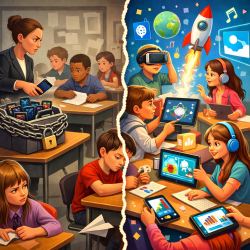
But as highlighted in Nathan Strange’s 2025 refereed article, From Ban to Balance: A New Approach to Cell Phones in the Classroom, comprehensive bans frequently miss the mark. They may reduce visible phone use, yet still fail to improve learning outcomes, and they can create new problems—especially around trust, consistency, and school-home relationships.
Schools can do better than “ban or no ban.” A balanced approach acknowledges that phones are part of students’ lives and future workplaces, and it treats technology as something to be taught and managed—like any other powerful tool.
Why comprehensive bans often backfire
Cell phone bans are typically implemented to reduce distractions and improve focus. However, Strange outlines several persistent issues that arise when schools rely on comprehensive restrictions.
1) Bans can limit learning and engagement
Students use phones for quick research, accessibility supports, educational apps, and interactive learning tools. When phones are removed without providing alternative devices (tablets, laptops, etc.), schools may unintentionally reduce access to learning resources that support participation and critical thinking.
Many educators also use mobile-friendly platforms for quizzes, collaborative tasks, and real-time feedback. UNESCO has noted that technology can enhance engagement and learning quality for many learners, even while acknowledging risks and equity concerns. If the instructional design assumes “no phones,” classrooms may revert to less interactive methods that don’t meet all learners’ needs—particularly students who benefit from multimodal instruction, immediate feedback, or assistive supports.
2) Bans don’t prepare students for the real world
Phones are not going away. Students will need to manage digital tools in post-secondary settings, workplaces, and daily life. Removing phones from the learning environment can remove an authentic opportunity to teach digital responsibility, self-regulation, and time management.
In special education, we often talk about skill-building in the environment where the skill is needed. If we want students to learn appropriate technology use, we need structured opportunities to practice it—with clear expectations and adult coaching.
3) Evidence of effectiveness is mixed
Strange notes there is no conclusive evidence that comprehensive bans reliably improve mental health, academic performance, or cyberbullying outcomes. Some research suggests bans can negatively affect student satisfaction and motivation. In other words, bans may create compliance on the surface while failing to address root causes such as attention challenges, instructional relevance, peer conflict, or unmet mental health needs.
4) Bans can strain relationships and increase conflict
One of the most significant practical challenges is enforcement. Students may conceal phones or shift to other devices, leading to power struggles, mistrust, and a “gotcha” dynamic between adults and students. Families may also have legitimate concerns about communication and safety. When bans are mandated without meaningful local input, schools can find themselves in repeated conflict with parents and students—making collaboration harder across the board.
Moving from “ban” to “balance”: what a workable policy can include
A balanced cell phone approach is not permissive. It is structured, teachable, and consistent. The goal is to reduce distraction while preserving the educational value of technology and strengthening school-community trust.
1) Designated usage times and clear routines
Balanced policies work best when they are predictable. Rather than “phones whenever,” schools can establish specific times and purposes for phone use.
- Instructional use windows: phones allowed during planned activities (research, polls, formative assessment, group collaboration).
- Non-instructional times: clear expectations for lunch, passing time, and arrival/dismissal (aligned to supervision capacity and school culture).
- Default storage expectation: when not in use, phones are away (backpack, pouch, or designated area), with consistent language used across classrooms.
From an administrative lens, the key is consistency. If every classroom has a different rule, students experience confusion, staff experience frustration, and enforcement becomes inequitable.
2) Teach digital citizenship like we mean it
Strange emphasizes that digital responsibility should be taught through workshops and curriculum integration—not just addressed through discipline. Digital citizenship instruction should include:
- Privacy and digital footprint: what students share, where it goes, and how long it lasts.
- Cyberbullying prevention and response: reporting pathways, bystander responsibilities, and restorative practices where appropriate.
- Screen time and attention: strategies for self-monitoring, notifications management, and focus tools.
- Source evaluation: how to vet information, identify misinformation, and cite appropriately.
For students receiving special education services, digital citizenship instruction may need to be differentiated and reinforced. Consider embedding it into advisory, health, ELA, or social studies, and aligning it with behavior instruction frameworks already in place.
3) Integrate educational technology intentionally
Phones can support engagement when educators have practical tools and clear guardrails. Schools can encourage the use of structured apps and platforms that support learning goals, such as:
- Quick checks for understanding (polls, quizzes, exit tickets)
- Collaborative documents and group research tasks
- Multimedia creation (short presentations, audio responses, captioned video)
- Organizational supports (timers, calendars, reminders)
In districts experiencing therapist staffing shortages, technology can also support service delivery models. For example, online therapy providers like TinyEYE can help schools maintain continuity of speech-language or occupational therapy services, while teams coordinate how student devices are used safely and appropriately during sessions. The larger point is that technology integration should be purposeful, supervised, and tied to outcomes—not left to chance.
4) Build a technology support team to monitor and adjust
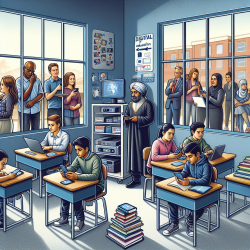
One of the most actionable recommendations in Strange’s article is forming a technology support team that includes educators, administrators, students, and parents. This group can:
- Review discipline and referral data related to phones
- Gather student and staff feedback on what is and isn’t working
- Monitor engagement and classroom climate indicators
- Recommend adjustments to policy language and implementation supports
- Track emerging technology trends and risks
This is also a strong strategy for legal and procedural defensibility: when policies are reviewed regularly, grounded in data, and shaped with stakeholder input, districts are better positioned to show that rules are reasonable, equitable, and responsive.
5) Engage parents and students early and often
Communication is not an “extra”—it is part of implementation. Strange notes that parent concerns often center on safety and the ability to contact children. Schools can address this by clearly outlining:
- How families can contact students during the school day
- What happens in emergencies and how information is shared
- When phones are allowed and when they must be away
- How the school will respond to misuse (progressive, instructional, and consistent)
Student voice matters as well. Surveys, focus groups, and student council discussions can uncover practical issues adults may miss (for example, where phones are stored, how to handle medical or translation needs, or what “reasonable use” looks like during lunch). When students help shape norms, compliance often improves because expectations feel more legitimate.
Implementation tips districts can use right now
If your district is revisiting cell phone policy, these steps can help move from debate to action:
- Start with purpose: define what the policy is intended to improve (engagement, instruction, safety, climate), and how you’ll measure it.
- Write clear, observable expectations: avoid vague language like “appropriate use” without examples.
- Train staff for consistency: provide scripts, routines, and escalation pathways so enforcement is predictable and fair.
- Plan for exceptions: include accommodations for disability-related needs, translation, medical monitoring, and documented safety plans.
- Review regularly: set a schedule for stakeholder feedback and data review so the policy evolves with reality.
Conclusion: phones are a management issue—and a learning opportunity
Comprehensive cell phone bans are often adopted with good intentions, but Strange’s analysis underscores why they frequently fall short: they can reduce access to learning tools, fail to build real-world skills, show limited evidence of broad effectiveness, and damage relationships within the school community.
A balanced approach—designated usage times, explicit digital citizenship instruction, intentional educational technology integration, parent and student engagement, and a technology support team—offers a more sustainable path. It treats phones not as the enemy, but as a tool that requires structure, instruction, and shared accountability.
For more information, please follow this link.