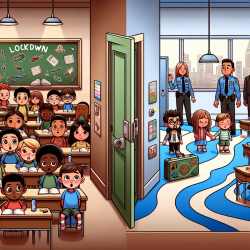
School safety is more than a protocol—it’s also a mental health issue
Lockdowns have become a standard part of school safety planning. Even though school shootings are statistically rare, the perceived risk is high, and schools increasingly face real-time threats that can trigger lockdowns—police activity nearby, online threats, or even a dangerous animal in the area.
These procedures are designed to protect students and staff. At the same time, lockdowns can create intense fear, uncertainty, and stress—especially when students are asked to sit silently out of sight, unsure of what is happening. The result is a difficult reality for school leaders: a practice that supports physical safety may also produce anxiety, stress reactions, and loss of instructional time if not planned and communicated carefully.
This is why trauma-informed planning matters. When schools prepare thoughtfully before, during, and after a lockdown, they can reduce unintended psychological harm while still maintaining strong safety readiness.
The two types of lockdowns—and why the distinction matters
Not every safety event requires the same level of response. One of the most important best practices is differentiating between lockdown types so students aren’t exposed to the most intense procedures unless absolutely necessary.
-
Full-Scale Lockdown: Doors are locked or barricaded, blinds are closed, windows may be covered, lights are turned out, and everyone remains silent and out of sight. This is used when there is imminent danger to the school. Because it is highly disruptive and frightening, it can be psychologically impactful and may result in stress or traumatic reactions.
-
Secured Perimeter / Lockout: Classroom and exterior doors are locked and no one enters or leaves the building, but teachers can often continue instruction. This approach can still be unsettling, but it is typically less disruptive and less stressful than a full-scale lockdown.
Using the secured perimeter/lockout whenever it is safe to do so can help preserve the learning environment and reduce the likelihood of trauma responses—while still keeping the building secure.
Planning is critical: the foundation of safer, calmer responses
Lockdowns should be part of a comprehensive emergency preparedness plan developed collaboratively. That means school administrators, school-employed mental health professionals, school resource officers, law enforcement partners, and crisis team members should align on clear definitions, steps, and communication protocols.
Planning should also reflect the needs of real students in real classrooms. Considerations should include:
Age and developmental level (what a kindergartener needs to hear is different than what a high school student needs)
Disabilities that affect mobility or access to instructions
Sensory differences (for example, some students with autism may experience heightened distress during sudden changes, alarms, or forced silence)
Intellectual disabilities that may affect understanding of directions or context
Second-language considerations for students and families to ensure instructions and follow-up communication are accessible
When schools plan with these factors in mind, they reduce confusion during high-stress moments and increase the likelihood that students feel supported rather than frightened.
Before a lockdown: how to prepare without increasing fear
Preparation is not just about compliance—it’s about building confidence. Done well, drills can increase knowledge and readiness without raising anxiety.
1) Create separate processes for different threat levels
Work with local law enforcement and emergency dispatchers to define and use different terms and procedures for community-based concerns versus immediate on-campus threats. When everyone shares the same definitions, schools can respond faster and communicate more clearly.
2) Conduct drills carefully—and always announce them
Drills should be planned, integrated into yearly crisis preparation, and paired with training and discussion. A key best practice is to always announce drills with explicit, repeated clarity. For example:
“This is an emergency drill, not an actual emergency. This is a drill. We are now practicing how to keep safe in an emergency. This is a drill.”
3) Start with an orientation that matches student needs
Before a drill, provide an overview of what will happen and what students should do. Tailor the orientation to developmental level, language access needs, and disability accommodations. This also helps staff understand their roles and expected actions.
4) Build trauma-informed accommodations into the plan
Some students and staff have trauma histories that may make lockdown drills especially frightening. Schools should identify ways to provide advanced warning or additional support for those who may be more vulnerable to distress.
5) Train staff to recognize stress reactions and use grounding strategies
During a lockdown, students take emotional cues from adults. Staff should be able to recognize signs of traumatic stress and use basic stabilization and grounding techniques to help students regain emotional control.
6) Include the right people in planning and evaluation
Ensure an administrator is present during drills.
Include school resource officers and school-employed mental health professionals in planning and evaluation.
Add drill rationale and procedures to parent handbooks.
Consider posting on social media when a drill is occurring to reduce rumors and confusion.
During a lockdown: communication and emotional regulation matter
In the moment, the goal is to keep everyone physically safe while minimizing panic. The way adults communicate and behave can significantly reduce distress.
-
Use clear, direct, developmentally appropriate language. Safety vocabulary matters. For younger students, wording like “go,” “get out,” or “evacuate” may feel less frightening than “escape” or “run,” supporting calmer action.
-
Model a controlled response. Staff who remain steady help students feel protected. Calm leadership can prevent fear from escalating.
-
Reinforce silence and phone expectations. Remind students to silence phones and remain quiet. This is both a safety and anxiety-management step because it reduces stimulation and confusion.
-
Support distressed students with grounding techniques. Staff should reassure students and use stabilization strategies when needed.
-
Communicate whether there is imminent danger, when possible. Factual information delivered quickly can minimize fear of the unknown.
-
Communicate with families using a pre-established system. As soon as possible, reassure families that students are safe. Having two lockdown types helps families understand the seriousness of the situation.
-
Monitor social media for misinformation. Designate a crisis team member to track and correct rumors and provide updates as appropriate.
Whenever it is safe, using a secured perimeter/lockout rather than a full-scale lockdown can reduce disruption and psychological impact while still maintaining safety.
After a lockdown: what schools do next can reduce long-term harm
The end of a lockdown is not the end of its impact. Students and staff may continue to feel unsettled, distracted, or fearful—especially if communication was limited or rumors spread quickly.
Coordinate with law enforcement to determine the actual risk related to the triggering event.
Communicate quickly and factually with parents, neighboring schools, and media, using a public information officer when available.
Use reunification procedures when needed, with special attention to younger students reconnecting with primary caregivers.
Provide caregivers with guidance on how to talk with children about fears related to violence at school or in the community.
Offer mental health crisis intervention and recognize trauma reactions in students and staff.
Create space to process by giving students and staff an opportunity to share reactions in a supported way.
Evaluate the lockdown to identify what worked, what didn’t, and what needs to change in the protocol.
Where TinyEYE fits: supporting schools beyond the moment of crisis
Lockdowns are an important part of school crisis preparedness, but they can also affect student wellbeing in ways that show up later: increased anxiety, trouble concentrating, sleep disruptions, or heightened sensitivity to alarms and sudden changes.
TinyEYE supports schools by expanding access to online therapy services that can help districts respond to student needs before and after stressful events. Whether a school is strengthening prevention efforts, building coping skills, or supporting students who are struggling after a lockdown, timely access to qualified mental health and therapy professionals can make a meaningful difference.
For more information, please follow this link.