If you are a school leader or family in Oklahoma looking for speech-language therapy or related services, one of the first questions is often the same: “How long will we have to wait?” In practice, the answer depends on the type of provider you choose and where you live. Oklahoma City (OKC) and Tulsa each have their own service landscape, and both are shaped by a strong presence of non-profit and community-based care.
As a special education writer, I’ve learned that wait times are more than an inconvenience. Delays can affect classroom participation, confidence, behavior, and progress toward IEP goals. The good news is that understanding the “why” behind wait times can help you make a plan that is realistic, student-centered, and timely.
Why Oklahoma’s Therapy Landscape Can Feel So Different
Oklahoma has a mix of private clinics, non-profit programs, and hospital-based rehabilitation services. Each model is designed to meet needs in a different way. That means each model also tends to have different timelines, different intake steps, and different expectations for families and schools.
In OKC and Tulsa, many families rely on community-based and non-profit supports. These programs can be life-changing, especially when they offer low-cost or tuition-free services. At the same time, high demand often leads to long waitlists.
Three Common Therapy Models in Oklahoma (and What They Mean for Wait Times)
1) Private Clinics: Often Faster Access
Private clinics are frequently the quickest route to an evaluation or therapy start date, especially when they have staffing capacity and flexible scheduling. In Oklahoma City, examples of private clinics currently accepting new clients include Just Kids Pediatrics and Speech Pathway.
- Just Kids Pediatrics (OKC): Anecdotal reports suggest they can “work kids in within a few weeks,” often around 2–4 weeks.
- Speech Pathway (OKC): Highlights a “text upon arrival” policy and a strong emphasis on confidentiality.
What this can mean for schools and families: When a student needs support quickly, private clinics may reduce the time between concern and service. However, private services may involve insurance requirements, out-of-pocket costs, transportation, and scheduling outside school hours.
2) Non-Profits: High Impact, Often Long Waitlists
Non-profit therapy and special education programs are a major part of the Tulsa-area service ecosystem. One well-known example is Little Light House in Tulsa, which provides tuition-free special education and therapy.
Programs like this are vital resources. A tuition-free model can remove financial barriers for families and provide comprehensive, mission-driven care. The challenge is that “zero-cost” models typically carry massive waitlists compared to fee-for-service clinics, simply because demand is so high.
What this can mean for schools and families: Non-profits can be an excellent long-term support, but they may not be the best match when a student needs services immediately. Many teams choose to pursue a non-profit option while also looking for interim supports to avoid lost time.
3) Hospital-Based Rehabilitation: Comprehensive, Medical Intake Process
Hospital systems such as Oklahoma Children’s Hospital (OU Health) and Mercy provide comprehensive rehabilitation services. These programs often have access to interdisciplinary teams and medical resources, which can be especially helpful for complex needs.
Hospital-based therapy, however, usually follows a standard medical intake model. That can include referrals, documentation, scheduling constraints, and multiple steps before therapy begins.
What this can mean for schools and families: Hospital programs can be an excellent fit when medical coordination is important, but families may experience longer timelines due to the structure of medical intake and high demand.
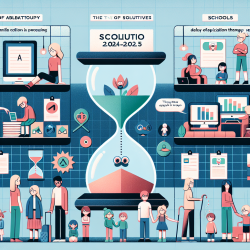
Typical Wait Time Estimates (Based on Reported Patterns)
While each provider and season can vary, the following estimates reflect common patterns in the Oklahoma market:
- Private clinics: approximately 2–4 weeks
- Non-profit and hospital-based programs: approximately 4–9 months
These ranges matter because they help IEP teams and families plan. If a student is struggling now, waiting 4–9 months without a support plan can widen skill gaps and increase frustration for everyone involved.
What Schools Can Do While Students Are Waiting
When a student is on a waitlist, it can feel like everything is on pause. But there are practical steps schools can take to support communication and learning while formal services are pending.
- Use classroom strategies right away: Visual supports, clear routines, and explicit vocabulary instruction can help many students access learning more effectively.
- Document what you see: Collect teacher observations and work samples. This helps clarify needs and supports better decision-making.
- Strengthen home-school communication: Simple check-ins and shared strategies can reduce confusion and build consistency.
- Consider short-term supports: Small-group language practice, targeted articulation practice (as appropriate), or assistive technology trials can be helpful when guided by qualified staff.
Most importantly, teams should avoid a “wait and see” approach when concerns are clear. Early support can reduce the intensity of later intervention.
An Online Option for Schools: TinyEYE Therapy Services
For schools navigating staffing shortages, high caseloads, or long community waitlists, online therapy can be a practical way to increase access. TinyEYE Therapy Services provides online therapy services to schools, helping districts and special education teams support students in a timely, consistent way.
Online therapy is not about replacing local resources. Instead, it can be a flexible option that helps schools:
- Reduce service gaps when in-person providers are hard to hire or schedules are full
- Support IEP compliance by improving consistency and continuity of services
- Reach students across locations including rural areas where providers may be limited
- Coordinate with school teams so therapy goals connect to classroom needs
In a state where private clinics may be available within weeks but non-profit and hospital options may take months, schools often need a solution that can start sooner and scale across buildings. Online therapy can be one of the tools that helps teams respond faster while still maintaining quality and collaboration.
Choosing the Right Path in OKC and Tulsa
There is no single “best” therapy model for every student. The right fit depends on urgency, student needs, family capacity, transportation, insurance, and the school’s ability to provide services directly.
Here is a simple way to think about it:
- If speed is the top priority: private clinics may be the quickest to start
- If cost-free comprehensive programming is essential: non-profits can be powerful, but plan for longer waitlists
- If medical coordination is needed: hospital-based rehab may be the best match, with a more structured intake process
- If schools need timely, scalable support: TinyEYE Therapy Services can be an online option to help deliver therapy services through the school setting
When schools and families understand the likely timelines, they can create a two-track plan: pursue the ideal long-term placement while also putting meaningful supports in place now.
For more information, please follow this link.