
Pennsylvania is home to one of the most respected pediatric health systems in the country: the Children’s Hospital of Philadelphia (CHOP). For families seeking speech-language evaluations and services, CHOP’s reputation can feel like a beacon—especially when a child has complex needs, a recent diagnosis, or a referral from a pediatrician who trusts CHOP’s expertise.
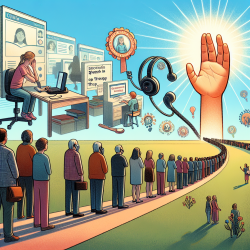
But a powerful institution can also shape the market around it. In Pennsylvania, many providers operate in what can be described as the “CHOP Shadow”: a regional ecosystem where demand concentrates around a major hospital, wait times grow, and families often get redirected to community-based options for ongoing therapy.
This post breaks down what that looks like across Pennsylvania, why wait times differ so dramatically between hospital-based and private services, and how online therapy—especially school-based teletherapy through TinyEYE Therapy Services—can be a practical, student-centered option for districts and families.
The Ecosystem: Why CHOP Shapes Access Across Pennsylvania
1) Hospital dominance and the evaluation bottleneck
CHOP’s Department of Speech-Language Pathology provides evaluations, but it also clearly notes that outpatient therapy is not recommended for all patients. In practice, that means many families may receive an excellent evaluation and then be triaged back to community providers for ongoing therapy.
This is not unusual for large pediatric hospitals. Hospitals are often designed to prioritize acute care, complex cases, and interdisciplinary diagnostics. Ongoing therapy, especially for high-volume needs, is frequently more sustainable in schools and community clinics. The challenge is that families may assume the hospital will provide the entire continuum of care—only to discover the next step involves finding a provider elsewhere.
Scheduling an evaluation at CHOP can involve a wait, and therapy slots are highly competitive. Other hospital-based systems in the region, such as Nemours and Tower Health, also serve families—but the overall pattern remains: high demand, limited ongoing therapy capacity, and a ripple effect across the community.
2) Private innovation: “No waitlists” as a direct response
When a major hospital becomes the default “first stop,” private providers often differentiate themselves by focusing on access, flexibility, and continuity. In Pennsylvania, private clinics increasingly position themselves as the accessible alternative to the medical giant—offering faster starts, consistent scheduling, and a more personalized experience without navigating a large hospital system.
In Philadelphia, services like Coral Care market “no waitlists,” directly addressing one of the biggest pain points families face: delays that can stretch from weeks into months. Other private alternatives include The Speech & Language Center and Amazing Kids in Pittsburgh, which serve families looking for options outside hospital systems.
In State College, Above and Beyond Speech Therapy explicitly verifies that they do not maintain a waiting list—an approach that resonates in a university town where families may be balancing busy schedules and looking for responsive services.
Marketing Analysis: What Families Are Really Buying
In Pennsylvania, the messaging tends to split into two clear value propositions:
- Hospitals sell expertise and prestige. Families associate CHOP with top-tier pediatric care, complex diagnostics, and a strong clinical reputation.
- Private clinics sell access and consistency. They emphasize faster starts, fewer administrative layers, and a more personalized care experience.
From a special education lens, it’s important to name what’s often left unsaid in marketing: children benefit from therapy that is timely, consistent, and coordinated with the environments where they communicate every day. A prestigious evaluation is valuable, but progress is driven by ongoing intervention and carryover—especially when goals align with school participation, classroom routines, and functional communication.
Wait Times in Pennsylvania: A Practical Snapshot
Based on the current landscape described above, a reasonable estimate for Pennsylvania is:
- Private providers: around 2 weeks (often promoted as “no waitlists” in competitive areas)
- Hospital-based services: around 6–12 months (especially for therapy slots)
Of course, wait times vary by location, season, staffing, and the type of service requested. But the overall pattern is consistent: hospitals can be slow to access for ongoing therapy, while private clinics compete on speed and availability.
Where Schools Fit In: The Hidden Pressure Point
When community systems are stretched, schools feel the impact. Districts may see:
- More referrals and evaluations as families seek help wherever it’s available
- Increased pressure on school-based SLP caseloads
- More complex needs arriving without timely outside therapy support
- Challenges maintaining service frequency when staffing is tight
Even when a student qualifies for services through an IEP, districts can struggle to hire and retain speech-language pathologists—especially in areas where hospitals and private clinics compete for the same professionals. In that context, access isn’t only a family problem; it becomes a system problem.
An Online Option for Pennsylvania Schools: TinyEYE Therapy Services
One way districts can respond to the access gap is by adding online therapy as part of their service delivery model. TinyEYE Therapy Services provides online therapy services to schools, supporting students through teletherapy that is designed for educational settings.
When implemented well, school-based teletherapy can help address common barriers in Pennsylvania’s current landscape:
- Reducing service delays: Teletherapy can help districts start services sooner when onsite hiring is difficult.
- Supporting consistency: Regularly scheduled sessions can be maintained even when local staffing changes.
- Expanding reach: Districts in smaller communities (or those competing with nearby medical systems) can access qualified clinicians without relying solely on local recruitment.
- Keeping goals functional: School-based therapy can target classroom communication, literacy-related language skills, social communication, and participation—aligned with IEP goals.
For many students, the most meaningful progress happens when therapy is integrated into the school week and connected to what they need to do in real life: follow directions, tell a story, ask for help, participate in discussions, and build relationships with peers.
How to Choose the Right Path: A Simple Decision Guide
Families and schools often ask the same question in different ways: “Where do we start?” Here are practical considerations that can help clarify next steps.
If a child needs a specialized evaluation
- Hospital-based evaluation may be a strong fit, especially for complex medical histories or interdisciplinary needs.
- Plan ahead for potential wait times and ask what happens after the evaluation (therapy offered vs. referral out).
If the priority is starting therapy quickly
- Private clinics may offer faster access and more scheduling flexibility.
- Ask about consistency (who provides therapy, what happens if the clinician changes, and how progress is measured).
If the child needs school-based support tied to educational goals
- School services and school-based teletherapy can directly target classroom participation and IEP outcomes.
- Coordinate communication between school providers and any outside clinicians to reduce duplication and improve carryover.
What Pennsylvania’s “CHOP Shadow” Teaches Us
CHOP’s presence is a strength for Pennsylvania—it raises the standard for pediatric care and provides families with access to world-class evaluation and expertise. At the same time, its gravitational pull can create a bottleneck where therapy access becomes scarce and competitive.
Private providers respond by emphasizing what families need most in the moment: timely access, consistency, and a clear path forward. Schools, meanwhile, carry a growing share of the service delivery load—often while navigating staffing shortages and rising student needs.
In this environment, online therapy isn’t a replacement for every setting or every student. But it is a practical option that can help districts stabilize services, reduce delays, and support students with consistent, school-aligned intervention.
For more information, please follow this link.