Why Convergence Insufficiency Matters in School-Age Children
Convergence insufficiency (CI) is a common binocular vision condition in which a child has difficulty coordinating both eyes to work together at near distances. In practical terms, the eyes may struggle to “team” effectively when focusing on close-up tasks such as reading, writing, using tablets, completing worksheets, or doing detailed craft work. Because so much learning is visually demanding, CI can have an outsized impact on comfort, stamina, and academic confidence.
CI is not the same as a refractive error (such as nearsightedness or farsightedness) that is corrected with glasses alone. Some children with CI may have 20/20 distance vision and still experience significant discomfort or functional difficulty during near work. This is one reason CI can be missed or misunderstood—especially when symptoms are attributed to attention, motivation, or behavior rather than visual effort.
What Is Convergence, in Plain Language?
Convergence is the coordinated inward movement of both eyes to maintain single, clear vision on a near target. When a child looks at a book or a screen, the eyes should turn inward together and sustain that alignment comfortably. With convergence insufficiency, that system is less efficient. The child may be able to converge briefly, but sustaining it can be difficult—particularly as reading time increases or fatigue sets in.
Common Convergence Insufficiency Symptoms in Children
CI symptoms often show up during or after near tasks. They can be intermittent, meaning a child may have “good days” and “bad days,” which can complicate identification. Below are symptoms frequently reported by children, families, and educators.
Visual and Physical Discomfort Symptoms
- Eyestrain during reading or close work
- Headaches, especially after school or after extended near tasks
- Tired or sore eyes
- Blurred vision at near (sometimes intermittent)
- Double vision (seeing two images) during reading or when tired
- Light sensitivity or discomfort in visually busy environments (less specific, but sometimes reported)
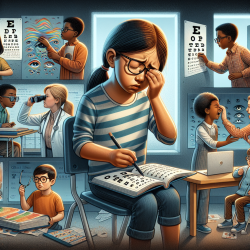
- Rubbing eyes frequently during desk work
Reading and Schoolwork Behaviors That Can Signal CI
- Losing place while reading; needing a finger or marker to track
- Skipping lines or rereading the same line
- Slow reading speed despite adequate decoding skills
- Reduced reading stamina (fatigues quickly, avoids longer passages)
- Difficulty with comprehension that worsens as reading time increases (often due to visual fatigue rather than language skill)
- Avoidance of near tasks (works slowly, procrastinates, or appears “unmotivated” for worksheets)
- Short attention span for close work, particularly as assignments become longer
Observable Signs in the Classroom
- Frequent breaks needed during reading or writing
- Complaints that words “move,” “jump,” or “swim” on the page
- Closing or covering one eye during near tasks (a compensatory strategy)
- Leaning very close to paper or screen
- Inconsistent performance: strong oral responses but weaker written output
Why CI Can Be Confused with Other Learning or Attention Concerns
Many CI symptoms overlap with signs educators associate with attention challenges or learning difficulties. For example, a child who avoids reading, struggles to sustain focus, or rushes through near work may be responding to discomfort rather than lacking interest or ability. Similarly, a student may demonstrate strong listening comprehension but underperform on independent reading tasks because the visual demand is higher and sustained.
This overlap does not mean CI is the only issue at play. Some children may have CI alongside other learning, language, or attention needs. The key is that unrecognized visual fatigue can amplify academic stress and reduce the effectiveness of interventions if the underlying visual barrier is not addressed.
Who Is Most Likely to Show Symptoms?
Convergence insufficiency can affect children across grade levels, but symptoms often become more noticeable when:
- Reading volume increases (typically in early elementary and again in later grades)
- Assignments require sustained near focus (longer writing tasks, test booklets, online learning)
- Screen time increases for learning and homework
- Academic demands rise and breaks become less frequent
Because symptoms are task-dependent, children may appear fine during distance activities (sports, recess, board work) yet struggle during independent desk work.
Practical Ways Schools and Families Can Notice Patterns
When CI is suspected, pattern recognition is helpful. Consider tracking:
- Timing: Do symptoms appear after 10–15 minutes of reading?
- Task type: Are complaints stronger during worksheets than during hands-on activities?
- Environment: Do symptoms worsen under fluorescent lighting, on digital screens, or during long testing sessions?
- Recovery: Does the child feel better after a break, movement, or switching to listening tasks?
Teachers may notice that a student’s accuracy decreases as the page progresses, or that the student’s work quality declines later in the day. Families may hear complaints after homework or notice avoidance behaviors that escalate with longer assignments.
When to Seek an Evaluation
If a child regularly shows the symptoms above—especially eyestrain, headaches, double vision, or persistent reading fatigue—it is reasonable to seek a comprehensive vision evaluation that includes binocular vision testing (not only a basic acuity screening). Standard school vision screenings are valuable but may not fully assess eye teaming and near focusing skills.
Families can ask the evaluating provider whether the assessment includes measures related to convergence (such as near point of convergence) and binocular coordination. If CI is identified, the provider can recommend appropriate next steps, which may include targeted vision therapy or other interventions based on the child’s profile.
Support Strategies in the Classroom While Families Pursue Answers
Schools often want practical, low-risk supports that can reduce strain while a child is being evaluated or receiving services. Depending on the student and school context, helpful strategies may include:
- Planned visual breaks during sustained near tasks (brief, structured pauses)
- Chunking assignments into shorter sections with check-ins
- Access to audiobooks or text-to-speech to reduce visual load while maintaining content learning
- Preferential seating and clear print materials
- Use of a reading guide (bookmark, ruler, or line window) for tracking
- Reduced copying demands (provide notes or allow photo copies of board work)
These supports are not a substitute for diagnosis or treatment, but they can help maintain participation and reduce frustration.
How Online Therapy Services Can Fit into a School Support Model
While convergence insufficiency is a vision condition typically evaluated by eye care professionals, schools often encounter the academic and functional consequences first: reduced reading endurance, avoidance of written tasks, and inconsistent performance. In a school-based support model, collaboration matters.
Online therapy services can help schools address the broader learning impact by supporting related skills and classroom participation. For example, when students experience fatigue during literacy tasks, therapy teams may collaborate with educators to adjust task demands, strengthen compensatory strategies, and support communication and learning goals that are affected by reduced visual stamina.
For districts facing staffing shortages or serving geographically dispersed students, telepractice can also help maintain continuity of services and provide timely support aligned with school schedules.
Key Takeaways
- Convergence insufficiency can make near work uncomfortable and can reduce a child’s reading stamina and accuracy.
- Symptoms often include eyestrain, headaches, blurred or double vision, losing place while reading, and avoidance of close-up tasks.
- CI can be mistaken for attention or motivation issues because the child may struggle most during sustained near work.
- A comprehensive evaluation that includes binocular vision measures is important when symptoms persist.
- Schools can provide practical supports (breaks, chunking, audio access) to reduce strain while families pursue assessment and recommendations.
For more information, please follow this link.