Why Convergence Insufficiency Matters in School-Age Children
Convergence insufficiency (CI) is a common binocular vision condition in which a child has difficulty coordinating both eyes to work together when focusing on near tasks. “Convergence” refers to the inward turning of the eyes needed for reading, writing, using a tablet, completing worksheets, and other close-up activities. When convergence is inefficient, the child may still have normal visual acuity (for example, they can “see the letters” on an eye chart), yet struggle significantly with near work.
This distinction is important in schools. Many classroom demands are near-vision heavy, and CI symptoms can look like attention challenges, reading difficulties, avoidance behaviors, or even frustration and fatigue. Recognizing the symptom pattern can help families and educators pursue appropriate evaluation and support rather than assuming a child is simply unmotivated or distracted.
What Is Convergence Insufficiency (CI)? A Simple Explanation
When a child looks at something close, both eyes should turn inward together and maintain alignment so the brain can fuse the two images into one clear, single picture. In convergence insufficiency, the eyes may drift outward or fail to sustain the inward turn. The brain then has to work harder to keep vision single and clear, which can lead to discomfort and reduced stamina for near tasks.
CI can be intermittent, meaning symptoms may come and go depending on fatigue, stress, illness, length of reading time, or the visual demands of the task. This variability is one reason CI can be overlooked.
Common Child Symptoms of Convergence Insufficiency
Children do not always have the language to describe what they are experiencing, and many assume that everyone feels the same way when reading. As a result, CI often shows up through behaviors and performance patterns. Below are symptoms commonly associated with convergence insufficiency in children.
Visual Symptoms (What a Child May See or Feel)
Double vision (seeing two of the same word or image), especially during or after reading
Words that “move,” “jump,” “swim,” or blur on the page
Eye strain, burning, or aching eyes during near work
Headaches, often after reading or screen time
Difficulty maintaining focus on near tasks for more than a short period
Light sensitivity or visual discomfort in visually busy environments (less common, but reported by some students)
Reading and Learning Symptoms (How CI Can Affect School Tasks)
Losing place while reading; skipping lines or rereading the same line
Slow reading speed despite adequate decoding skills
Reduced reading comprehension because effort is spent “keeping the words still”
Avoidance of reading, writing, or other close-up work
Inconsistent performance: “good days” and “bad days” with near tasks
Difficulty copying from the board to paper (switching focus from far to near can increase strain)
Behavioral and Physical Signs (What Adults Often Notice)
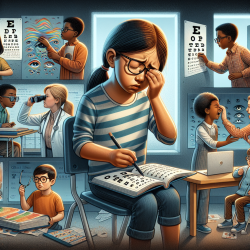
Frequent rubbing of eyes, blinking, or squinting during near work
Closing or covering one eye to make vision single
Leaning very close to the page or changing posture frequently
Short attention span specifically for reading or desk work (but not necessarily for hands-on activities)
Increased irritability, frustration, or fatigue during homework
Complaints of nausea or dizziness with prolonged near work (occasionally)
Why CI Is Sometimes Confused With Other Challenges
Because convergence insufficiency can mimic other learning and attention issues, it may be mistaken for:
Attention difficulties (the child looks away, fidgets, or avoids reading because it is uncomfortable)
Motivation problems (the child “doesn’t want to read” when the real barrier is visual fatigue)
Reading disorders (CI can coexist with dyslexia or language-based learning needs, but it is a different mechanism)
General vision problems (a child may pass a standard vision screening that focuses on distance acuity)
This is why symptom pattern and context matter. A key clue is that symptoms intensify with near tasks and increase over time (for example, the first five minutes of reading are fine, but the next fifteen become increasingly difficult).
Who Is Most at Risk and When Symptoms Often Appear
CI can appear in early elementary years when sustained reading becomes part of the school day, but it may also become more noticeable later as academic demands increase. Increased screen use and prolonged near work can make symptoms more apparent, even if they are not the original cause.
Children may be at higher risk of being missed if they:
Are strong verbal learners who compensate well until workloads increase
Avoid reading quietly and choose activities that do not require sustained near focus
Have intermittent symptoms that do not show up during brief screenings
What Schools and Families Can Do: Practical Next Steps
1) Observe and Document Patterns
Before jumping to conclusions, collect simple observations. Helpful notes include:
When symptoms occur (time of day, subject, length of task)
What the child says (e.g., “the words are blurry,” “my eyes hurt,” “I get headaches”)
What adults see (eye rubbing, closing one eye, frequent breaks)
Whether breaks improve performance temporarily
2) Seek an Appropriate Vision Evaluation
If convergence insufficiency is suspected, families should consider a comprehensive eye exam that includes binocular vision assessment (eye teaming), not only distance acuity. A standard screening can be valuable, but it may not be sufficient to detect CI.
3) Provide Classroom Supports While Evaluation Is Underway
Support strategies do not replace diagnosis or treatment, but they can reduce strain and improve access to learning. Schools may consider:
Shorter reading intervals with planned breaks
Preferential seating and reduced copying demands when possible
Access to audiobooks or text-to-speech for longer reading assignments
Chunking assignments into smaller parts with check-ins
Encouraging the child to use a bookmark or reading guide to maintain place
4) Collaborate Across Teams
CI symptoms can affect academic performance, behavior, and participation. Collaboration between families, teachers, and school-based support staff helps ensure the child is not penalized for a barrier that is physiological and often treatable.
For schools, it can be helpful to integrate vision-related considerations into broader student support conversations, particularly when reading stamina and headaches are recurring themes.
How Online Therapy Services Can Support Schools
At TinyEYE, we partner with schools to deliver online therapy services that support student success. While convergence insufficiency is a vision condition requiring appropriate eye care evaluation, the school impact often overlaps with learning access, classroom participation, and student confidence. When students struggle with near work, they may also experience secondary effects such as reduced engagement, increased frustration, and avoidance of language-heavy tasks.
Schools benefit when they have systems for early identification of barriers and coordinated support. When educators understand how CI can present, they can make informed referrals and implement practical accommodations that help students stay engaged while families pursue clinical guidance.
Key Takeaways
Convergence insufficiency can cause significant discomfort and reduced stamina for reading and near work, even when a child “sees fine” at distance.
Common child symptoms include headaches after reading, double or moving words, eye strain, losing place, and avoidance of near tasks.
CI can be mistaken for attention or motivation problems because symptoms often show up as task avoidance or inconsistent performance.
Documenting patterns, seeking a binocular vision assessment, and using classroom supports can help children access learning more comfortably.
For more information, please follow this link.