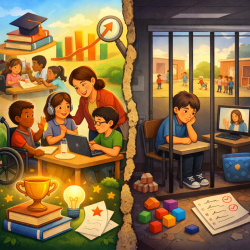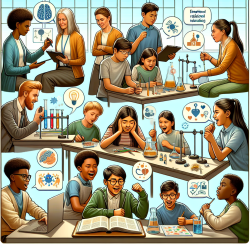
Science class is often treated as the “no feelings” part of the school day: facts, formulas, and correct answers. But anyone who has taught, supported, or parented a K–12 student knows that science learning is full of emotion—curiosity, pride, frustration, anxiety, and sometimes shutdown. When students feel unsafe, overwhelmed, or disconnected, it becomes harder to ask questions, take risks, and persist through complex problem-solving.
A 2025 meta-synthesis by Saroya and Buck in the International Journal of Research in Education and Science (IJRES) pulls together a decade of qualitative research (2013–2023) to answer a practical question: What happens when social-emotional learning (SEL) strategies are integrated into K–12 science classrooms? By synthesizing findings across 33 studies, the authors provide a clearer picture of SEL’s “big impact” in science—beyond what any single small study can show.
For school leaders and educators, the takeaway is straightforward: SEL isn’t an “extra” in science. It is a lever that improves how students participate, how they cope with challenge, and how deeply they learn.
What SEL means in a science classroom
SEL focuses on building skills that help students understand and manage emotions, build relationships, and make responsible decisions. Saroya and Buck ground their work in CASEL’s five core competencies:
Self-awareness (recognizing emotions, strengths, and needs)
Self-management (regulating emotions, persisting through difficulty)
Social awareness (empathy, perspective-taking across differences)
Relationship skills (communication, collaboration, conflict resolution)
Responsible decision-making (considering consequences, ethics, and wellbeing)
In science, these competencies show up in very concrete ways: managing test anxiety, tolerating uncertainty during inquiry, collaborating during labs, responding to feedback, and engaging ethically with topics like climate change, animal welfare, or public health.
Key finding #1: SEL builds self-efficacy and positive emotions that fuel learning
Across the studies, SEL-aligned practices increased students’ science self-efficacy—their belief that they can do science successfully. That matters because self-efficacy predicts whether students attempt challenging tasks, persist when confused, and re-engage after mistakes.
The meta-synthesis highlights that positive emotions—like pride, interest, belonging, and enjoyment—are not “nice side effects.” They are part of the learning engine. When teachers used encouragement and specific praise (for effort, strategies, and progress), students reported feeling more confident and more willing to participate.
In practical terms, SEL in science can look like:
Teachers naming and normalizing struggle: “Confusion is part of investigation.”
Celebrating process, not just correctness: “Your model changed because you tested a new idea.”
Structuring participation so more students can experience success (think-pair-share, sentence starters, low-stakes checks for understanding).
Key finding #2: SEL helps students move through negative emotions instead of getting stuck
Science learning can trigger strong negative emotions—especially when students believe science is about being right, quickly. The synthesis describes patterns of anxiety, frustration, confusion, irritation, and boredom when students don’t understand concepts or feel pressured by grades and performance.
These emotions often reduce participation: students hesitate to speak, avoid tasks, or disengage. Importantly, the research suggests that SEL strategies don’t eliminate challenge; they help students tolerate challenge and recover from it.
Supportive SEL moves that reduce emotional barriers include:
Psychological safety: students can offer ideas without embarrassment or ridicule.
Reframing mistakes: errors become data, not evidence of inability.
Teacher “noticing”: adults acknowledge effort and small wins to rebuild momentum.
From a special education lens, this is especially relevant for students with anxiety, executive functioning challenges, learning disabilities, or communication needs. When emotions spike, working memory and language access can drop. SEL-informed instruction protects access.
Key finding #3: SEL strengthens metacognition, mindfulness, and awareness
Another theme in the meta-synthesis is that SEL strategies improve students’ metacognition—their ability to think about their thinking—and their awareness of how emotions affect learning. Students described benefits from practices such as mindfulness, acceptance, and focused attention, particularly when facing academic stress.
In science, metacognition is essential: students must monitor understanding, revise models, evaluate evidence, and persist through uncertainty. SEL adds the emotional layer: “What am I feeling right now, and how is it shaping what I’m doing?”
Classroom-aligned strategies include:
Brief breathing or grounding routines before assessments, presentations, or complex labs
Reflection prompts after investigations: “Where did you get stuck? What helped you restart?”
Explicit teaching about attention and distraction (especially helpful for students who struggle with sustained focus)
Key finding #4: SEL improves the learning environment—and the environment improves learning
The synthesis emphasizes that classroom “emotional climate” is not background noise; it shapes the quality of discussion, collaboration, and conceptual understanding. When students experience a friendly, inclusive environment—especially during group work—they are more likely to share tentative ideas, ask questions, and build knowledge together.
Several environmental factors surfaced across studies:
Peer support increases comfort and participation.
Teacher behavior (warmth, active listening, responsiveness) influences students’ willingness to take academic risks.
Space and context matter: outdoor learning and hands-on experiences often increased curiosity and engagement.
Class size and adult attention affect how seen and supported students feel.
Home stress can spill into school, shaping emotions and readiness to learn.
This is where schoolwide systems matter. SEL can’t be carried by one teacher alone—especially when students are navigating stressors outside of school. Coordinated supports (educators, counselors, psychologists, speech-language pathologists, and occupational therapists) help students build the skills that make classroom learning accessible.
Key finding #5: SEL increases engagement—and engagement deepens science learning
The final theme is engagement: students learn science better when they are active participants. SEL supports engagement by making it safer to try, fail, revise, and try again. The meta-synthesis highlights that students remembered and valued lessons that included hands-on demonstrations, discussion, modeling, creative performance (like drama), and real-world problem solving.
Engagement isn’t just “fun.” It’s cognitive and emotional investment. When students connect science to authentic issues—air quality, ecosystems, ethics, climate impacts—they often show increased empathy, systems thinking, and motivation. SEL helps students handle the emotional weight of those topics while staying engaged in inquiry and evidence-based reasoning.
What this means for schools—and how TinyEYE can support the work
For administrators and educators, the research points to a practical conclusion: integrating SEL into science improves both student wellbeing and academic outcomes. But implementation requires time, consistency, and coordinated support—especially for students who need explicit instruction in emotional regulation, communication, and coping strategies.
TinyEYE partners with schools to provide online therapy services that can strengthen the conditions the research describes. When students receive targeted support, schools are better positioned to:
Reduce barriers that interfere with participation (anxiety, shutdown, avoidance, social conflict)
Build communication and collaboration skills that improve group work and classroom discourse
Support self-regulation and attention so students can persist through challenging tasks
Promote inclusive practices that help more students experience belonging and success in STEM learning
In other words, SEL is not separate from science achievement. It is part of how students access instruction, demonstrate understanding, and develop confidence as learners.
Closing thought
Saroya and Buck’s meta-synthesis reinforces what many educators observe daily: emotions shape learning, and science learning generates emotion. When schools intentionally integrate SEL strategies into science instruction, students are more likely to feel capable, stay engaged, regulate stress, collaborate effectively, and develop deeper understanding of scientific concepts.
For more information, please follow this link.