Schools work hard to support every learner. But years of research show that some students face an uneven playing field—especially students of color, students from low-income backgrounds, and students with disabilities. One of the clearest places these inequities show up is in special education and school discipline.
The National Center for Learning Disabilities (NCLD) uses the term
“significant disproportionality”
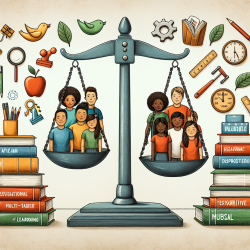
to describe a widespread pattern: students from certain racial and ethnic groups are more likely than their peers to be identified for special education, placed in more restrictive settings, and disciplined more often and more harshly.At TinyEYE, we partner with schools to deliver online therapy services that fit into real school schedules and real student needs. And because related services (like speech-language therapy and mental health supports) are part of the special education experience for many students, it’s important to understand disproportionality—and how school teams can reduce it.
What “significant disproportionality” means (in plain language)
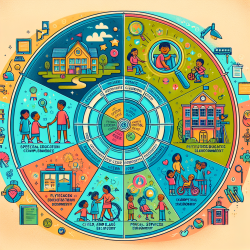
Significant disproportionality is not one single issue. It includes three connected areas that shape a student’s school experience:
Identification: Who gets evaluated and found eligible for special education.
Placement: Where students receive services after eligibility is determined (for example, mostly in general education vs. separate settings).
Discipline: Who gets office referrals, suspensions, expulsions, restraint, or other removals from instruction.
These areas matter because each one can change a student’s access to grade-level instruction, peer relationships, and long-term outcomes like graduation and employment.
1) Identification disparities: Who gets labeled—and why it can go wrong
NCLD summarizes research showing that students of color (with the exception of Asian students, as reported in federal data sets) are identified for special education at higher rates than White peers. For example:
American Indian and Alaska Native children receive special education at about twice the rate of the general student population.
Black students are more likely to be identified with a disability than many other student groups.
Some researchers argue that higher identification rates might reflect higher levels of need connected to poverty-related risk factors. NCLD notes that poverty is associated with factors that can affect learning and development, such as low birth weight, lead exposure, and adverse childhood experiences (ACEs). ACEs can include economic hardship, family separation, exposure to violence, and being treated unfairly due to race or ethnicity.
But NCLD also points to evidence that income does not fully explain the differences. Even when comparing students within the same income bracket, Black and Hispanic students can be more likely to be identified for special education than White students. That suggests systemic bias can play a role—through policies, practices, and subjective judgment in evaluation.
Why “subjective” disability categories are a big part of the problem
NCLD explains that disproportionality is often greatest in disability categories that rely heavily on professional judgment. Some disabilities are more “objective” to assess (for example, vision or hearing impairments). Others are more “subjective,” meaning identification depends more on observations, interpretation, and decision-making that can be influenced by bias.
Examples of more subjective categories include:
Specific Learning Disability (SLD)
Intellectual Disability (ID)
Emotional Disturbance (ED)
When students are misidentified—placed into special education when they do not actually have a disability—the harm can be serious. NCLD highlights risks such as:
Less rigorous curriculum and lower expectations
Fewer opportunities to prepare for postsecondary education
Stigma, loss of self-esteem, and increased racial separation
Staying in special education for the rest of their academic career once placed
2) Placement disparities: Least Restrictive Environment (LRE) isn’t reaching everyone equally
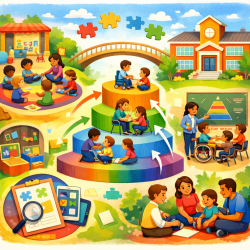
Under the Individuals with Disabilities Education Act (IDEA), students must be educated in the least restrictive environment (LRE). That means students with disabilities should learn alongside nondisabled peers as much as possible, with supports built in.
NCLD points to strong research on the benefits of inclusion. When inclusion starts early and supports are embedded into instruction, students show better outcomes, including stronger test scores and higher graduation rates.
However, placement is not equal across groups. NCLD notes that while more than half of White students with disabilities spend most of their day in general education, only about a third of Black students with disabilities spend that much time in general education. Hispanic and American Indian students with disabilities are also more likely to be taught in separate classrooms than White peers.
Why does this matter? Because segregated placements can widen achievement gaps. Students in inclusive settings often have stronger academic and employment outcomes than students taught in separate settings.
3) Discipline disparities: The “double hit” for students of color with disabilities
Discipline inequities are well documented. NCLD describes how Black, Hispanic, and Native students often receive harsher punishments than White peers for similar behavior, including more suspensions and expulsions.
For students with disabilities, the disparities can be even more severe. NCLD reports that among several racial and ethnic groups of students with disabilities, out-of-school suspension rates are extremely high, and Black males from low-income backgrounds receiving special education services are suspended at the highest rates of any subgroup.
NCLD also highlights disproportionality in restraint practices. Black students with disabilities make up a smaller portion of students served under IDEA, yet account for a much larger share of students who experience mechanical restraint.
These outcomes are not just “unfair.” They can be life-altering. Suspensions and expulsions do not improve behavior outcomes in the long run, and they increase the risk of being held back, dropping out, and involvement with the juvenile justice system.
What schools can do: Practical actions that reduce disproportionality
NCLD emphasizes that change is possible—especially when schools improve evaluation practices, reduce exclusionary discipline, and strengthen educator preparation and supports.
Improve the eligibility and evaluation process
IDEA requires schools to consider whether learning difficulties are primarily the result of other factors, including environmental, cultural, or economic disadvantage, and limited English proficiency. NCLD notes that many schools struggle to rule out these factors effectively, especially in subjective disability categories.
Actions NCLD recommends include:
Train teams on culturally and linguistically responsive identification and bring in outside expertise when needed.
Audit special education and discipline policies to find where bias may be built into systems and routines.
Strengthen relationships with families so parent input and cultural context are meaningfully included in evaluations.
Use better alternatives to exclusionary discipline
NCLD recommends limiting suspensions and expulsions and building a positive school climate supported by student services staff such as counselors and social workers.
They also highlight evidence-based frameworks that help schools respond earlier, teach skills directly, and reduce removals from instruction:
MTSS: A tiered framework for instruction and intervention matched to student need, with frequent progress monitoring.
UDL: Planning lessons that offer multiple ways to access information, show learning, and stay engaged.
PBIS: Teaching and reinforcing positive, observable behavior expectations using data to guide supports.
Culturally Responsive Teaching (CRT): Building instruction around students’ strengths, identities, and lived experiences while reflecting on adult bias.
Restorative practices: Repairing harm and strengthening relationships rather than relying on punishment and exclusion.
Invest in educator diversity and ongoing support
NCLD notes that teacher diversity is linked to decreases in racial discipline disparities. Yet the educator workforce remains disproportionately White compared to increasingly diverse student populations. Schools and districts can strengthen recruitment and retention pathways and ensure all educators receive meaningful training in culturally responsive practice.
Make data transparent and usable
Accurate data helps districts see patterns early and respond with targeted improvement. NCLD highlights the importance of the Equity in IDEA regulations and the Civil Rights Data Collection (CRDC), including data that captures both IDEA and Section 504 supports. They also encourage better data disaggregation so differences within broad categories are not hidden.
Where TinyEYE fits in
Disproportionality is a systems issue, but support services can be part of the solution when they are delivered ethically, consistently, and in partnership with school teams. Online therapy can help schools:
Increase access to specialized providers (including speech-language pathologists and mental health professionals) when staffing is tight
Support inclusive practices by bringing services to students within their school day in a coordinated way
Improve consistency of documentation and progress monitoring, which strengthens decision-making
Collaborate with families and educators using clear, shared goals
Most importantly, services should never be used as a “shortcut” to label students. The goal is accurate identification, strong general education instruction, early intervention, and fair, supportive school environments where students can thrive.
For more information, please follow this link.