Why Aligning Preschool and K–12 Special Education Matters
School leaders are often asked to strengthen special education across multiple age bands—while also ensuring compliance, equity, and high-quality services for students with disabilities. One of the most effective ways to do this is to intentionally connect preschool and K–12 special education systems while honoring the important differences between early childhood and school-age programming.
Although preschool and K–12 special education share core legal and ethical commitments—access, inclusion, individualized planning, and meaningful progress—the day-to-day realities can look very different. Differences in setting options, developmental expectations, assessment approaches, and family needs can create gaps during transitions and inconsistencies in service delivery.
This article summarizes key similarities and differences across five high-impact areas:
- Least Restrictive Environment (LRE)
- Multi-Tiered System of Support (MTSS)
- Curriculum
- Assessment
- Family Engagement
For school administrators, special education directors, and student services teams, the goal is not to make preschool “more like K–12” or vice versa. The goal is coherence: a shared understanding of what effective support looks like across ages, with developmentally appropriate implementation at each level.
Least Restrictive Environment (LRE): Same Principle, Different Pathways
The Least Restrictive Environment (LRE) requirement is foundational in both preschool and K–12 special education. In both contexts, teams are expected to educate children with disabilities alongside their typically developing peers to the maximum extent appropriate, using supplemental aids and services when needed.
In early childhood, the emphasis is often framed as access to an “Early Childhood Setting,” with removal to other settings only when the nature and severity of the disability prevents needs from being met even with supports. The intended outcome is the same as in K–12: meaningful participation in inclusive environments and access to the general education experience.
Key similarity
- Both preschool and K–12 programs must provide services in the LRE that meets the child’s needs, consistent with expectations from the Office of Special Education Programs (OSEP).
Key differences that affect implementation
How placement data are reported: Preschool educational environments are typically reported under Indicator 6, while ages 6–21 are reported under Indicator 5.
Availability of inclusive settings: Some districts do not operate regular early childhood programs. As a result, preschool LRE may require partnerships with community childcare/preschool providers or Head Start, depending on what the IEP Team determines is appropriate.
Administrative takeaway
In preschool, LRE is often a systems-design challenge as much as an IEP decision. Leaders can strengthen LRE by building reliable community partnerships, clarifying service-delivery expectations across sites, and ensuring related services can follow the child into inclusive settings.
MTSS: Shared Tiers, Different Terminology and Emphases
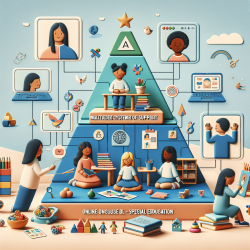
Multi-Tiered System of Support (MTSS) is a prevention-oriented framework that organizes supports into universal, targeted, and intensive levels. Both preschool and K–12 use MTSS to improve outcomes for all learners, including children with disabilities.
Core similarity: the same three-tier structure
- Tier One: Universal supports for all children/students
- Tier Two: Targeted supports for some children/students
- Tier Three: Intensive, individualized supports for a few children/students
Key differences
Purpose framing in K–12: MTSS is often positioned as a tool for overall school and district improvement that is sustainable across academics, behavior, and wellness.
Early childhood models: In preschool special education, MTSS is frequently discussed through early childhood frameworks such as Early Childhood Positive Behavioral Interventions and Supports (PBIS) or the Pyramid Model, with a strong focus on social-emotional development and prevention.
Administrative takeaway
Alignment does not require identical materials or language. It requires shared decision rules, consistent tier definitions, and coordinated data practices. When preschool and K–12 teams use comparable tier logic, transitions become smoother and service intensity can be adjusted more predictably over time.
Curriculum: Sequential Learning Across Ages, With Developmentally Distinct Priorities
Curriculum functions as an instructional guide that supports access and participation for all learners. In preschool, curriculum commonly includes learning objectives, environmental considerations, and instructional approaches—often delivered through structured play and routines. In K–12, curriculum becomes increasingly centered on academic knowledge acquisition and skill development.
For children eligible for special education, IDEA requires that programs, curricula, and practices be based on scientifically based research to the extent practicable. This expectation spans preschool and K–12, but what “best practice” looks like differs by developmental stage.
Key similarities
Preparation for long-term success: Both preschool and K–12 special education support learning across a wide range of domains/subjects to prepare learners for adulthood.
Sequential and scaffolded design: Both systems use objectives or standards to build skills progressively over time.
Key differences
Preschool focus: Early learning emphasizes social, emotional, physical, cognitive, and language development, with learning often structured through play.
K–12 focus: Standards become more academically oriented, with increasing emphasis on cognitive development, content mastery, and academic skill fluency.
Administrative takeaway
Curriculum alignment is most effective when leaders focus on continuity of skill development rather than identical content. For example, early language, self-regulation, and foundational communication skills in preschool can be intentionally connected to later literacy, classroom participation, and learning independence in K–12.
Assessment: Shared Need for Data, Different Methods and Purposes
Assessment is the process of gathering, analyzing, and monitoring data about a child’s learning or skill development. In both preschool and K–12, assessment data inform instruction and help teams evaluate whether supports are working.
However, preschool assessment is often broader and more embedded in daily routines because young children develop rapidly and unevenly across domains. Assessment in preschool special education also plays a role at every step of the IEP process—from early identification through progress monitoring and outcomes measurement.
Key similarity
- Both preschool and K–12 have assessment requirements and use assessment information to guide instruction and special education decision-making.
Key differences
Assessment is woven through the full preschool IEP cycle: It supports Child Find, eligibility determination, IEP goal development, progress monitoring, and child outcomes measurement.
Developmentally responsive approaches: Because young children learn in different ways and at different rates than older students, preschool assessment often relies on observation, routines-based measures, and tools designed for early development.
Outcomes monitoring tools: In New Hampshire, preschool outcomes monitoring may use tools such as AEPSi or My Teaching Strategies as part of state monitoring of child outcomes (Indicator 7).
Administrative takeaway
Assessment alignment works best when districts establish a clear “data story” across ages: what data are collected, why they matter, how often they are reviewed, and how they translate into instructional changes. This is especially important when students transition from preschool into kindergarten, where expectations and measurement systems can shift quickly.
Family Engagement: A Constant Priority With Different Starting Points
Family engagement is a collaborative partnership with families to support a child’s learning and development. Across preschool and K–12, families remain the child’s first and most important teachers, and meaningful engagement improves outcomes such as attendance, attitudes toward school, and long-term success.
Special education can be complex to navigate, and families often serve multiple roles: advocates, collaborators, and critical sources of information about their child’s strengths and needs.
Key similarities
Family engagement improves outcomes: Partnering with families supports learning, development, and health for every learner.
Shared responsibility: Effective practice includes educators, service providers, families, and community members working together in a relationship that respects unique needs and differences.
Key differences
Preschool families may be new to school systems: Many families enter preschool special education with limited experience navigating school-based services, particularly if they are transitioning from Part C / Family Centered Early Supports and Services (FCESS) or home visiting programs.
Transition is a major engagement moment: The partnership often begins during the transition into preschool special education or at the initial referral stage.
Administrative takeaway
Family engagement strategies should be differentiated by entry point. Preschool teams may need to prioritize orientation, trust-building, and clear explanations of the IEP process. K–12 teams may focus more on sustaining engagement over time, supporting student self-advocacy, and coordinating across multiple teachers and settings.
How Online Therapy Can Support Coherence Across Preschool and K–12
For districts working to align systems across age bands, service delivery capacity is often a limiting factor—especially for specialized providers. This is where online therapy can play a practical role.
TinyEYE partners with schools to provide online therapy services that can support continuity across preschool and K–12 by helping districts:
- Maintain service access when staffing shortages or geography make in-person coverage difficult
- Support inclusive LRE service delivery by bringing services into the student’s learning environment virtually
- Coordinate progress monitoring and documentation across sites and age levels
- Improve consistency of related services during transitions (for example, preschool to kindergarten)
When thoughtfully integrated, online therapy can complement district systems—supporting timely services while teams focus on high-quality instruction, strong family partnerships, and data-informed decision-making.
For more information, please follow this link.