
Why this conversation matters right now
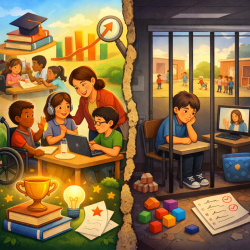
Across the United States, years of research have shown persistent inequities in education for students of color, students from low-income backgrounds, and students with disabilities. These inequities show up in multiple ways, but they become especially visible in two high-stakes areas: special education and discipline.
The National Center for Learning Disabilities (NCLD) uses the term significant disproportionality to describe a widespread pattern: students from certain racial and ethnic groups are identified for special education, placed in more restrictive settings, and disciplined at markedly higher rates than their peers. When these patterns are driven by bias in systems, assessments, or policies, the consequences can follow a student for years—academically, socially, and emotionally.
For school leaders, educators, and specialized support teams, the goal is not simply compliance. The goal is ensuring every student receives the right support at the right time, without being mislabeled, segregated, or excluded from learning opportunities.
The three components of significant disproportionality
NCLD emphasizes that significant disproportionality is not one issue—it’s three connected trends that shape a student’s educational experience:
- Identification: Who is found eligible for special education services
- Placement: Where students receive services after eligibility is determined (including how restrictive the setting is)
- Discipline: Who is referred, suspended, expelled, restrained, or otherwise removed from instruction
Because these components influence one another, addressing only one area rarely solves the full problem. For example, a biased identification process can lead to restrictive placement, and restrictive placement can increase behavior referrals and exclusionary discipline.
1) Identification disparities: when eligibility decisions are not equitable
The most discussed pattern of disproportionality is overrepresentation of students of color in special education. NCLD notes that students of color (with the exception of Asian students in many datasets) are identified for special education at higher rates than White peers. For example:
- American Indian and Alaska Native children receive special education at about twice the rate of the general student population.
- Black students are substantially more likely to be identified with a disability compared to other students.
- Hispanic, Black, and Native students show higher risk ratios for identification than White students.
Income, poverty-related risk factors, and why they don’t explain everything
It is true that poverty is associated with factors that can increase the likelihood of learning and behavioral challenges—such as low birth weight, lead exposure, and higher rates of adverse childhood experiences (ACEs). NCLD highlights that students experiencing four or more ACEs have been found to be dramatically more likely to be diagnosed with learning or behavioral challenges.
But recent evidence also shows that income alone does not fully explain identification disparities. Research cited by NCLD indicates that even when comparing students within the same income bracket, Black and Hispanic students are still more likely to be identified for special education than White students. That points to systemic issues—such as bias in referrals, assessment practices, and decision-making processes.
“Subjective” disability categories and the role of professional judgment
NCLD notes that disparities are greatest in disability categories that are more subjective—where identification relies heavily on professional judgment rather than a clear-cut medical or sensory determination. Categories often discussed as more subjective include:
- Specific Learning Disability (SLD)
- Intellectual Disability (ID)
- Emotional Disturbance (ED)
This does not mean these disabilities are not real. It means the pathway to identification can be influenced by inconsistent practices, limited culturally and linguistically appropriate tools, and implicit bias.
The harm of misidentification
Special education provides essential protections and services for students who truly need them. But when students are inappropriately identified, NCLD notes risks such as:
- Less rigorous curriculum and lower expectations
- Fewer opportunities for postsecondary readiness
- Stigma, reduced self-esteem, and increased racial separation
- Long-term placement, since students often remain in special education once identified
In other words, misidentification can become a long-lasting barrier rather than a support.
2) Placement disparities: least restrictive environment in practice
IDEA is grounded in the principle of the least restrictive environment (LRE): students with disabilities should learn alongside nondisabled peers to the greatest extent possible. Inclusion is not just a value statement—research shows it can improve outcomes when supports are embedded early and effectively.
However, NCLD reports that students of certain racial and ethnic groups are more likely to be placed in more restrictive settings. One striking comparison cited is that while a majority of White students with disabilities spend more than 80% of their day in general education, only about a third of Black students with disabilities do.
Restrictive placements can widen opportunity gaps by limiting access to grade-level content, peer models, extracurriculars, and high-expectation instruction. Research summarized by NCLD connects inclusive settings with stronger graduation and employment outcomes.
3) Discipline disparities: exclusion from learning and long-term consequences
Discipline disparities are well documented: Black, Hispanic, and Native students often receive harsher punishments than White peers for the same behavior. NCLD also highlights that disparities are even more severe for students with disabilities—especially students of color with disabilities.
These patterns include higher rates of:
- Office referrals, suspensions, and expulsions
- Out-of-school suspensions for boys and girls of color with disabilities
- Restraint, including mechanical restraint, disproportionately affecting Black students with disabilities
Exclusionary discipline is not only inequitable; it can be harmful. NCLD notes there is no evidence that removing students from school improves behavior more effectively than teaching pro-social skills and addressing behavior in the moment. Meanwhile, suspension and expulsion are associated with increased risk of grade retention, dropout, and juvenile justice involvement.
What’s being done: Equity in IDEA regulations and the need for strong implementation
NCLD describes the Equity in IDEA regulations as an effort to create a more consistent, standardized approach across states for identifying districts with significant disproportionality in eligibility, placement, and discipline. These regulations are designed to reduce loopholes in data systems that previously allowed states to set thresholds so high that districts rarely “qualified” as having a disproportionality problem.
Policy matters, but implementation matters just as much. NCLD stresses the importance of monitoring, high-quality technical assistance, and continued enforcement so that data collection leads to meaningful change.
The path forward: practical actions schools can take
NCLD’s recommendations focus on improving evaluation and eligibility processes, reducing exclusionary discipline, strengthening educator preparation and diversity, and improving data transparency. For schools looking for an actionable starting point, the following areas are especially high-impact.
Strengthen eligibility and evaluation practices
- Invest in training on disability identification that explicitly addresses linguistic and cultural differences.
- Audit policies and processes to uncover where bias may be entering the system (referrals, assessments, eligibility meetings, placement decisions, and discipline practices).
- Build authentic family partnerships so evaluation teams understand a student’s context and incorporate caregiver observations.
These steps are particularly important for evaluations where teams must rule out factors such as environmental, cultural, or economic disadvantage and limited English proficiency—areas where many districts struggle to make consistent, defensible determinations.
Replace exclusionary discipline with evidence-based supports
NCLD points to approaches that help schools respond to behavior while keeping students connected to instruction:
- MTSS to match interventions to need with progress monitoring
- UDL to proactively remove barriers in instruction and assessment
- PBIS to teach and reinforce positive, observable behaviors
- Culturally Responsive Teaching (CRT) to build engagement and affirm student strengths
- Restorative practices to repair harm, strengthen relationships, and improve school climate
When these frameworks are implemented with fidelity, schools can reduce referrals and removals while improving student outcomes and staff confidence.
Support and diversify the educator workforce
NCLD highlights research linking educator diversity to reductions in racial discipline disparities, with particularly strong effects for Black boys when taught by Black teachers. Alongside recruitment and retention efforts, schools can deepen CRT implementation by providing specific guidelines, coaching, and accountability for impact.
Improve data reporting and transparency
Better data enables better decisions. NCLD emphasizes the importance of disaggregated reporting (including cross-tabulation by race/ethnicity and income where possible) and continued support for federal data sources like the Civil Rights Data Collection (CRDC), which includes both IDEA and Section 504 disability status.
Where TinyEYE fits: expanding access to the right supports, earlier
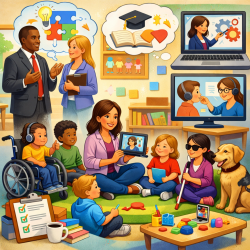
Reducing disproportionality is not only about identifying problems—it’s about ensuring schools have the capacity to respond with timely, appropriate support. That includes access to specialized instructional support personnel and consistent service delivery.
As an online therapy provider partnering with schools, TinyEYE supports districts by helping expand access to services such as speech-language therapy and other student supports in ways that can strengthen early intervention, reduce service gaps, and promote consistent documentation and progress monitoring. When schools can deliver services reliably and collaborate effectively with educators and families, teams are better positioned to make accurate decisions and keep students learning in inclusive environments.
Moving from awareness to action
Significant disproportionality is not a small technical issue—it is a system-level pattern that can shape a child’s identity, opportunity, and long-term outcomes. NCLD’s research makes clear that the stakes are high: misidentification, restrictive placement, and exclusionary discipline can limit access to rigorous instruction, increase stigma and segregation, and contribute to lower graduation rates for students of color with disabilities.
The encouraging reality is that schools are not powerless. With stronger evaluation practices, evidence-based behavior supports, inclusive placement decisions, culturally responsive teaching, transparent data, and the right service partnerships, districts can reduce disproportionality and build learning environments where students are supported without being sidelined.
For more information, please follow this link.