Why this research matters for school practitioners
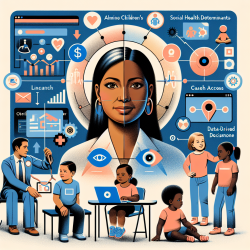
In schools, we often say we “meet families where they are.” The research article Identifying community needs of the Hispanic faith community to develop a research agenda gives us a concrete, respectful way to do that—by recognizing places of worship as trusted community hubs and by listening first to what community members say they need most.
As a Special Education Director, I’m always balancing legal compliance, service delivery realities (including therapist staffing shortages), and the day-to-day work of building trust with families. This study is a helpful reminder that strong outcomes don’t come only from what happens in an IEP meeting or therapy session. Outcomes also depend on whether families can access basic resources, understand systems, and feel safe engaging with schools.
The study focused on Hispanic faith community members in Central Arkansas and used a community-based participatory research (CBPR) approach—meaning faith leaders were trained and actively involved in the research process. That “shared ownership” model is highly relevant to schools, especially when we are trying to improve engagement with families who may have experienced barriers related to language, immigration concerns, work schedules, or limited access to healthcare.
Key outcomes from the study (in plain language)
Participants ranked their community concerns across several domains. Two stood out at the top:
- Hunger and nutrition was the highest-ranked concern (mean score 3.21 out of 4).
- Healthcare access was a close second (mean score 3.19 out of 4).
The study also found that hunger and nutrition concerns were strongly connected with socioeconomic factors—particularly lower income, worry about money for nutritious food, and inability to take time off work. Importantly, the research process itself built capacity: Hispanic faith leaders were trained as “research advocates” and helped administer the needs assessment in trusted settings.
What school practitioners can do differently on Monday morning
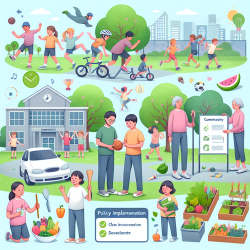
Below are practical, school-based ways to implement the spirit and outcomes of this research—without turning educators into social workers, and without losing sight of our instructional and special education responsibilities.
1) Treat food insecurity as an access issue, not a “family issue”
When hunger and nutrition are top community concerns, they become school access concerns. Food insecurity can affect attention, behavior, attendance, stamina, and even willingness to participate in therapy sessions (in-person or online).
- Add a simple, non-stigmatizing check-in to existing family conversations: “Do you feel your child has consistent access to healthy food?”
- Train staff on how to respond with a warm handoff (not a lecture): provide a short list of local food resources, school pantry hours, weekend backpack programs, and how to access them.
- Coordinate with school nutrition services to ensure families know how to apply for free/reduced meals and understand meal options.
For special education teams, this can be framed as supporting “access to FAPE” by reducing barriers that interfere with educational benefit—without making assumptions or requiring families to disclose more than they want to.
2) Build partnerships with faith leaders the same way you build IEP trust
The study’s CBPR approach worked because it respected the faith community as a unit of identity and built on existing strengths. Schools can do something similar.
- Identify 2–3 trusted community connectors (faith leaders, promotores, community health workers) and invite them to a listening session—not a presentation.
- Ask for guidance on communication norms: best times to reach families, preferred channels (WhatsApp, texts, phone calls), and how to make school events feel welcoming.
- Offer bilingual “office hours” at a community site when possible (or virtually), focused on navigating school systems: evaluations, IEPs, and related services.
When staffing shortages make it hard to provide consistent in-person outreach, community partnerships can extend your reach without overextending your staff.
3) Make healthcare access barriers visible in your service planning
Healthcare access was a top concern in the study. In schools, we see this when families struggle to obtain outside diagnoses, medications, glasses, hearing follow-up, or mental health supports.
- Use a “barriers to access” lens during problem-solving: transportation, work schedules, cost, language, and fear of systems.
- Offer flexible scheduling for meetings and teletherapy when appropriate, including early evening options when contracts allow.
- Provide bilingual navigation supports (even a one-page guide) explaining what the school can do versus what requires medical providers.
4) Use culturally responsive health education strategies that families actually use
In the study’s community response, faith leaders suggested monthly health and nutrition information shared through churches and technology, including short educational videos (even in a telenovela format). That’s a powerful insight: format matters.
- Keep school-created resources short: 60–90 second videos, simple visuals, and plain language Spanish and English.
- Focus on practical topics tied to school success: sleep routines, healthy snacks on a budget, reading food labels, and stress management.
- Invite community review before publishing: ask a small group of parents or community partners, “Does this sound respectful and clear?”
5) Align teletherapy with community realities (TinyEYE’s sweet spot)
Online therapy can reduce transportation barriers and improve scheduling flexibility—two issues that show up repeatedly in communities facing access challenges. But teletherapy only works when it’s implemented with cultural humility and strong school coordination.
- Confirm language access: ensure interpreters or bilingual providers are available for family communication, not just student sessions.
- Design sessions with the “whole day” in mind: if a student is coming to school hungry or stressed, build in regulation supports and predictable routines.
- Share progress in family-friendly ways: short phone calls, brief bilingual notes, or secure messages that explain what was practiced and how families can reinforce it.
When therapist staffing shortages exist (and they do), teletherapy can help districts maintain compliance timelines and service consistency—while still honoring the community context highlighted in this research.
Encouraging practitioners to do further research (and why it’s worth it)
This study also points to what we still need to learn. The authors note limitations such as a small sample and lack of open-ended responses. For school practitioners, that’s an invitation: we can gather better local information, ethically and respectfully, to guide our own improvement.
- Consider a local needs assessment in partnership with community organizations (including faith communities), using bilingual tools and trusted facilitators.
- Add open-ended questions to capture context: “What makes it hard to access healthy food?” “What would make school feel more welcoming?”
- Study what works: track whether partnership strategies improve attendance at meetings, therapy participation, or family satisfaction.
In my experience, the strongest community partnerships are built when schools show they can listen, act on what they hear, and report back transparently—especially when we cannot fix everything at once.
To read the original research paper, please follow this link: Identifying community needs of the Hispanic faith community to develop a research agenda.