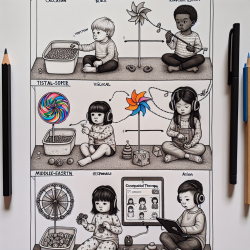
In busy classrooms and even busier homes, many children work hard to stay organized on the inside. You may see it as wiggling, chewing on sleeves, crashing into furniture, zoning out, or melting down when routines change. These behaviors are often misunderstood as “not listening” or “seeking attention,” but sometimes they are a child’s best attempt to regulate their body and brain.
Occupational therapy (OT) offers a helpful framework for this: a sensory diet. When thoughtfully designed, a sensory diet can support a child’s ability to participate in learning, play, and daily routines with more comfort and confidence.
What Is a Sensory Diet?
A sensory diet is a planned set of sensory-based activities and environmental supports that help a child maintain an optimal level of alertness and regulation throughout the day. The word “diet” can be misleading; it is not about food. It is more like a balanced schedule of inputs that the nervous system needs, just as the body needs sleep, movement, hydration, and breaks.
A sensory diet is typically developed or guided by an occupational therapist and then carried out by the adults who support the child—families, teachers, and school staff. The goal is not to “fix” a child, but to help them access their best learning and participation.
Why Sensory Diets Matter in Schools
School days are full of sensory demands: fluorescent lights, crowded hallways, loud cafeterias, unpredictable transitions, and long periods of sitting still. For some students, these demands can overload the nervous system. For others, the day may not provide enough of the right kind of input, leading to restlessness or low alertness.
A well-matched sensory diet can help students:
- Improve attention and readiness to learn
- Increase tolerance for transitions and changes
- Reduce stress behaviors (meltdowns, shutdowns, avoidance)
- Support motor planning and body awareness
- Build independence with self-regulation over time
Who Might Benefit From a Sensory Diet?
Sensory diets are often associated with sensory processing differences, but many children can benefit from supportive regulation strategies. Students who may benefit include those with:
- Sensory processing challenges (over- or under-responsiveness)
- Autism spectrum disorder
- ADHD
- Anxiety
- Trauma history or high stress
- Developmental delays impacting motor skills or self-care
- Difficulty with attention, transitions, or emotional regulation
It is important to note that a sensory diet should be individualized. Two children can show similar behaviors for very different reasons. OT support helps identify what is driving the behavior and which strategies are most likely to help.
Understanding the Sensory Systems OT Often Targets
When people think “sensory,” they often think of the five senses. OT also considers body-based senses that strongly influence regulation and coordination.
- Proprioceptive input (muscles and joints): “heavy work” like pushing, pulling, carrying, or climbing can be organizing and calming for many children.
- Vestibular input (movement and balance): swinging, rocking, spinning, and changing head position can be alerting or calming depending on the child and the type of movement.
- Tactile input (touch): textures, messy play, clothing seams, and unexpected touch can be soothing for some and distressing for others.
- Auditory and visual input: noise levels, echoes, bright lights, and visual clutter can impact attention and stress.
- Interoception (internal body signals): awareness of hunger, thirst, bathroom needs, and emotional cues supports self-regulation and self-advocacy.
Key Principles of an Effective Sensory Diet
A sensory diet works best when it is proactive, consistent, and embedded into real routines. Here are OT-informed principles that make a difference:
- Start with the “why.” Identify when the child struggles and what the environment demands at that time.
- Match the input to the goal. Some activities are alerting; others are calming. The same activity can affect different children differently.
- Use short, frequent supports. A two-minute strategy used at the right time can prevent a 20-minute escalation later.
- Build skills, not dependence. Teach the child to notice their body signals and choose a tool, gradually increasing independence.
- Measure what matters. Track participation: time on task, smoother transitions, fewer disruptions, improved mood, or better work completion.
Examples of Sensory Diet Activities (OT-Informed Ideas)
The activities below are common starting points. An OT can help tailor them based on the child’s needs, safety considerations, and school policies.
Proprioceptive “Heavy Work” (Often Organizing)
- Wall push-ups or chair push-ups
- Carrying books or a small weighted item (as approved by the OT and school)
- Helping stack chairs, wipe tables, or move bins
- Animal walks (bear walk, crab walk) down the hallway when appropriate
- Resistance bands on chair legs for quiet foot pushing
Movement Breaks (Vestibular + Proprioceptive)
- Short obstacle courses using classroom-safe items
- Marching in place, jumping jacks, or “brain breaks”
- Yoga poses or stretching routines
- Rocking in a chair (if safe and not disruptive)
- Walking a quick lap with a purpose (deliver a note, return a bin)
Tactile Supports
- Fidgets with clear rules for use (hands only, eyes on teacher)
- Textured items for calm touch (fabric swatches, sensory strips)
- Hand wipes or lotion breaks for children who avoid messy tasks
- Gradual exposure to challenging textures paired with choice and control
Auditory and Visual Supports
- Noise-reducing headphones during loud times (assemblies, cafeteria)
- A quiet corner or study carrel for reduced visual distraction
- Visual schedules and clear transition warnings
- Lighting adjustments when possible (natural light, lamp vs. harsh overhead)
Calming and Regulation Routines
- Breathing strategies paired with a visual cue card
- “Check-in” scales (zones, numbers, colors) to label body states
- Access to water, chewing options (as allowed), or crunchy snacks at planned times
- Co-regulation scripts: short, consistent adult language that helps the child reset
How to Build a Sensory Diet: A Simple OT-Friendly Process
If you are a parent or educator wondering where to begin, this step-by-step approach can help you organize your thinking before or alongside OT support.
- Identify the hardest moments. Examples: morning arrival, circle time, writing tasks, recess re-entry, lunchroom, end-of-day packing.
- Describe what you see without judgment. “Leaves seat every 2 minutes,” “covers ears,” “refuses worksheet,” “cries when asked to line up.”
- Look for patterns. Is it noise, waiting, fine-motor demand, hunger, fatigue, social stress, or unpredictability?
- Choose one or two strategies per routine. Keep it small and realistic so adults can implement consistently.
- Decide when to use it. Many strategies work best before the challenge (preventative), not after escalation.
- Collect quick data. Note frequency, duration, or a simple rating of how the routine went.
- Adjust. If a strategy increases dysregulation, stop and consult the OT. More is not always better.
Common Mistakes to Avoid
- Using a sensory tool as a reward or punishment. Regulation supports should be available based on need, not behavior bargaining.
- Overloading the schedule. Too many activities can become disruptive and hard to maintain.
- Assuming one-size-fits-all. A strategy that calms one child may agitate another.
- Waiting until the child is already overwhelmed. Proactive supports are often more effective than reactive ones.
- Ignoring the task demand. Sometimes the issue is not sensory; it may be skill-based (fine motor, language, executive function) or emotional.
How Online OT Can Support Sensory Diets in Schools
At TinyEYE, we understand that schools need practical strategies that fit real classrooms. Online OT services can support sensory diet planning by partnering with school teams and families to identify needs, recommend feasible supports, and monitor progress over time.
Depending on student needs and school processes, online OT may help with:
- Observation and consultation to identify sensory patterns impacting participation
- Collaborative planning with educators to embed strategies into routines
- Home-school consistency so the child experiences predictable supports
- Staff coaching on how to use tools safely and effectively
- Progress monitoring tied to functional outcomes (participation, independence, engagement)
A Final Thought: Regulation Is a Skill We Can Teach
A sensory diet is not about eliminating all stress or expecting perfect behavior. It is about giving children the supports and practice they need to recognize what is happening in their bodies and respond in helpful ways. With the right plan, many students can move from “surviving the day” to truly participating in it.
For more information, please follow this link.